
Last updated November 15, 2026
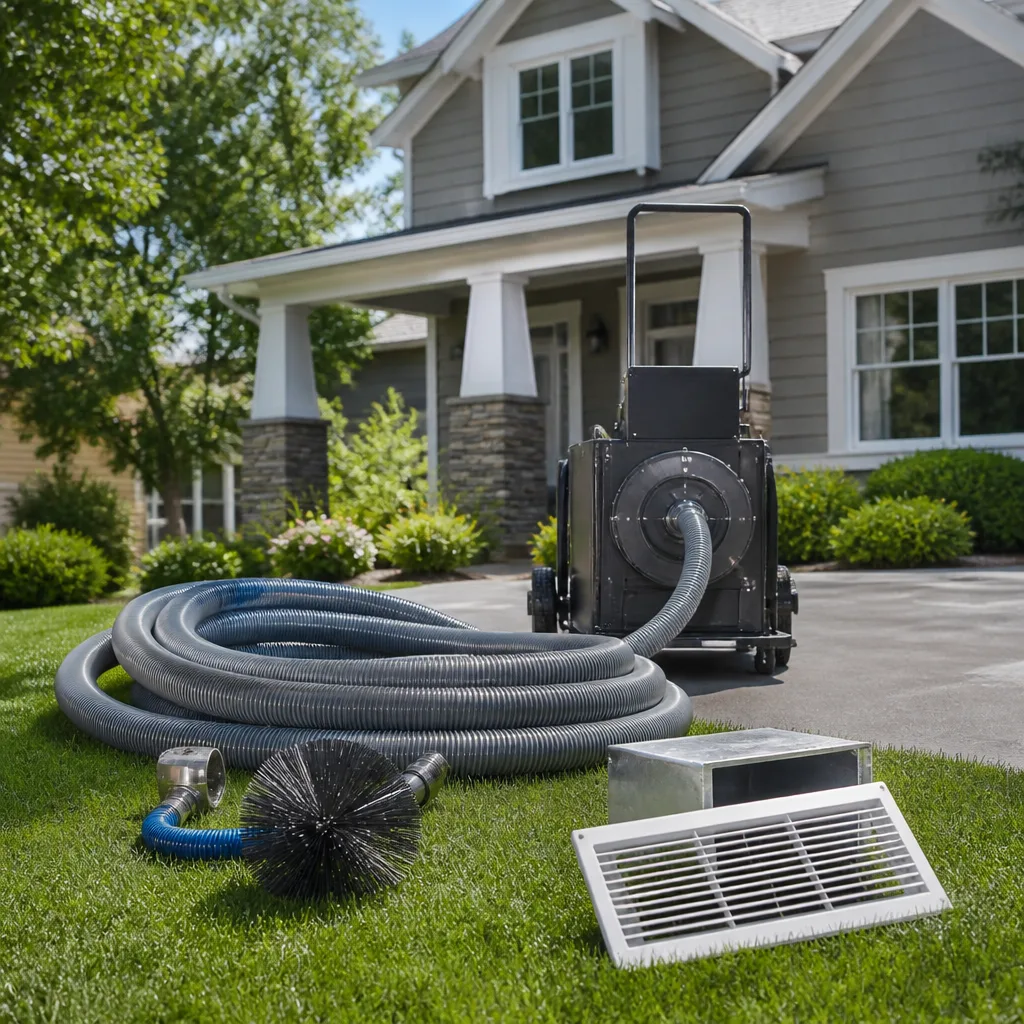 Whole-home duct cleaning
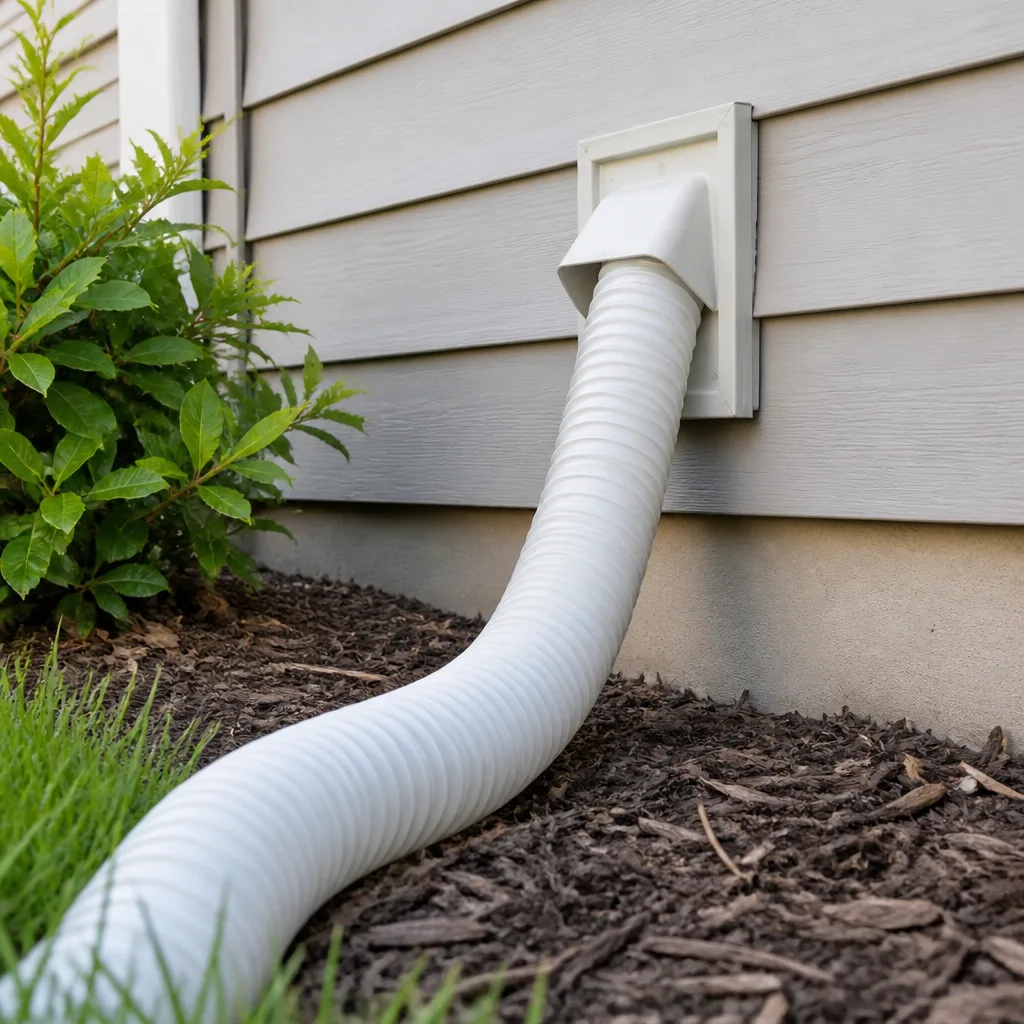 Dryer vent cleaning
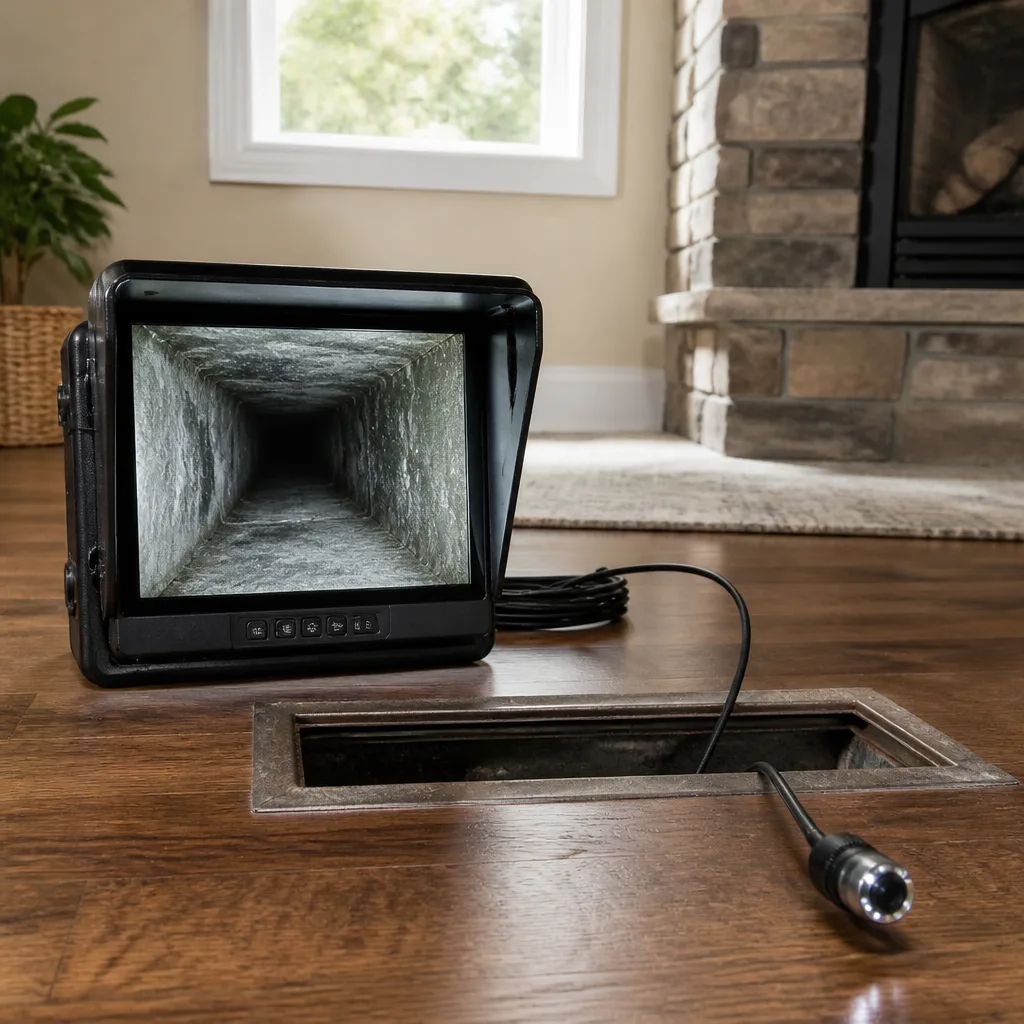 Camera inspection
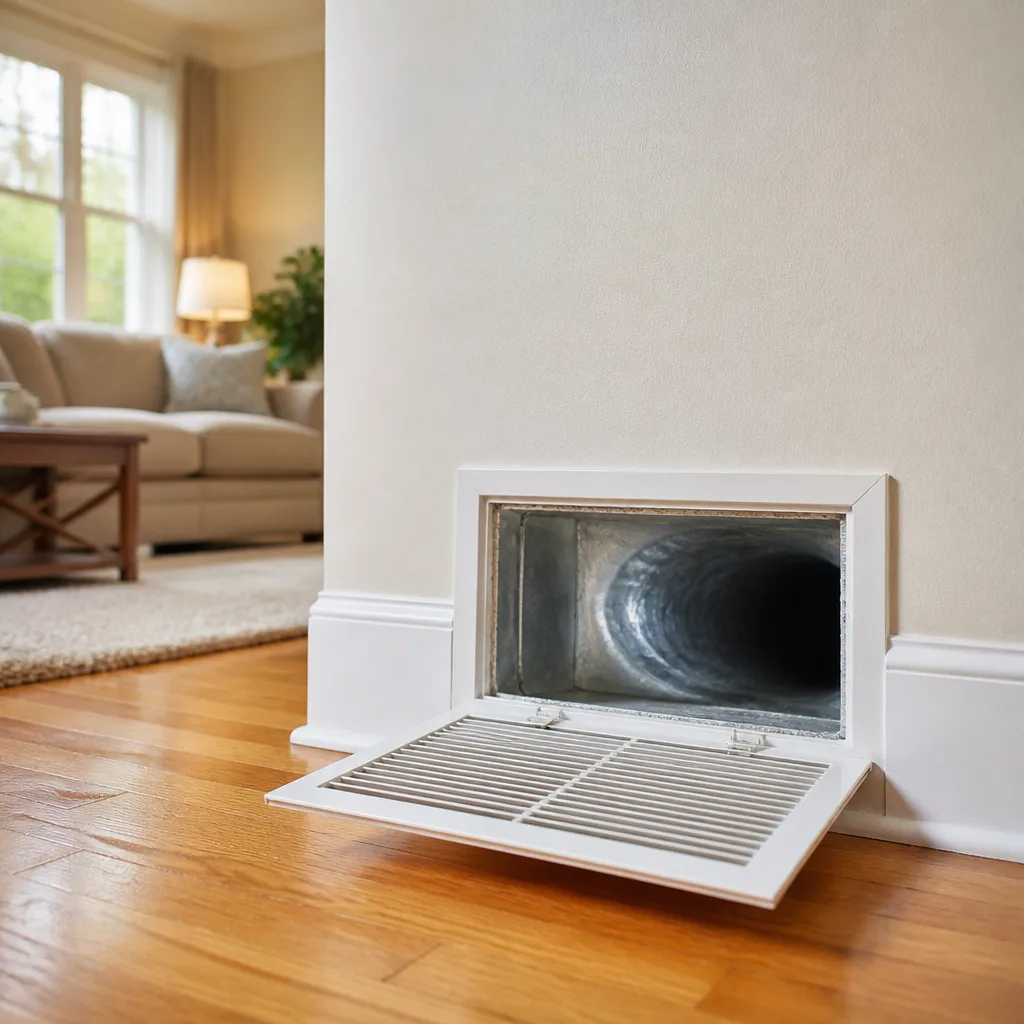 Sanitizing & deodorizing
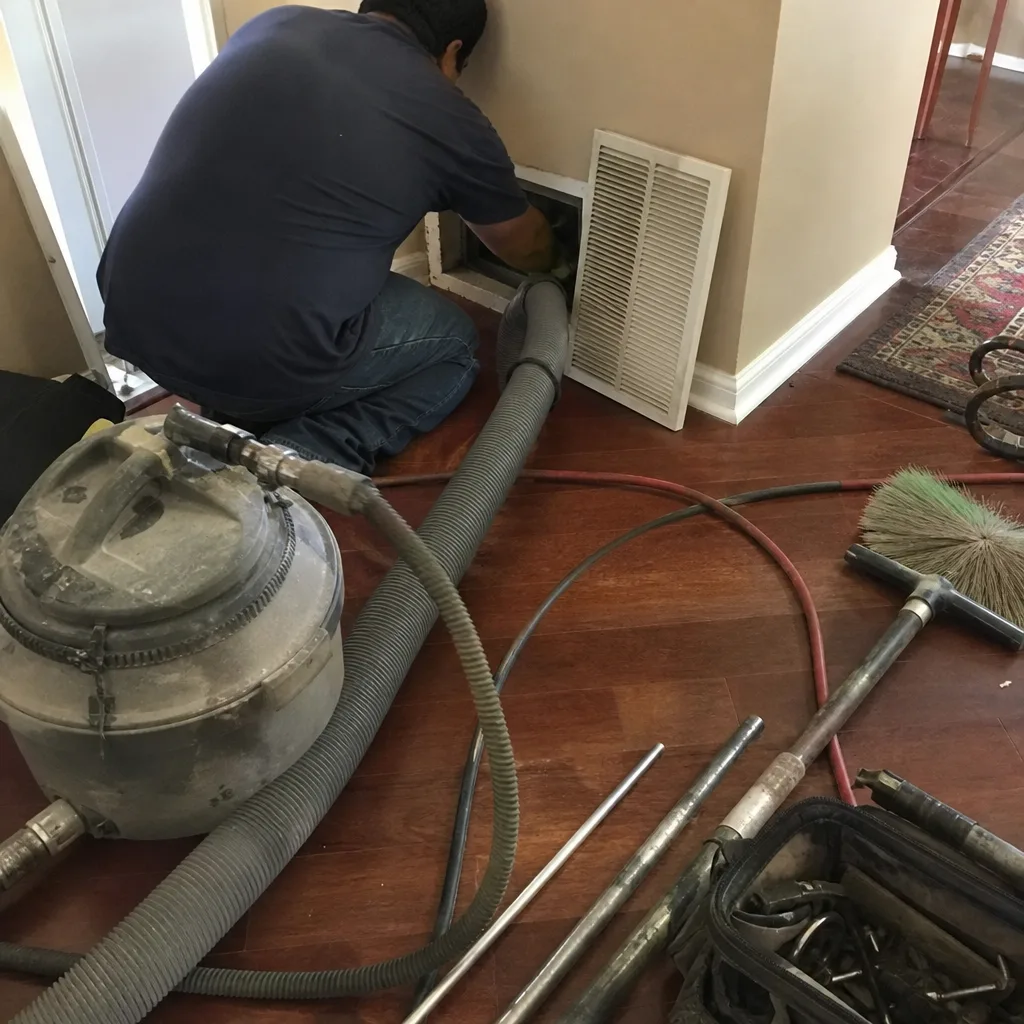
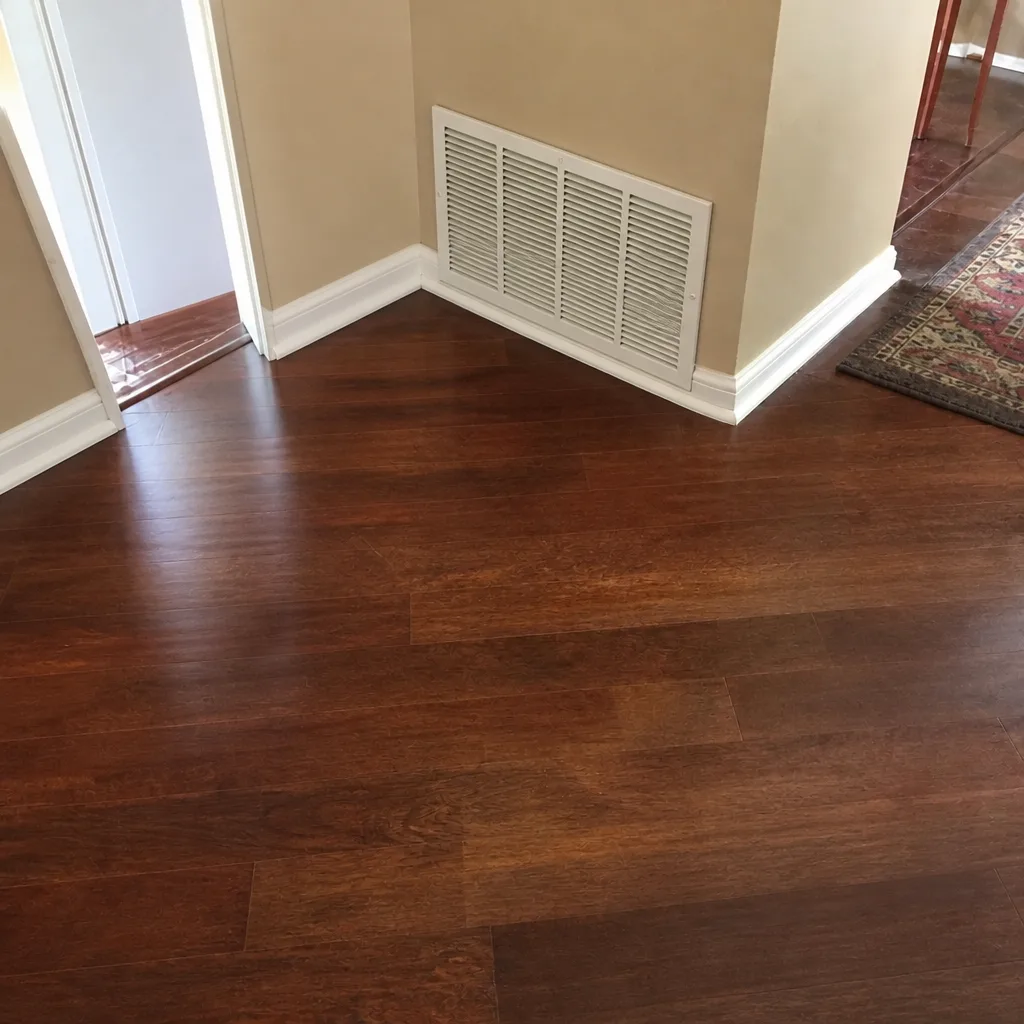
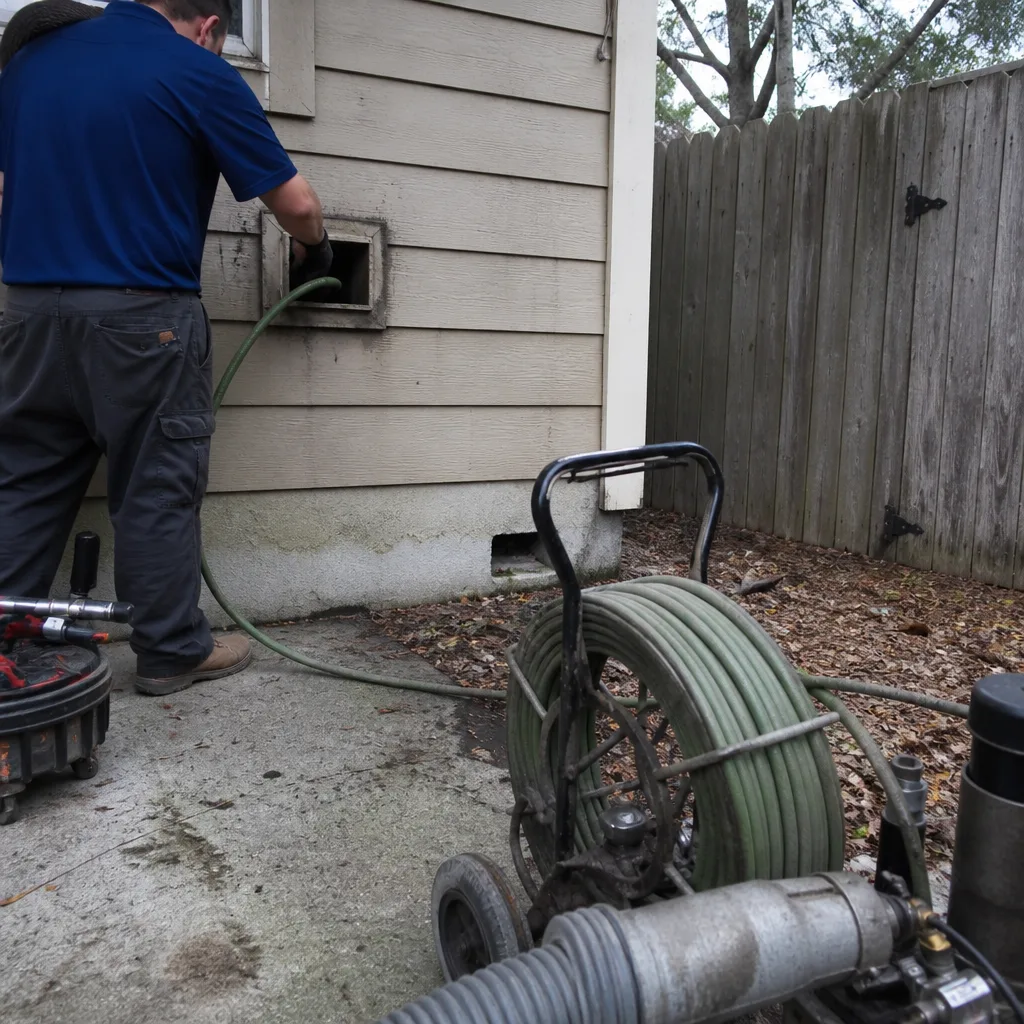
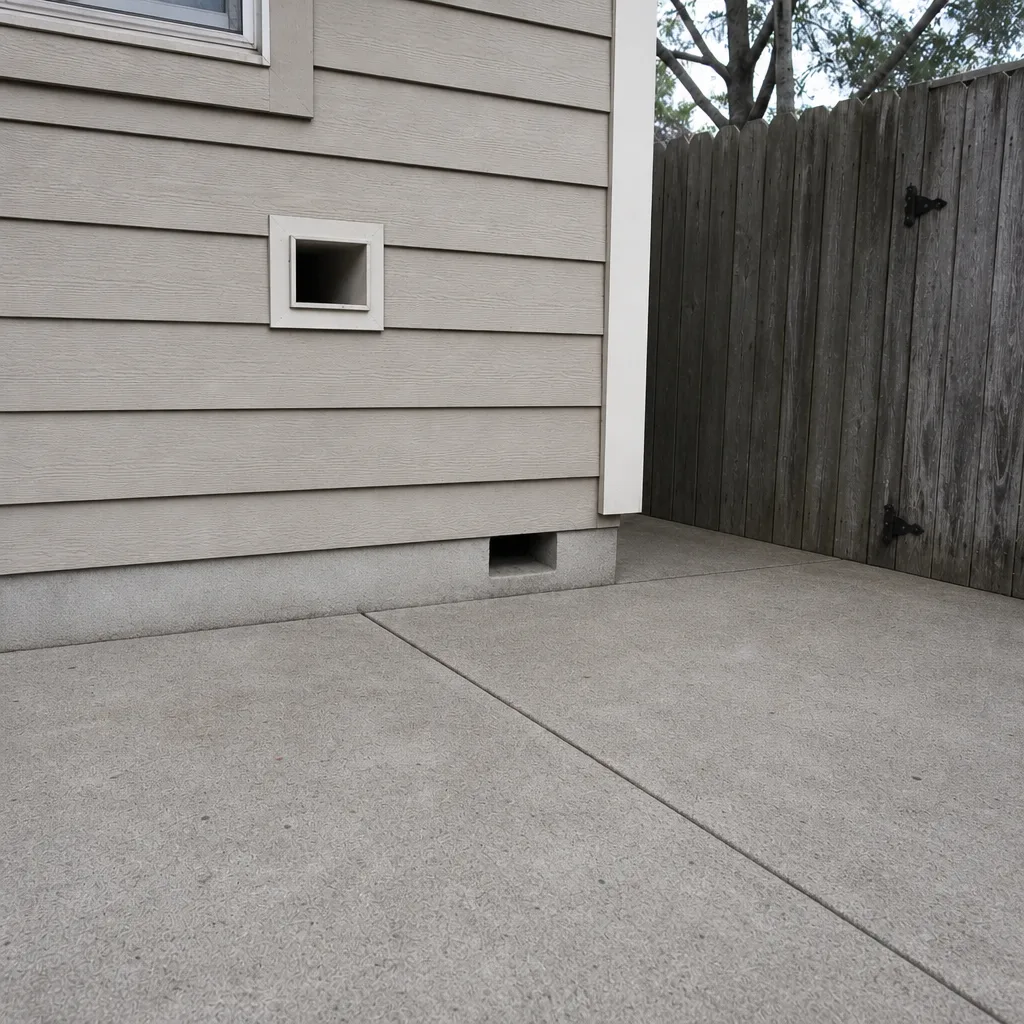
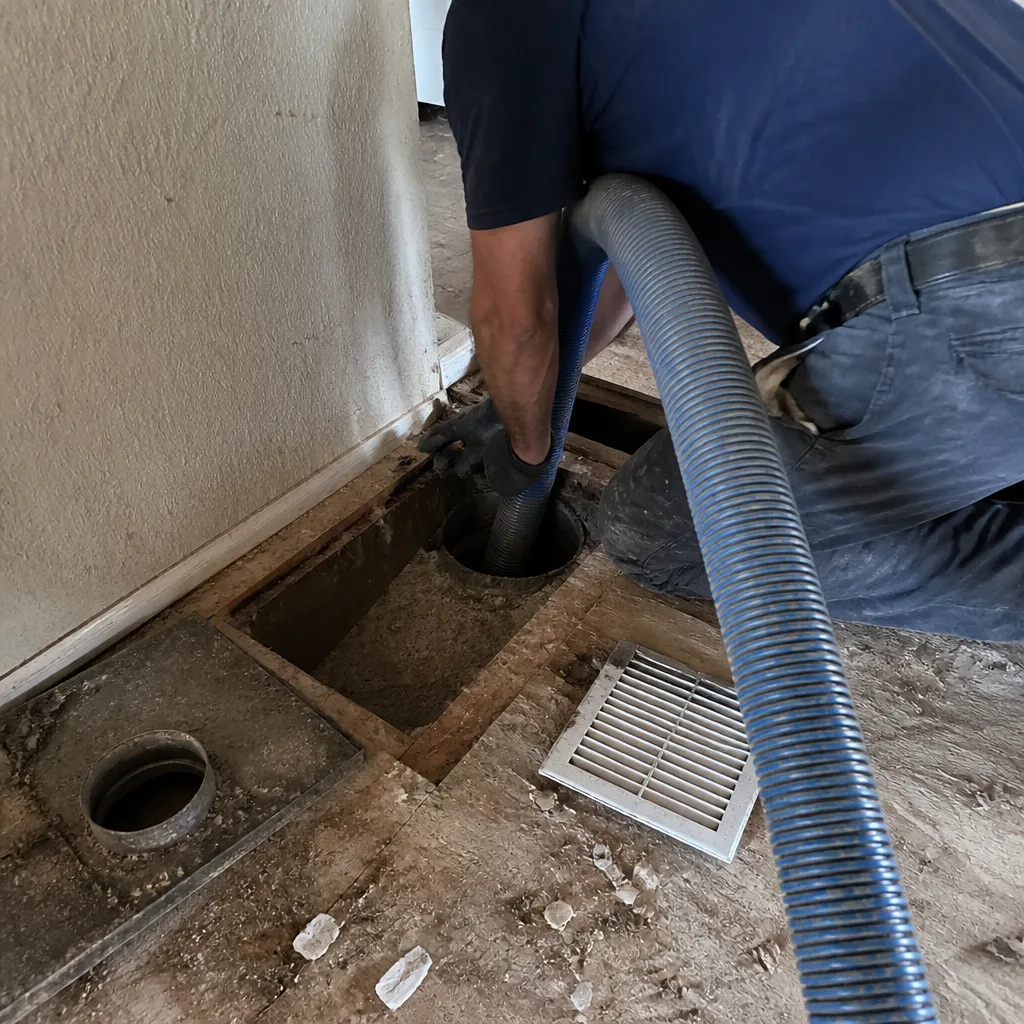
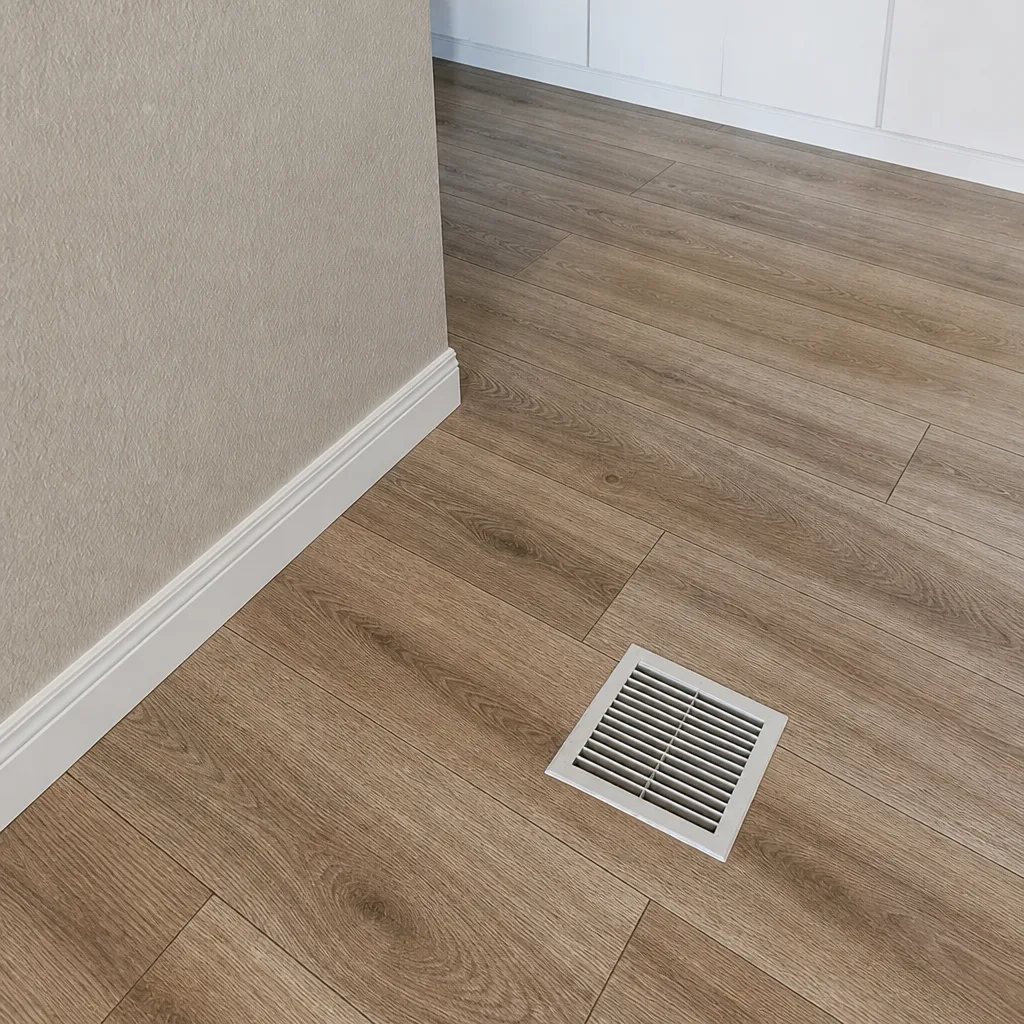
Whole-system duct and dryer vent check with before-and-after photos - you see exactly what came out of your vents
That "$99 whole-house special" is a bait ad - the real number appears once they are in your hallway, or the "clean" is a shop-vac at the register. We photograph the inside of your ducts before and after instead.
Air Duct Cleaning Permits, Codes & Inspections in League City, TX: What You Need to Know
Here’s the part most homeowners miss: cleaning a duct system is not the same job as changing one. Cleaning needs no permit. Cutting a new access panel, reconnecting a run of flex duct, sealing a joint with mastic, or spraying a coating inside the ducts can cross a line into regulated mechanical work, and that line is set in code, not by the technician standing in your hallway. A “free fix” thrown in during a cleaning visit can quietly turn into unpermitted work with no inspection to back it up. This guide walks through what Texas mechanical code actually says, where cleaning ends and modification begins, how League City and Galveston County oversight applies, and exactly what paperwork to ask for before anyone touches your ductwork.
Quick Answer
Air duct cleaning on its own doesn’t require a permit in Texas. What can require a permit is anything that alters the duct system itself: cutting new access openings, replacing or reconnecting duct sections, applying sealants, or installing antimicrobial coatings, since those fall under mechanical code and generally need a licensed HVAC contractor, a mechanical permit, and an inspection. Cleaning, brush-and-vacuum work, and removal of debris through existing access points stay outside that permit boundary. If a contractor does more than clean, ask to see the license, the permit, and the inspection sign-off.
Styles & brands we work with
- Whole-home duct cleaning
- Dryer vent cleaning
- Camera inspection
- Sanitizing & deodorizing
Table of Contents
- What Does Texas Mechanical Code Say About Ductwork?
- Where Does Cleaning End and Regulated Mechanical Work Begin?
- The Specific Tasks That Cross the Line
- How League City and Galveston County Oversight Works
- Antimicrobial Coatings and EPA Registration
- What to Ask to See From Any Contractor
- What a Duct Inspection Actually Checks
- Why a Duct Specialist Fits a Different Role
What Does Texas Mechanical Code Say About Ductwork?
Texas adopts a statewide mechanical code built on the International Mechanical Code, and local jurisdictions enforce it. That code treats duct systems as part of the mechanical system of the house, which is why anything that modifies the system is measured against it. Cleaning is maintenance. Modification is construction. The code cares about construction.
The practical effect is that ductwork isn’t a free-for-all. The code sets expectations around how ducts are sized, how they’re sealed, how they’re supported, and how air is distributed. When someone cuts a new hole in a trunk line, they’re changing the system the code describes. When someone reconnects a disconnected run of flex duct, they’re restoring a connection the code expects to be intact and sealed.
What the code doesn’t do is require a permit to vacuum debris out of an existing duct. There’s no section that says a homeowner needs approval to have dust and lint pulled out of a system that was already there. That distinction matters in League City, where a lot of homes have ductwork that’s been in place for years and simply needs cleaning, not rebuilding.
Here’s the part people tend to gloss over. The code doesn’t care who’s satisfied with the result. It cares whether the work was done to standard, by someone authorized to do it, with an inspection on the other end. If a technician who only cleans ducts decides mid-job to replace a crushed section of flex, the code question isn’t whether it looks better. The question is whether that modification was permitted and inspected. In our experience, most homeowners never think to ask until after the fact.
Where Does Cleaning End and Regulated Mechanical Work Begin?
The clean line is this: work that removes material from an existing duct system stays in the cleaning lane. Work that changes the physical duct system moves into the mechanical lane. Use the two lists below to sort a job before anyone starts.
Stays in the cleaning lane (no permit)
- Brush-and-vacuum cleaning of existing duct runs through existing registers and access points
- Removal of dust, lint, construction debris, and settled particulate from the interior of the system
- Cleaning of the blower compartment and accessible components without disconnecting or altering duct sections
- Inspection with a camera through existing openings
- Dryer vent cleaning (a separate system, and a fire-safety service in its own right)
Moves into the mechanical lane (permit and license territory)
- Cutting a new access panel where none existed
- Replacing or reconnecting a duct section, including a disconnected flex run
- Sealing duct joints with mastic or tape as a system modification
- Resizing, rerouting, or extending duct runs
- Applying any coating or antimicrobial product to the interior of the duct system
That’s the boundary. It’s cleaner on paper than it is in a crawlspace, which is exactly where we’ve seen the confusion happen. A technician finds a disconnected run, reconnects it as a courtesy, and nobody pulls a permit or calls for an inspection. The homeowner is relieved. Months later, if the connection fails or a home inspection flags it, the record shows nothing. In that moment, the duct repair was needed and the paperwork wasn’t done.
Some of this goes beyond the permit question. A crushed or disconnected duct is a real problem worth fixing, and that’s why air duct cleaning visits often turn up repair needs that the cleaning itself can’t resolve. The right move is to identify the issue, explain what’s involved, and let the homeowner decide whether to bring in a licensed mechanical contractor for the modification. Cleaning companies that understand the boundary make better decisions than the ones that don’t.
The Specific Tasks That Cross the Line
Here’s the point in the service visit where a job can quietly change character. Four tasks come up most often, and each one pushes a cleaning call into mechanical work.
- Cutting a new access panel. A technician who finds a hidden duct section with no way to reach it may want to cut an opening. That opening is a modification to the duct envelope and typically needs a permit and a licensed mechanical contractor. It’s also the task most likely to be described as “no big deal” when it isn’t.
- Sealing duct joints. Re-sealing a joint that’s come apart changes the system’s air-sealing characteristics. It’s a mechanical act with a code standard attached to it, not a cleanup step.
- Replacing flex duct. A crushed, torn, or disconnected flex run gets swapped out or reconnected. That’s duct replacement, full stop, and it belongs with a licensed HVAC contractor and a permit.
- Applying sealants or coatings. Any product sprayed or brushed into the duct interior moves into a separate regulatory lane entirely, which is where the EPA question comes in below.
None of this means duct repair shouldn’t happen. It means the repair should happen correctly, with the license and the paperwork in place. The honesty test for any contractor is simple: when they find one of these tasks, do they name it and explain the boundary, or do they just do it? A company that can spot the problem and route it correctly is more useful to you than one that “handles everything.”
Our own scope is deliberately narrow: duct cleaning in League City, dryer vent cleaning, and duct repair. When a repair calls for a permit-level modification, the right answer is a licensed mechanical contractor, not a cleaner who’s willing to wing it. Knowing where we stop is part of doing the job properly, and it’s something we’re glad to explain on a call.
How League City and Galveston County Oversight Works
Permits for mechanical work in and around League City are issued and inspected through the local building department, with Galveston County providing the broader jurisdiction for unincorporated areas. That matters because “League City” isn’t one uniform permitting authority. A home inside the city limits may fall under the city’s permitting department, while a property in an unincorporated part of the county may go through Galveston County. The permit path depends on where the house actually sits.
For homeowners, the practical steps look like this:
- Confirm the address’s jurisdiction before any modification work starts, so the permit goes to the right office.
- Ask the contractor which jurisdiction they’re pulling the permit in, and get it in writing.
- Confirm the permit is issued before the work begins, not after.
- Ask who will schedule the inspection and when it will happen.
- Keep the inspection sign-off with your home records, since it’s the proof the work was done to code.
Duct cleaning on its own doesn’t trigger any of this. What does trigger it is the modification work described above, and the reason it matters in League City is that homes here range from recent builds to older construction, and duct systems in both can hide disconnected runs, crushed flex, or debris left over from a renovation. When a technician finds one of those problems, the homeowner now has a decision to make: repair it properly under permit, or leave it and document it. What they shouldn’t do is accept a quiet, unpermitted fix.
A word on scope. City and county permit rules do change, and the specifics vary by jurisdiction and by the project. The best source for a current requirement is always the building department that has jurisdiction over the address. If you’re unsure which one that is, your contractor should know, and if they don’t, that tells you something.
Antimicrobial Coatings and EPA Registration
Here’s a corner of this topic most homeowners never hear about. If a company offers to spray an antimicrobial coating inside your ductwork, that product is treated differently than the cleaning service itself. Products marketed as antimicrobial or mold-inhibiting typically carry an EPA registration, and how they can legally be applied in HVAC systems is governed by the label on the product, not by the contractor’s sales pitch.
What that means for a homeowner:
- Ask to see the product’s EPA registration number and its label instructions for HVAC use.
- Ask whether the application is limited to the product’s labeled surfaces and conditions.
- Be cautious of any coating sold as a cure-all for mold or indoor air quality complaints, since a coating doesn’t remove the underlying moisture or debris problem.
- Treat any interior coating application as a mechanical modification that deserves the same permit and license questions as duct replacement.
In our experience, the real work is removal. Moisture problems, mold, and heavy debris respond to containment-grade cleaning and a fix to the source of the moisture, not to a spray. That’s why our kits include Abatement Technologies containment equipment: it lets us handle contaminated duct environments with the right controls in place instead of pretending a light cleaning solves a heavy problem. If a coating is genuinely appropriate for your system, a licensed mechanical contractor and a properly labeled product are the right combination. A cleaning company shouldn’t be the one deciding that for you.
What to Ask to See From Any Contractor
Before anyone performs work beyond cleaning in your League City home, the paperwork should be easy to produce. If it isn’t, that’s the answer. Here’s the checklist, and every item on it is reasonable to ask for in advance.
- License number. A contractor performing mechanical modification work should hold a current Texas HVAC license and give you the number without hesitation. Write it down.
- Permit confirmation. A copy or a permit number from the issuing jurisdiction, dated before work begins.
- Inspection sign-off. The record showing the work passed inspection, which is your long-term proof the modification was done to code.
- Insurance. Proof the contractor carries liability insurance, in writing, before work starts.
- Scope in writing. A written description of what will be done, including whether the work is cleaning or modification, since that’s the line that determines the paperwork.
- The product label. For any coating or sealant, the EPA registration and the labeled HVAC application instructions.
The fastest way to sort a contractor is to ask what the permit is for. A legitimate mechanical contractor can answer in one sentence. A cleaning company that’s about to cut a hole in your trunk line will usually change the subject. In our experience, homeowners rarely regret asking this question, and the ones who skip it often wish they hadn’t. On our side of the line, the cleaning and dryer vent work we do doesn’t carry a permit, but it does carry a written scope and an explanation of what we found. That’s the standard any contractor should meet, whatever lane they’re working in.
What a Duct Inspection Actually Checks
An inspection is a look at whether the work matches the code, not a general health assessment of your ducts. It’s a narrow, technical review, and knowing what the inspector looks for helps you understand what “done correctly” means.
- Duct integrity. Whether sections are connected, sealed, and supported as the code expects.
- Access. Whether openings are placed and sized properly, and whether they’re accessible for future service.
- Sealing. Whether joints treated as part of the modification are sealed to the standard the code sets.
- Compatibility. Whether any new section matches the existing system’s size and configuration closely enough to keep airflow consistent.
The inspection is separate from the cleaning visit, and the two shouldn’t be conflated. Nobody inspects a duct for dust. An inspector looks at a modification and decides whether it meets code. That distinction is worth keeping in mind when a company wraps its cleaning and its “repair” into one visit and describes both the same way. The cleaning side doesn’t get inspected because it isn’t regulated. The repair side does, because it is.
What a good cleaning company can do is document what it sees. Camera footage and before-and-after photos of your own ducts are useful records, and they become evidence if you ever need to prove the state of the system. That’s one reason we take before-and-after images on every job: they show what was there and what changed, which matters if a repair question comes up later.
Why a Duct Specialist Fits a Different Role
There’s a reason duct and vent specialists exist separately from general HVAC companies. Cleaning is a specific skill with specific equipment, and the tools matter more than most homeowners realize. A shop vac and a consumer-grade unit don’t remove the kind of settled debris and lint that builds up in ducts over time. That’s why we work with Rotobrush mechanical brush-and-vacuum systems, which agitate the duct surface to break loose what suction alone won’t lift, and Nikro HEPA-rated equipment, which captures fine particles at the source rather than pushing them back into the living space. It’s the same class of equipment restoration contractors use, and that’s the point.
Specialists also recognize the systems they’re working around. Homes in League City often have premium filtration components, whether Honeywell or Aprilaire equipment or something else installed by a previous owner, and cleaning around those components without bypassing or damaging them takes familiarity. Nobody should learn on the job at your expense. Our technicians have up to experience, and knowing how to work with installed filtration gear is part of what that experience covers.
And then there’s dryer vent cleaning, which too often gets tacked onto a service list as an upsell. It’s a fire-safety service. Lint accumulation in the exhaust venting path is the leading cause of dryer fires, and it deserves its own visit, its own equipment, and its own seriousness. A dryer vent cleaning done right is a different job from a quick pass with a brush, and treating it that way reflects what the risk actually is.
Cleaning and repair aren’t the same service, and one company can reasonably do both without pretending the permit rules don’t apply. We clean ducts, we repair damaged ones, and we say clearly when a fix needs a licensed mechanical contractor. Being useful to a homeowner in League City means knowing which is which.
Common Mistakes to Avoid
- Accepting a “free repair” during a cleaning visit. A disconnected duct reconnected on the spot without a permit or a license is unpermitted mechanical work, and the homeowner is the one left holding it. Ask who’s doing the repair and what the permit status is before agreeing.
- Assuming cleaning always needs a permit. It doesn’t. Overpaying for a permit that isn’t required is a mistake too, and it usually happens when a company bundles cleaning and modification into one bill without explaining the difference.
- Never asking for the license number. In Texas, mechanical modification work belongs to a licensed HVAC contractor. If a company can’t produce a license number for modification work, that work shouldn’t be happening in your home.
- Letting a coating decide your air quality. An antimicrobial spray isn’t a substitute for removing mold or debris, and every product has an EPA label that governs how it can be used. Ask for the label before the spray.
- Not verifying the jurisdiction. A home inside League City and one in unincorporated Galveston County may go through different permitting offices. Getting that wrong can mean a permit filed in the wrong place.
- Skipping the inspection sign-off. The inspection record is the proof the work passed. Without it, you have a contractor’s word and nothing in writing.
- Hiring on price alone. A low-cost “blowout special” often means a shop vac and a short visit. What you want is a written scope of the cleaning, a written explanation of any repairs found, and honest documentation afterward, including photos.
See the difference
 Before
 After
 Before
 After
 Before
 After
When to Call a Professional
Some duct problems are worth a call to a duct specialist, and others need a licensed mechanical contractor. If you’re seeing visible dust blowing from registers, noticing more dust in the house than usual, or coming off a renovation with construction debris in the system, a professional cleaning is the starting point. If a technician finds a disconnected or crushed duct, that’s a repair question to be handled with the right license and paperwork. If you’re not sure whether your dryer vent is clear or you’ve noticed your dryer taking longer to dry a load, that’s a fire-safety concern worth addressing directly.
Duct Cleaning League City offers free estimates in League City. We’ll look at the system, explain what we find, and tell you plainly whether the work is cleaning, repair, or something that needs a licensed mechanical contractor and a permit. Call (866) 942-5170. We answer 24/7. Fast dispatch from 7am to 7pm, Sunday through Friday.
Frequently Asked Questions
No. Air duct cleaning itself doesn’t require a permit in Texas, because cleaning removes material from an existing system rather than modifying it. What needs a permit is mechanical modification work: cutting access panels, replacing or reconnecting duct sections, or sealing joints as a system change. Call (866) 942-5170 for an exact quote on cleaning, and estimates are free.
Work that alters the duct system requires a permit under Texas mechanical code. That includes cutting new access panels, replacing flex duct runs, reconnecting disconnected sections, resizing or rerouting runs, and applying interior coatings. Permit requirements are enforced by the local building department, so confirm the current rule for your address. Call (866) 942-5170 for an exact quote on cleaning, and estimates are free.
We price per system by written estimate, not per vent, which is the biggest difference between us and a “blowout special.” A per-vent teaser price is exactly the setup that turns into a much larger invoice once a technician is in the house. The written estimate sets the final price, and the estimate itself is free. Call (866) 942-5170 for an exact quote.
Usually because the equipment is a shop vac and the visit is short, which leaves settled debris in the ducts and doesn’t touch what’s stuck to the duct surface. Mechanical brush-and-vacuum equipment like Rotobrush and HEPA-rated Nikro vacuums cost more to run and take more time, and they remove what suction alone can’t. Call (866) 942-5170 for an exact quote, and estimates are free.
Ask for before-and-after photos of your own ducts. We take them on every job, because a picture of what came out of your system is a better record than a receipt. If a company can’t show you the inside of your own ducts, that’s worth noting. Call (866) 942-5170 for an exact quote, and estimates are free.
Yes. Products marketed as antimicrobial or mold-inhibiting typically carry an EPA registration, and the label determines where and how the product can legally be applied in HVAC systems. A coating doesn’t replace removing the debris or fixing the moisture problem underneath. Call (866) 942-5170 for an exact quote on cleaning, and estimates are free.
There’s no universal schedule that fits every home. Renovation work, pets, and visible dust at the registers are better triggers than a calendar, and a system that was recently cleaned properly shouldn’t need it again quickly. If you’re unsure, a professional inspection will tell you more than a rule of thumb. Call (866) 942-5170 for an exact quote, and estimates are free.
It depends on what the repair involves and who’s doing it. Replacing or reconnecting duct sections is mechanical modification work, which belongs with a licensed HVAC contractor and a permit. Cleaning companies should be clear about that boundary rather than absorbing repair work into a cleaning bill. Call (866) 942-5170 for an exact quote, and estimates are free.
The Bottom Line
Cleaning your ducts doesn’t require a permit, but changing them can. Texas mechanical code, built on the International Mechanical Code, treats duct modifications as regulated work: access panels, replacements, reconnections, and coatings all sit on the mechanical side of the line. League City and Galveston County each handle permits through their own building departments, and the inspection sign-off is the proof that modification work passed. Cleaning stays with specialists who use the right equipment and document what they find. Modification stays with licensed contractors who pull permits. Keep those lanes separate, ask for the paperwork, and you’ll avoid the quiet problems that show up months later.
If you’re not sure which side of the line your ducts are on, call Duct Cleaning League City at (866) 942-5170 for a free estimate. We answer 24/7. Fast dispatch from 7am to 7pm, Sunday through Friday. We’ll look at the system, explain what we see, and tell you honestly whether it needs cleaning, repair, or a licensed mechanical contractor with a permit.
Written by the team at Duct Cleaning League City.