
Last updated November 15, 2026
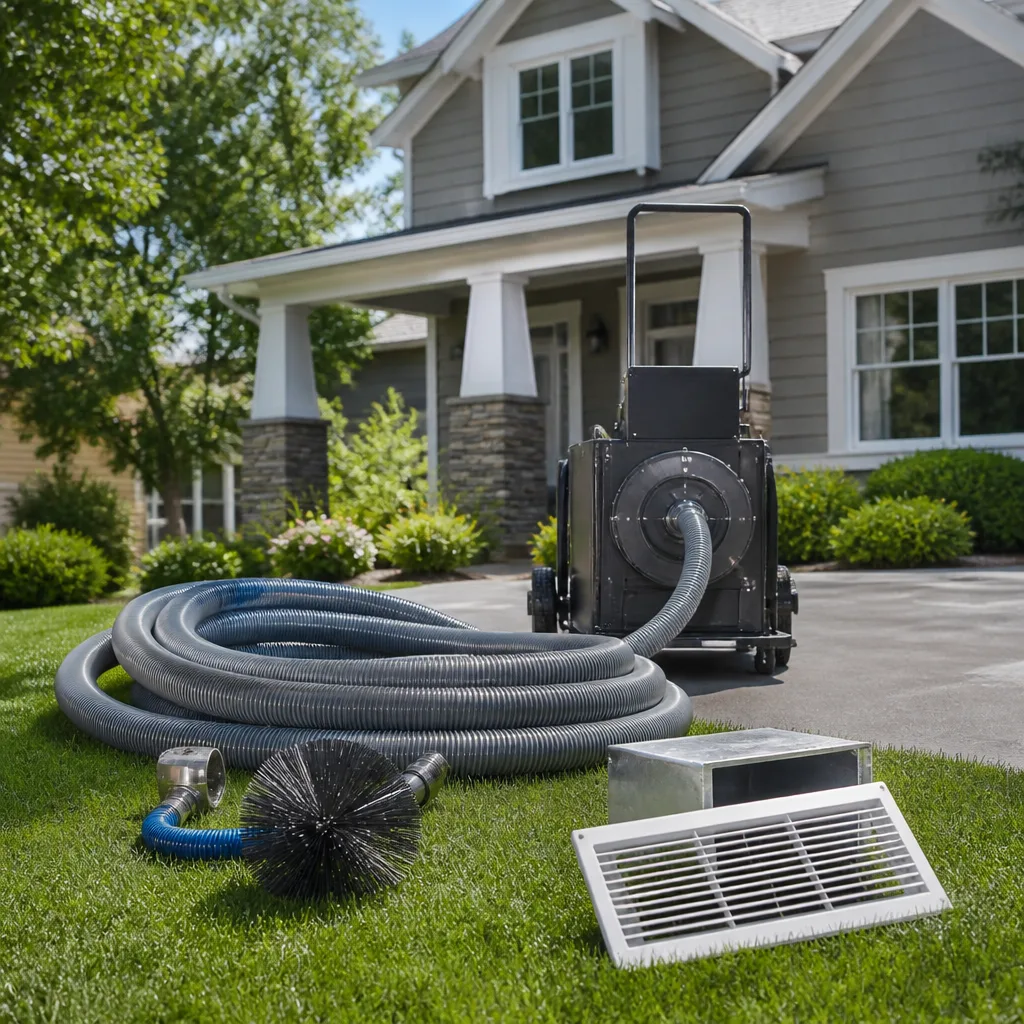 Whole-home duct cleaning
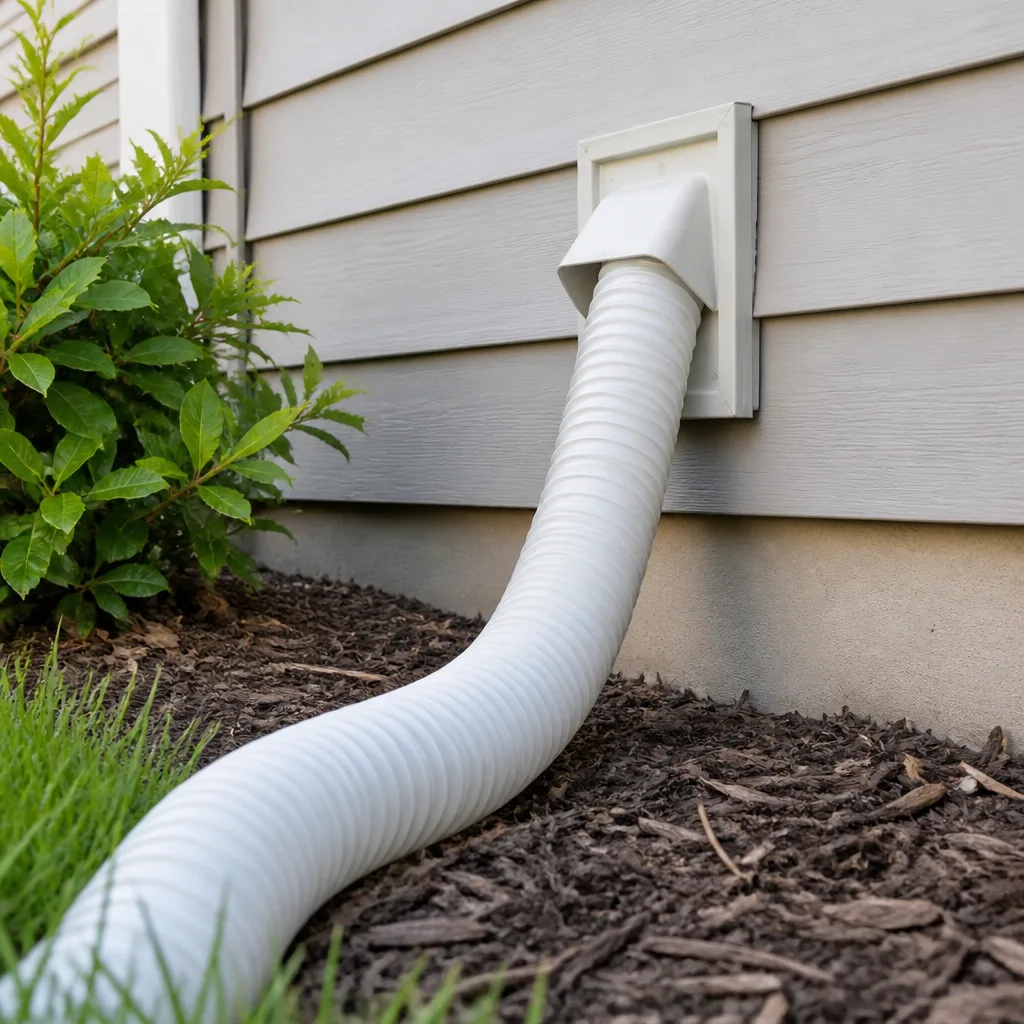 Dryer vent cleaning
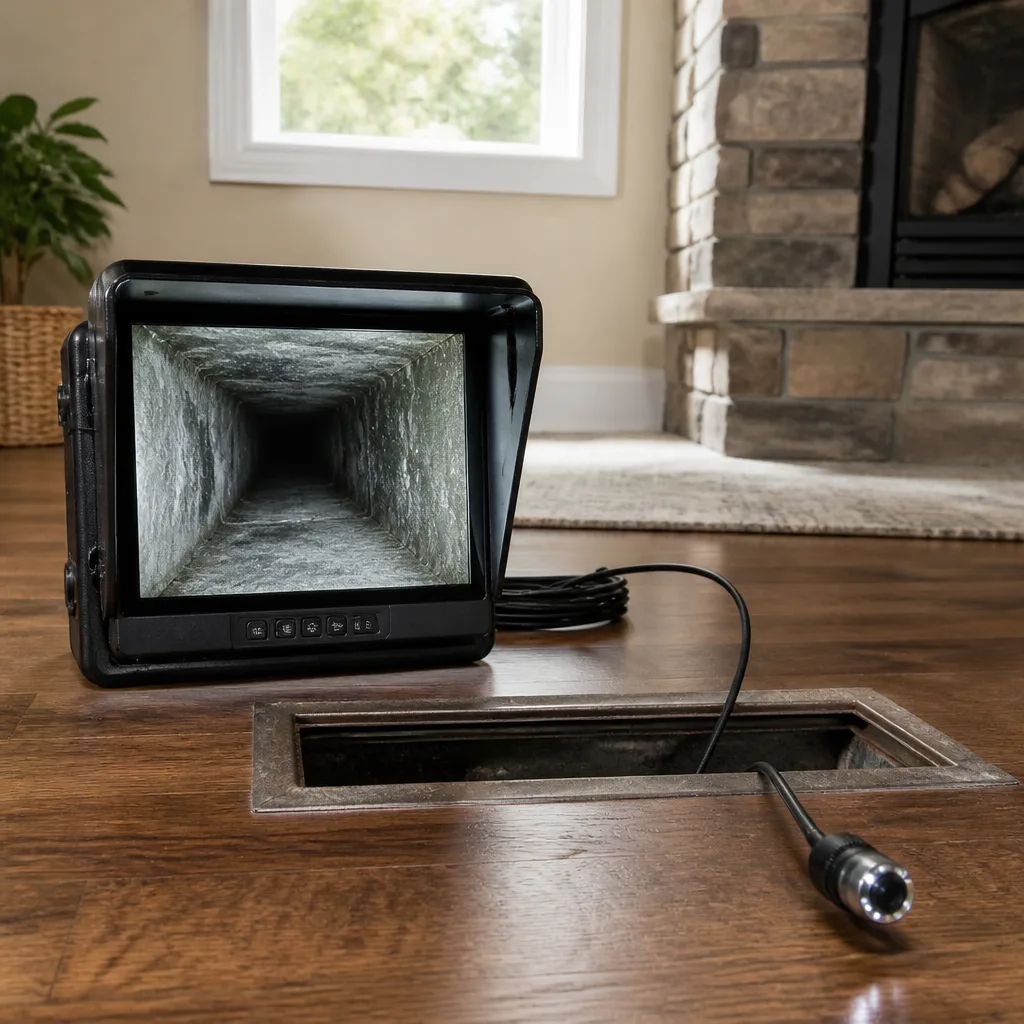 Camera inspection
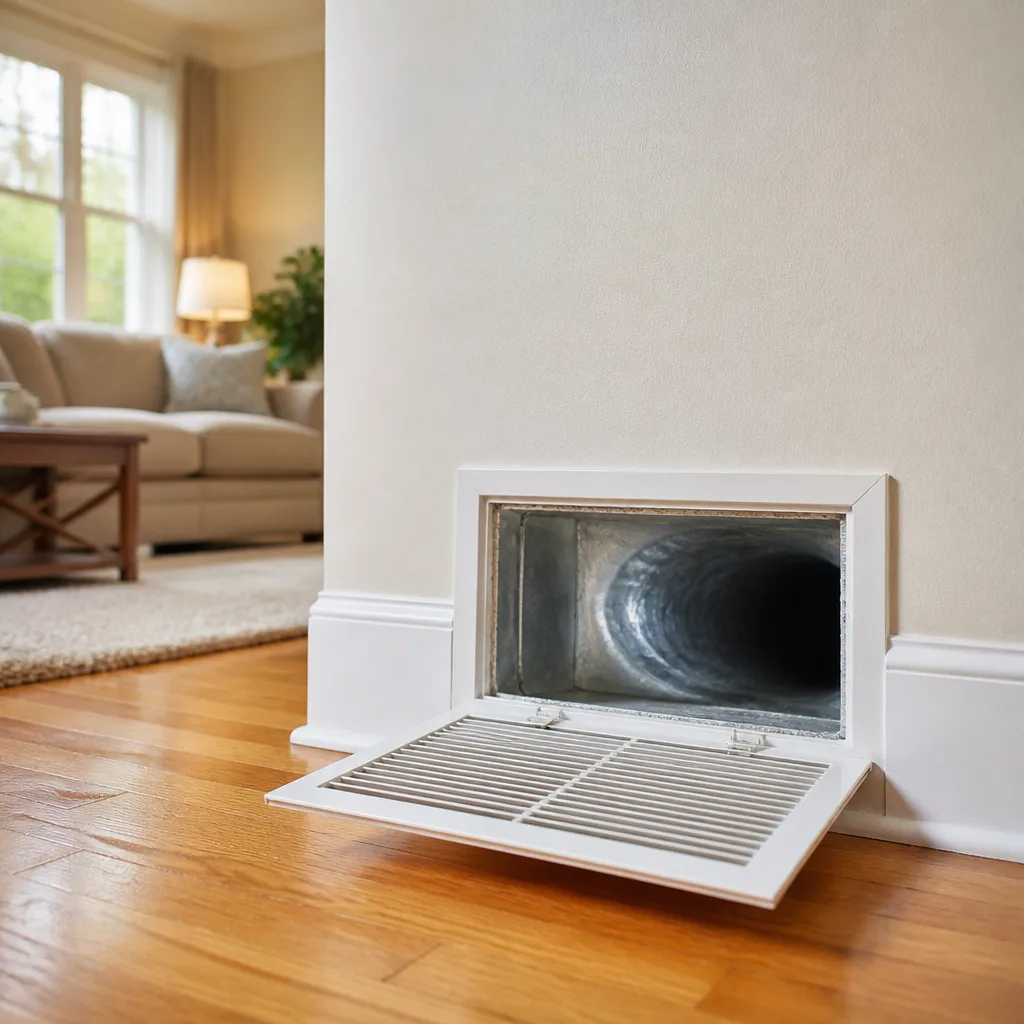 Sanitizing & deodorizing
Whole-system duct and dryer vent check with before-and-after photos - you see exactly what came out of your vents
That "$99 whole-house special" is a bait ad - the real number appears once they are in your hallway, or the "clean" is a shop-vac at the register. We photograph the inside of your ducts before and after instead.
Air Duct Cleaning Emergency Preparedness Guide for League City Homes
Most homeowners treat duct cleaning as a maintenance item, something to get around to when the filter looks bad. That framing breaks down the moment a tropical storm pushes water into a home, a hurricane knocks the power out for days, or a renovation fills the return plenum with drywall dust. In those situations the duct system stops being a background system and becomes the place where contamination settles and spreads. What surprises people is how fast that happens. Water sitting near a floor-level duct boot doesn’t give you weeks to decide. This guide is written for League City homeowners who want to know exactly what to do in the first 72 hours after an event, how to document damage so an adjuster doesn’t exclude it, and how to prepare before the next storm rather than after it.
Quick Answer
After flooding, storm moisture intrusion, or a long power outage, the first step is to shut down the air handler if water reached any duct boot, register, or the equipment itself, and keep it off until a professional inspects the system. Photograph everything with timestamps before you touch anything, because that documentation is what insurance adjusts. Microbial growth inside a wet duct system can begin within 48 to 72 hours, so the inspection and drying timeline matters more than almost any other decision you’ll make that week. If water stayed well below the boots and the system stayed dry, you may run the fan while you wait for an appointment, but you still want an inspection booked.
Styles & brands we work with
- Whole-home duct cleaning
- Dryer vent cleaning
- Camera inspection
- Sanitizing & deodorizing
Table of Contents
- The Post-Flood Duct Inspection Protocol
- Documenting Duct Condition for Your Insurance Claim
- The 72-Hour Microbial Growth Window
- What Extended Power Outages Do to Ducts in League City Humidity
- Post-Renovation and Mold Events: When Containment Matters
- Dryer Vents as a Fire-Safety Priority
- How to Pre-Position for Faster Emergency Response
- What Not to Do After a Duct Contamination Event
The Post-Flood Duct Inspection Protocol
The single most important decision after a flood event is whether to run your HVAC system or shut it down. That decision hinges on how high the water got relative to your duct boots and equipment, not on how the house looks. In slab-on-grade homes around League City, floor registers sit close to the slab, which means even a modest water level inside the house can reach the duct openings.
Work through these conditions in order. If any one of them applies, shut the system down:
- Water reached or covered any floor register or boot. Shut off the air handler at the thermostat and at the breaker. Water in a boot can wick into the duct lining and the subfloor around it.
- Water reached the air handler, furnace, or air handler platform. Shut down at the breaker. Do not open panels and do not run the fan to “dry things out.”
- You can see standing water, mud, or silt inside any register. Shut down and keep the registers closed until a technician inspects.
- Water stayed below every boot and the equipment stayed dry. You can keep the fan running on low to help interior humidity, and book an inspection for the first available appointment.
A proper inspection looks at more than the surface of the ducts. A technician will check boot penetrations, the return plenum, the closet where the air handler sits, and any flex duct runs that may have sagged into water. That’s the same scope whether the home is in a low-lying section near Clear Creek or on higher ground toward the west side of League City.
If the inspection finds water intrusion, the next step is a wet-vacuum and containment extraction, not a routine cleaning. This is where the tools matter. A shop vac with a long hose isn’t going to remove contaminated water or dry a wet duct lining. Professional-grade equipment – the same tools restoration contractors use, including air duct cleaning systems like Rotobrush and Nikro HEPA-rated vacuums – is what makes a wet-duct response actually work.
Documenting Duct Condition for Your Insurance Claim
Adjusters routinely deny or reduce duct-related claims when the homeowner can’t prove the damage happened during the covered event. That’s not because they’re trying to avoid paying; it’s because without dated evidence, they can’t tell flood damage from a duct system that was already dirty before the storm. The fix is straightforward: document fast, document thoroughly, and document before anything gets cleaned or moved.
Here’s the sequence we recommend homeowners follow immediately after an event:
- Photograph every register in the home. Wide shot of the room, close-up of the register, and a shot of the water line on the wall or floor showing its height relative to the register. Turn on the timestamp feature on your phone camera, or use a timestamp app.
- Photograph the air handler and equipment closet. Include the platform, the bottom of the unit, and any visible moisture or rust.
- Photograph any duct insulation or flex duct visible through open ceilings, attic hatches, or access panels. Note the date and time verbally in a video if that’s easier than text.
- Take a short video walkthrough. Narrate what you’re seeing. A two-minute walkthrough that shows the whole house in sequence is worth more than twenty unlabeled photos.
- Write down the timeline. When the water rose, when it receded, when power went out, when it came back. Keep this in a note on your phone and send it to yourself by email so it’s timestamped.
- Do not clean, sanitize, or run the system before you document. Cleaning before photos is the fastest way to have a duct claim reduced or excluded.
What adjusters look for is consistency: does the water line in the photos match the reported flood height, do the registers appear wet in the same way across the house, and does the timeline make sense? What they try to exclude is anything they can argue was pre-existing. A dated photo of a clean register the year before, kept in your records, makes that argument much harder for them.
The 72-Hour Microbial Growth Window
In warm, humid conditions like those in League City, a wet duct system is a microbial growth incubator. Growth can begin within 48 to 72 hours of moisture intrusion, and once it establishes inside a duct lining or the porous interior of a flex duct, surface cleaning won’t remove it. The practical takeaway is that the first 72 hours decide whether you’re dealing with a drying and cleaning job or a duct replacement job.
What you can do in the interim, before a professional crew arrives:
- Keep the air handler off if water reached the boots or equipment.
- Run a dehumidifier in the rooms with wet registers, and empty it frequently.
- Open interior doors to promote cross-ventilation but keep exterior doors and windows closed if outdoor humidity is high.
- Move rugs, furniture, and stored items away from wet registers so air can move.
- Keep a written timestamp of when the moisture was first observed and when drying equipment was started.
What not to do, no matter how tempting:
- Don’t spray bleach, disinfectant, or “mold fogger” products into ducts. They don’t reach contaminated surfaces, they can corrode metal components, and they can make a professional assessment harder.
- Don’t run the fan thinking airflow will “dry the ducts out.” It spreads moisture and spores through the house.
- Don’t cover registers with tape or plastic and leave it for weeks. That traps moisture against the boot and can rot the subfloor around the penetration.
- Don’t hire a general handyman to open the ducts “to see what’s inside.” Unsealed openings during a contamination event let spores into the living space.
When a crew does arrive, the right tool for a potentially contaminated system is containment-grade equipment. That’s why we run Duct Cleaning League City work with Abatement Technologies containment gear in the kit alongside the brush-and-vacuum system. It signals readiness for a contaminated environment, not just light dust removal, and it’s the difference between cleaning ducts and properly responding to a contamination event.
What Extended Power Outages Do to Ducts in League City Humidity
A long summer power outage in this climate isn’t just uncomfortable, it’s a moisture event inside your HVAC system. When the air handler stops running, the coil stops dehumidifying. Condensate that was draining normally backs up, the coil stays wet, and the cabinet and plenum around it stay wet too. Add an indoor humidity level climbing toward the outdoor level and you’ve created a wet environment inside a ducted system that was dry that morning.
What happens during an outage, in order:
- The air handler stops, so the coil loses airflow and stops draining condensate properly.
- Standing moisture on the coil and in the drain pan begins to evaporate into the return plenum and closet.
- If the outage runs more than a day, the coil and cabinet interior can develop microbial growth.
- When power comes back, the system may push that growth and odor through the house on the first few cycles.
After power is restored, run the system and pay attention to two things: odor on the first cycle and water in the drain pan. If the drain pan has standing water, or if the first ten minutes of running the system carry a musty smell, shut the system off and book an inspection. That’s not a problem to “run through.” It’s a signal of moisture in the coil, cabinet, or ductwork, and it’s the kind of thing we see in League City homes after every major summer outage.
If a system was properly maintained and the outage was short, there’s usually no lasting issue. The variable is duration. A three-hour outage and a three-day outage are two very different events for your duct system’s moisture load.
Post-Renovation and Mold Events: When Containment Matters
Not every duct contamination event starts with weather. Drywall dust, sawdust, insulation fibers, and construction debris from a renovation can migrate through return air and coat the entire duct system in a matter of days. Remodeling a kitchen or adding a room in a League City home often involves cutting into ductwork, moving registers, and running a saw inside the same footprint as the return grille. That dust doesn’t stop at the register.
Separately, homes that have had a known mold problem elsewhere (bathroom, closet, attic) often have spores in the duct system that surface testing alone won’t find. When we see a home with a documented mold event, the approach changes from routine cleaning to containment-grade work, because the goal is capturing contamination at the source rather than redistributing it.
What that containment work looks like:
- Sealing off the immediate work area so dust and spores don’t move into the rest of the house.
- Using HEPA-rated vacuum systems (we run Nikro equipment) to capture fine particulates at the point of removal rather than blowing them downstream.
- Mechanical agitation with a Rotobrush brush-and-vacuum system to dislodge debris that suction alone can’t remove from duct walls.
- Inspecting for and repairing any disconnected or damaged duct sections found during the cleaning. We clean and repair ducts in the same visit because a gap in the system defeats the cleaning downstream. This capability matters because most duct cleaning companies hand off repair to a different trade.
If your home has Honeywell or Aprilaire filtration equipment, that’s a separate consideration. We work around high-performance filtration components without bypassing or damaging them, because a service that mishandles a whole-home air cleaner to “get to the ducts” trades one problem for another.
Dryer Vents as a Fire-Safety Priority
Dryer vent cleaning is a fire-safety service, not a performance upgrade. Accumulated lint in the exhaust venting is the leading cause of dryer fires, and after a storm event or a long period of heavy use, vent lint plus heat plus restricted airflow becomes a hazard that has nothing to do with how clean your air ducts are. We treat it separately for that reason.
Emergency preparedness means this should be on your pre-storm checklist whether or not your ducts need attention. Lint buildup in the vent path restricts airflow, which raises dryer temperatures and shortens dry times. If a dryer is taking two cycles to dry a load, or the exterior vent flap doesn’t open freely, the vent path is restricted.
What to check:
- The vent flap outside the house should open freely when the dryer runs.
- Dryer loads should be dry in one cycle, not two.
- The dryer cabinet shouldn’t feel unusually hot near the top.
- Lint shouldn’t be visible around the transition duct behind the dryer.
For scheduled dryer vent cleaning, we recommend treating it as an annual item if the vent path is long or the dryer runs daily. That’s a routine appointment, not an emergency one, and it’s often the highest-value service on the list because the downside of skipping it is a fire rather than a dusty house.
How to Pre-Position for Faster Emergency Response
The homes that recover fastest after a storm or flood event aren’t the ones that got lucky, they’re the ones that were ready. Preparation here is unglamorous, but it does three things: it shaves days off the response time, it protects your insurance claim, and it removes the panic decision of “who do I call at 2 a.m. when there’s water in the registers.”
Build these into your household records now, before the next event:
- Photograph your duct system while it’s clean. Every register, the air handler, any accessible flex duct. Save the photos with dated file names. This is your baseline for a future claim.
- Note every register location and access panel. Make a simple floor plan with register locations marked and photograph any ceiling or closet access panels. If you’re not home when a technician arrives, the information still helps.
- Record the make and model of your air handler, filter, and any Honeywell or Aprilaire components. When a crew knows what equipment they’re walking into, they arrive with the right tools and don’t need a second visit.
- Establish a relationship with a duct specialist before the event. A pre-existing relationship means your call goes to someone who already knows your system, not to whoever answers an emergency hotline during a regional flood when every company in the county is booked. We’re based in the region and we know how many homes in League City are affected by the same storm at the same time. The call that comes in before the storm is the call that gets on the schedule.
- Keep a water-level reference. A small mark or a note on the wall in the air handler closet tells you how high water got the next time.
If you’re in League City and want to understand what a pre-event inspection covers, look at our League City service overview. The inspection checklist is the same one we use after an event, so it’s the same document that later supports a claim.
What Not to Do After a Duct Contamination Event
The instinct to “get things cleaned up quickly” is exactly what causes most of the preventable problems after a flood or a mold event. Some of what people do in the first 48 hours actively makes the situation worse and weakens their claim at the same time. Here’s what to skip and why.
- Don’t run the fan to dry out the system. Airflow doesn’t dry a wet duct lining; it moves moisture and microbial spores through the living space. Shut off the air handler if water reached the boots and call for an inspection.
- Don’t spray disinfectant or fogging products into ducts. These don’t reach the contaminated surfaces in a duct lining, they can damage metal components, and they complicate the assessment a professional will do on arrival.
- Don’t run a shop vac into a register. A consumer shop vac can spread fine particulate through the exhaust. HEPA-rated equipment exists for a reason, and a shop vac isn’t it.
- Don’t hire a generalist HVAC company that treats duct cleaning as an add-on. You want a specialist who shows up with brush-and-vacuum equipment, not a service truck that runs a hose into your return and calls it cleaning.
- Don’t clean before you photograph. Insurance claims get reduced for missing documentation far more often than for missing coverage.
- Don’t skip the dryer vent because your ducts are the priority. A wet house with restricted dryer venting is a fire hazard, and the vent cleaning takes a fraction of the time the duct work takes.
- Don’t wait six weeks to book the inspection. The microbial growth window is 48 to 72 hours. By the time a musty smell shows up in the house, the ducts are already affected.
See the difference
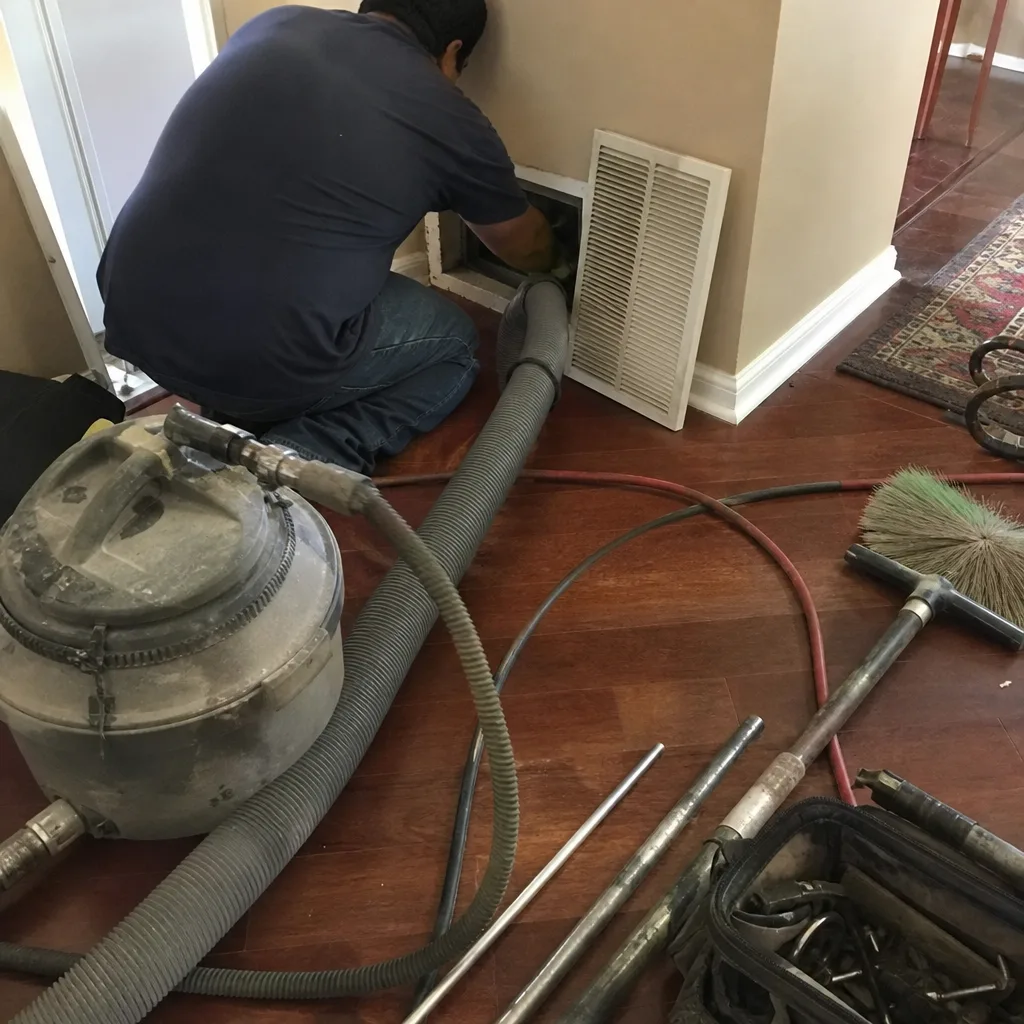 Before
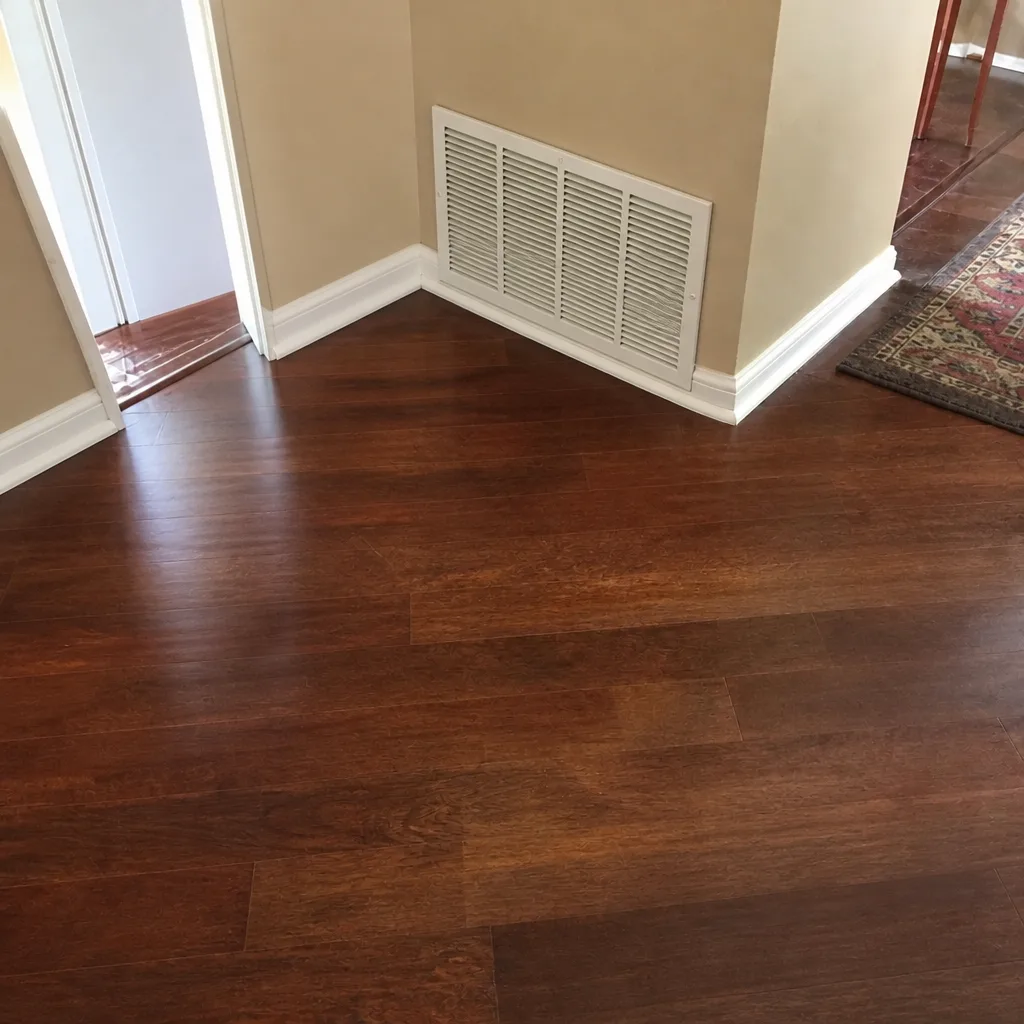 After
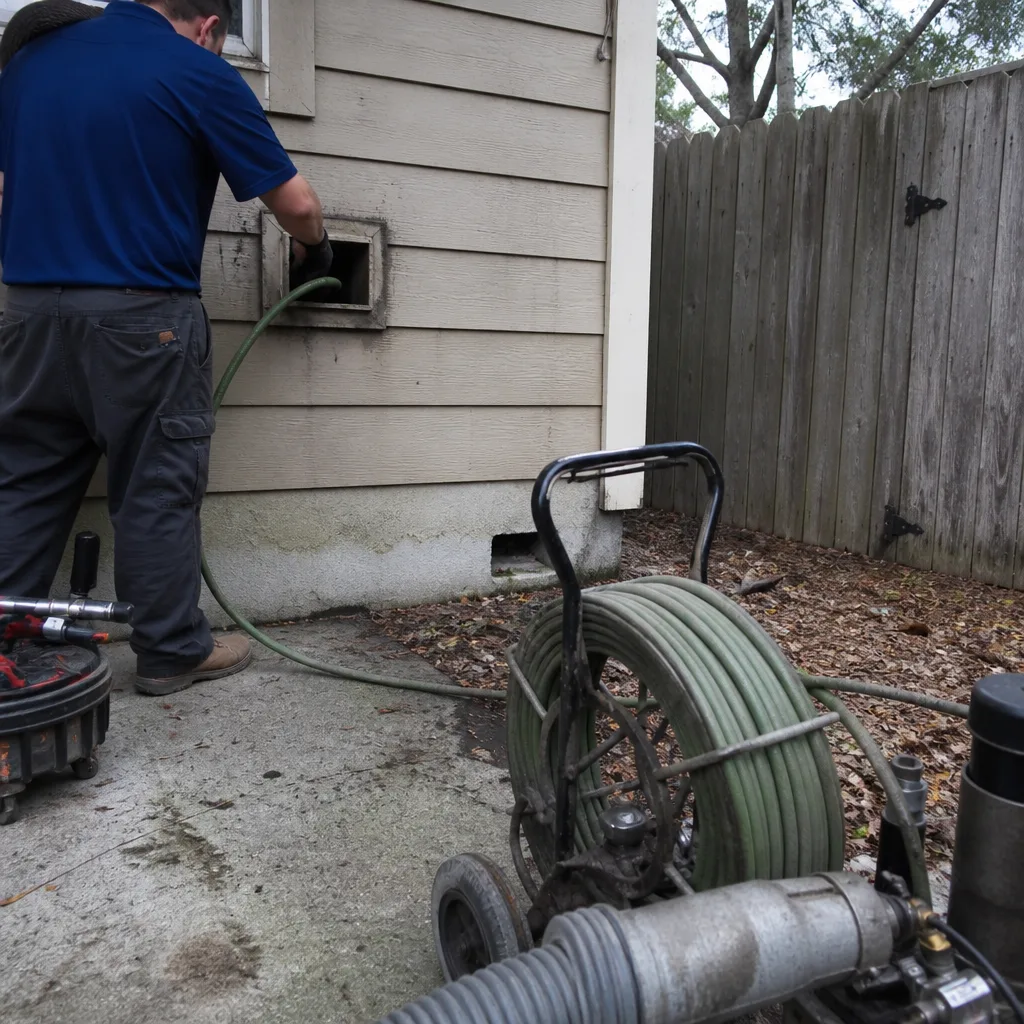 Before
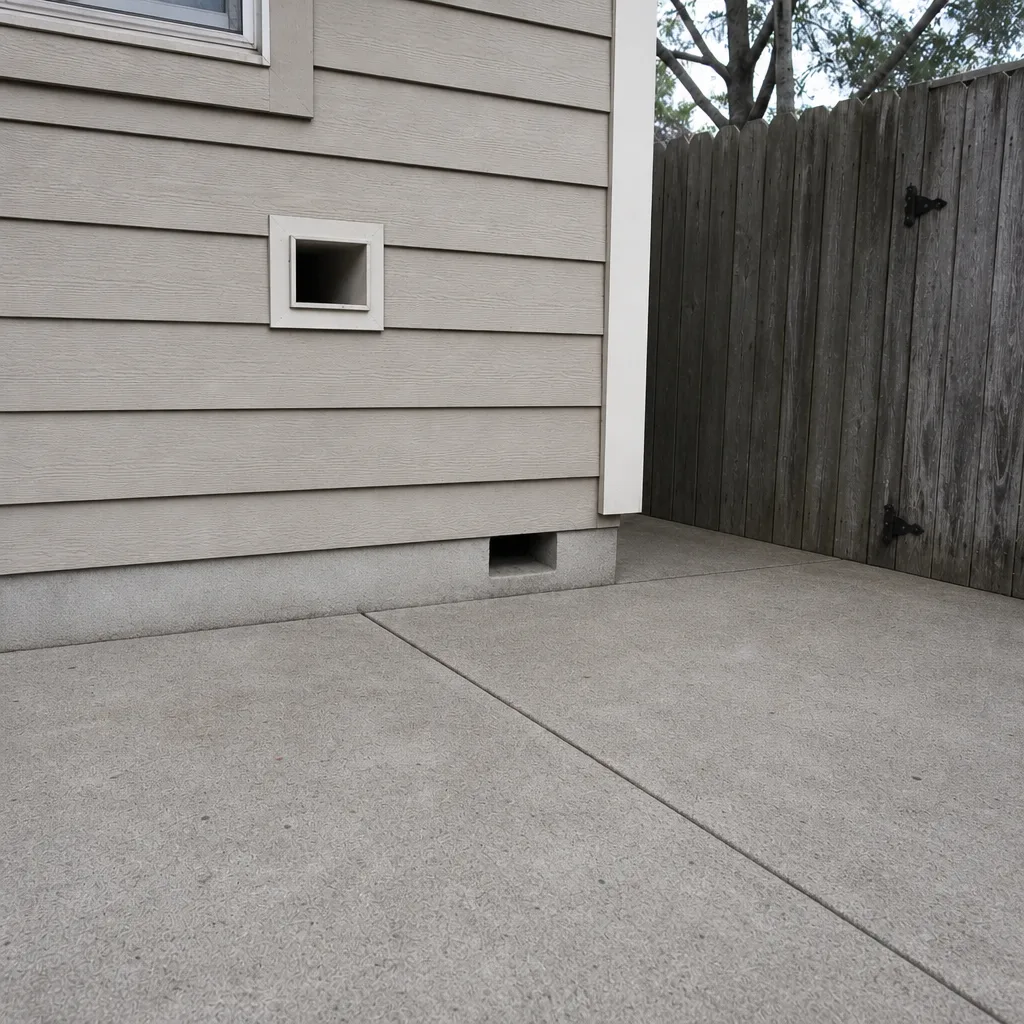 After
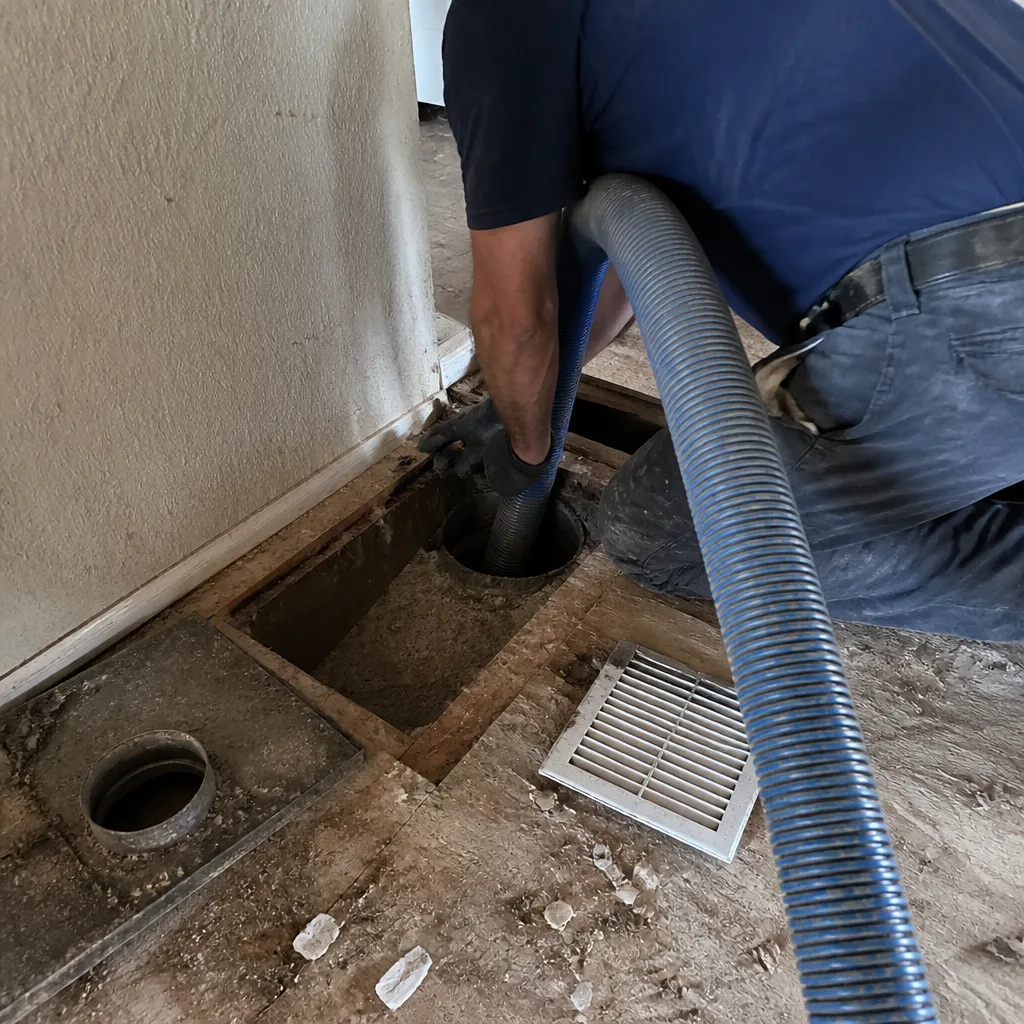 Before
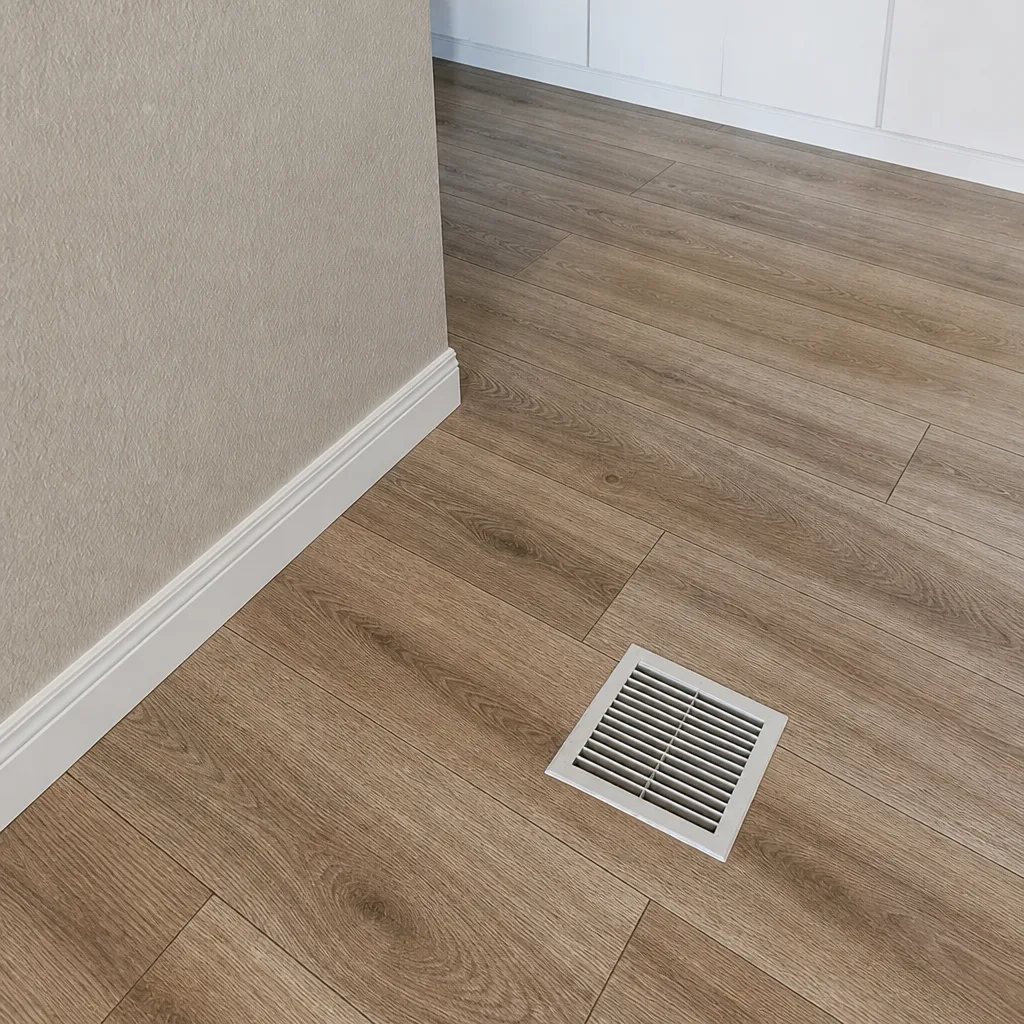 After
When to Call a Professional
Call a professional if any of these are true: water reached any floor register; water reached the air handler or furnace; the drain pan has standing water after a power outage; there’s a musty or earthy smell in the house during the first cycles after an event; you can see visible growth or debris inside a register; you’re mid-renovation and the ducts have been exposed to construction dust; or your dryer vent path is restricted. Each of these is a call that shouldn’t wait a week.
What you don’t want to do is let the situation sit until it becomes something else. A wet duct system that gets dried and cleaned within the 72-hour window is a manageable service call. One that’s left wet for a week becomes a duct repair and replacement conversation. Duct Cleaning League City offers free estimates in League City – call (866) 942-5170. We answer 24/7. Fast dispatch from 7am to 7pm, Sunday through Friday. Our technicians have up to experience, and we arrive with Rotobrush and Nikro equipment, not a consumer vacuum and a promise.
Frequently Asked Questions
The target is within 72 hours of the water receding if water reached any floor register or the air handler. That’s the window before microbial growth can establish inside a wet duct lining. Call (866) 942-5170 to book an inspection. We answer 24/7 and dispatch from 7am to 7pm, Sunday through Friday.
Usually yes, if water stayed below every boot and the equipment stayed dry. Run the fan on low to help interior humidity, and book an inspection for the first available appointment rather than assuming the system is fine. If you’re not sure how high the water got relative to the boots, shut the system down and call us for an assessment.
It depends on the scope: a routine cleaning on a dry system is one job, and a post-flood extraction and containment cleaning is another. We don’t quote per-vent or advertise a coupon figure, because that’s how a low teaser price becomes a much larger invoice once the technician is on site. You get one flat price per system, agreed before work starts, and the written estimate sets the final number. For an exact figure on your home, call (866) 942-5170 for a free estimate.
Coverage depends on your policy and the adjuster’s assessment, so we can’t promise what your insurer will pay. What we can do is document the condition of the duct system with photographs and a written scope so you have what your insurer needs. We can work with your insurer on that documentation. Keep dated photos of every register before any cleaning happens.
Ask for before-and-after photos of your own ducts, taken inside the system. A crew that cleans with a mechanical brush-and-vacuum system can show you the ducts before and after, and any reputable specialist will provide that without being asked. We do, on every job. If you can’t get photos, you can’t verify the work. Call (866) 942-5170 for a free estimate and ask what the photo record will cover.
Cheap quotes usually mean a shop vac, a hose in the return, and no containment equipment. That approach moves fine particulate rather than capturing it, and on a wet system it doesn’t dry or extract properly. Ask any contractor what equipment they’ll bring and whether it’s HEPA-rated and containment-grade. If they can’t answer, that’s your answer. Call (866) 942-5170 for an honest scope on your system.
If the dryer vent path was in any way affected by the event, or if it’s been more than a year, yes. Lint accumulation in the venting is the leading cause of dryer fires, and a wet house with restricted venting is a compounded hazard. It’s a dedicated safety service, not an add-on. Call (866) 942-5170 for a free estimate.
The Bottom Line
In League City, hurricane flooding, tropical storm moisture intrusion, and extended summer power outages are foreseeable events, and each one can contaminate a duct system faster than most homeowners expect. The core lessons: shut the system down if water reached the boots or equipment; photograph everything with timestamps before you clean or move anything; act inside the 72-hour microbial growth window; and pre-position your documentation, register locations, and contractor relationship before the next storm. Dryer vents belong on the same safety checklist. A duct system that’s handled correctly in the first three days is a service call. One that isn’t becomes a repair. If you’re in League City, call (866) 942-5170 for a free estimate. We answer 24/7. Fast dispatch from 7am to 7pm, Sunday through Friday, and we work with the professional-grade equipment the situation calls for.
Written by the team at Duct Cleaning League City.