
Last updated November 15, 2026
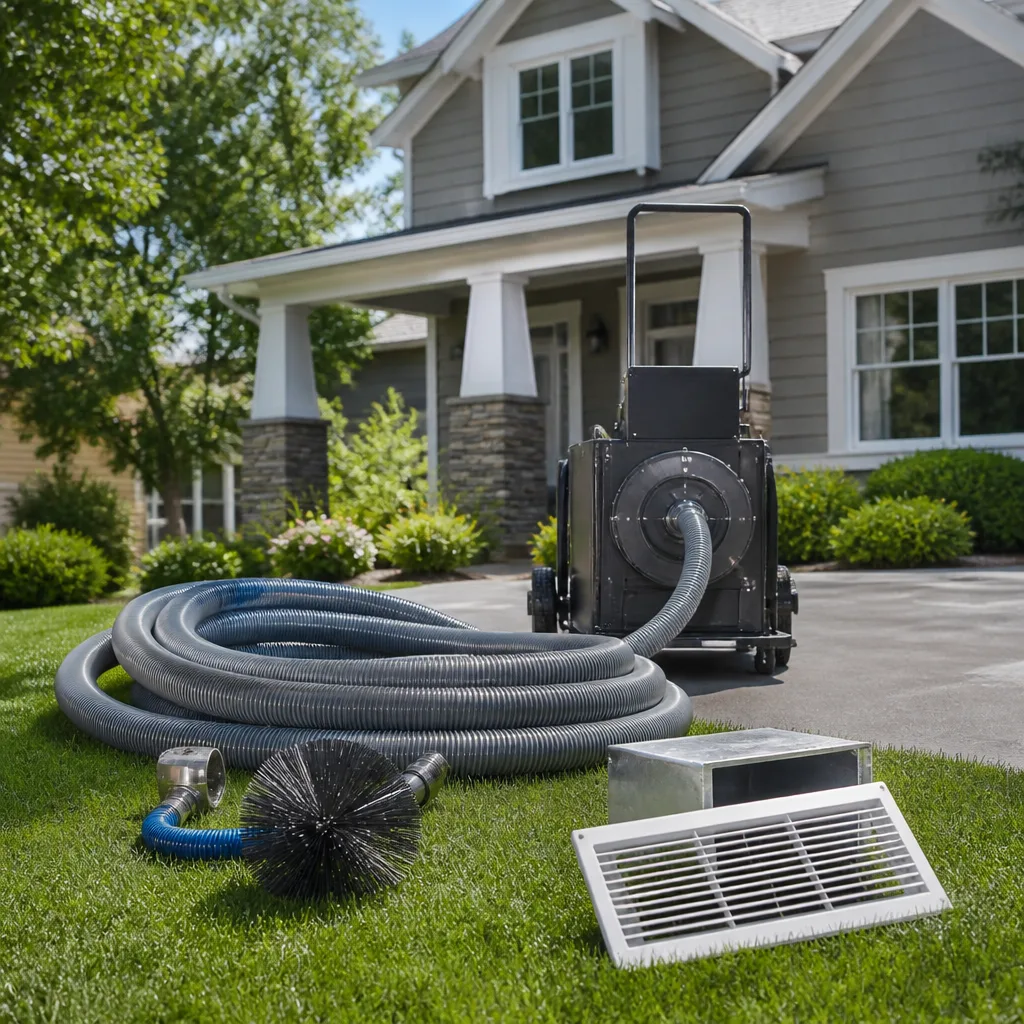 Whole-home duct cleaning
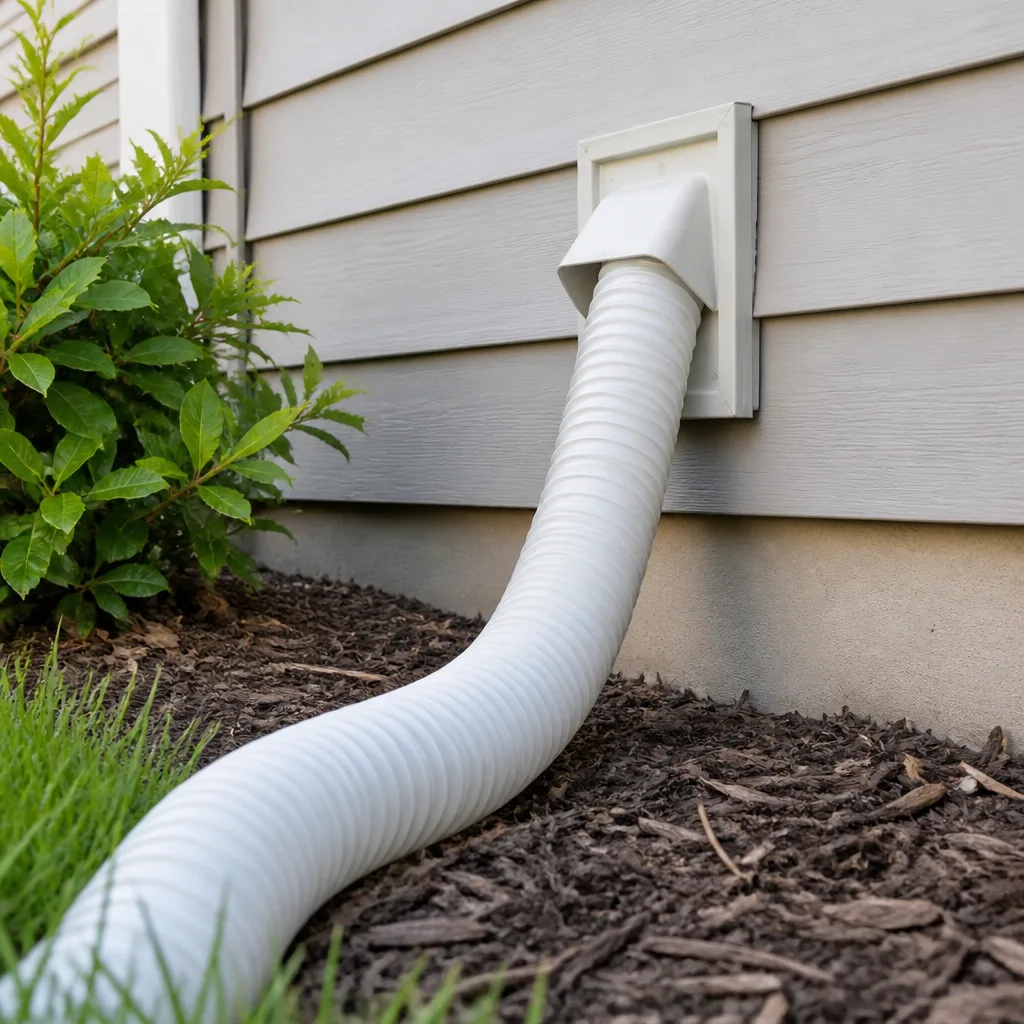 Dryer vent cleaning
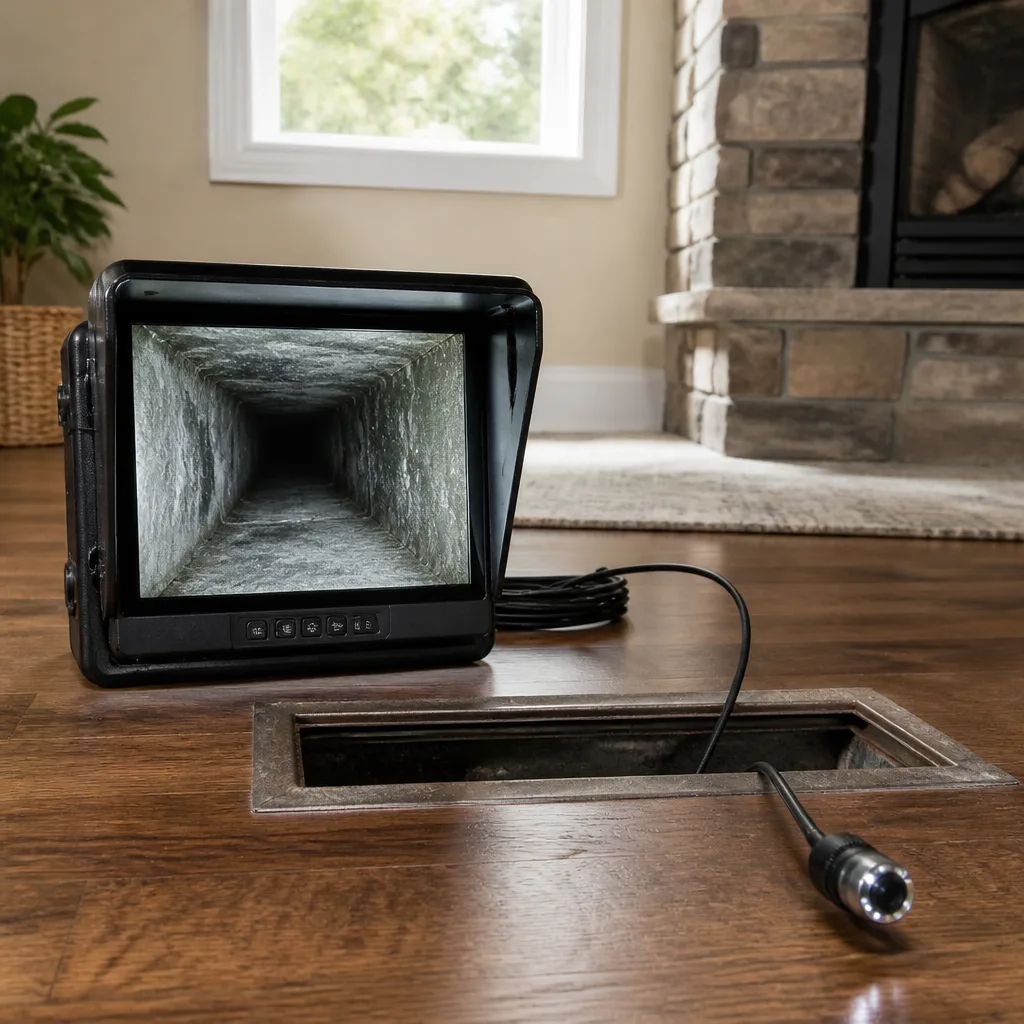 Camera inspection
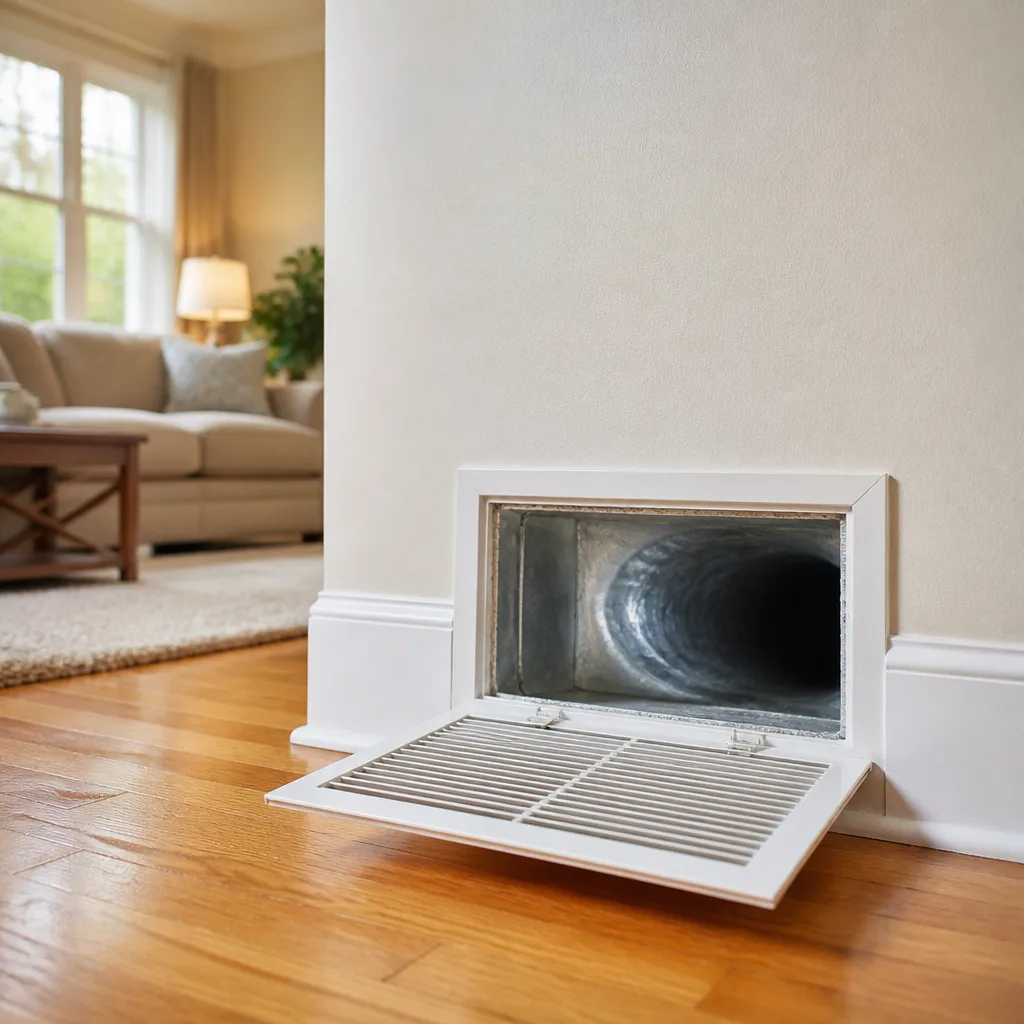 Sanitizing & deodorizing
Whole-system duct and dryer vent check with before-and-after photos - you see exactly what came out of your vents
That "$99 whole-house special" is a bait ad - the real number appears once they are in your hallway, or the "clean" is a shop-vac at the register. We photograph the inside of your ducts before and after instead.
Air Duct Cleaning Maintenance Schedule: What to Do and When
The 3-to-5-year duct cleaning rule most people repeat came out of studies on dry-climate homes with no pets, no recent renovation, and no water intrusion. That describes almost no house in League City. Humidity runs high for months, construction dust from new subdivisions drifts into older neighborhoods, and plenty of homes here have a dog, a cat, or both. So a single calendar interval doesn’t work. What works is a schedule built from a few variables you can actually observe: what’s living in the house, what’s been done to the house, and what your filter is telling you. This guide lays out a decision framework for League City homeowners instead of a fixed number, with checks you can run yourself between professional visits.
Quick Answer
Most League City homes should get a professional air duct cleaning every 2 to 4 years, not on a fixed 3-to-5-year timer. Shorten the interval to roughly every 2 to 3 years if you have pets or allergies, and consider a cleaning after any renovation, water intrusion, or smoke event regardless of the calendar. Check your return grilles and filter monthly, and inspect accessible duct runs twice a year.
Styles & brands we work with
- Whole-home duct cleaning
- Dryer vent cleaning
- Camera inspection
- Sanitizing & deodorizing
Table of Contents
- Why the Standard 3-to-5-Year Interval Falls Short
- The Four Variables That Set Your Real Cleaning Interval
- What to Check Between Professional Cleanings
- Seasonal Timing in League City: Why Late Spring Beats Fall
- Filter Maintenance: The Variable That Controls Reload Speed
- Building a Written Maintenance Log
- A Sample Two-Year Schedule for a League City Home
- Dryer Vent Cleaning Runs on Its Own Clock
Why the Standard 3-to-5-Year Interval Falls Short
The 3-to-5-year number gets quoted everywhere and almost never with its assumptions attached. It assumes relatively dry air, a household without heavy shedding, and no construction dust introduced into the return side. In Gulf Coast humidity, dust doesn’t just settle on duct walls. It cakes and sticks, and once it’s bonded to galvanized sheet metal, a shop vac and a hose won’t lift it. That’s why a light pass with weak suction makes no visible difference and homeowners end up assuming “duct cleaning doesn’t work.” The problem is the equipment, not the concept. Mechanical agitation with a Rotobrush brush-and-vacuum head breaks that bonded layer loose; HEPA-rated Nikro vacuum capture pulls it out of the system instead of blowing it through your supply registers. That’s the standard restoration contractors use, and it’s the level of work that actually resets the clock.
The other flaw in a calendar rule is that it treats cleaning as the only outcome. Sometimes a professional visit finds something else entirely: a crushed flex run behind a knee wall, a disconnected collar at a plenum, a section of duct sitting in standing water after a supply-line leak. In our experience around League City, a fair share of “dirty duct” complaints turn out to be a mechanical problem that no amount of cleaning fixes until the duct is repaired. We clean ducts, and we also fix them, which means the visit isn’t wasted if the diagnostics point at damaged sections instead of soil load.
The Four Variables That Set Your Real Cleaning Interval
Think of your interval as a short list of adjustments you make on your own house, not a number someone hands you. Four variables matter most.
1. Pets
A cat or a dog in the house adds dander and fine hair to the return stream continuously. Dander particles are light enough to stay airborne and get pulled back into the system over and over. If you have one pet, expect the shorter end of your range. Two or more, or a large double-coated breed, and cleaning every 2 years is realistic.
2. Renovation and construction dust
Drywall dust is far finer than typical household dust, and it migrates. In areas of League City seeing steady new construction and remodel activity, that dust finds the return grille even when the work is two streets away. A renovation in your own home almost always justifies a cleaning afterward, especially if ductwork was left open or if the HVAC ran during sanding. Containment-grade Abatement Technologies equipment exists for exactly this scenario.
3. Occupant allergies and respiratory sensitivity
If someone in the house has asthma or seasonal allergies, the threshold for “clean enough” drops. You can’t see dander and fine particulates, so don’t rely on looks. Cleaning every 2 years and keeping filtration up to date is a reasonable baseline.
4. Water intrusion and flood recovery
A wet duct is a different category of problem from a dusty one. Water intrusion in the duct system (or in the building envelope around it) can support mold growth on the liner and insulation, and that isn’t a schedule question, it’s an immediate one. Whatever your calendar says, get the system assessed after any flooding or roof leak. Households in League City have been through enough storm seasons to know that water doesn’t stay where it lands.
What to Check Between Professional Cleanings
You can catch a lot with your eyes and a phone light, no tools required. Run this check twice a year.
- Look at the return grilles. Pull the grille cover off a main return and look at the edges of the filter and the duct throat behind it. A visible gray mat of dust building on the metal within a month of cleaning is an early signal the system is loading fast.
- Check supply registers for streaking. Dark trails radiating out from the fins mean dust is being pushed through, not just sitting in the duct.
- Run the fan and notice the smell. A musty or “dirty basement” smell at every register points at the duct interior or the coil, not the room.
- Look at accessible flex runs. In an attic or garage where you can see them safely, look for kinked, crushed, or disconnected flex. A flex duct that’s pinched below its full diameter starves that branch, and a collar that’s slipped off dumps air into the attic.
- Watch for uneven airflow between rooms. One warm room and one cold room on the same system often traces back to a damaged branch rather than a dirty duct, and it’s worth having someone look at the duct runs before you assume the problem is the air handler.
None of this asks you to open the mechanical cabinet or handle anything electrical. If you can see a problem, note the date and take a photo. That photo becomes the first entry in your maintenance log.
Seasonal Timing in League City: Why Late Spring Beats Fall
Most guidance on duct maintenance is written for northern climates, where fall is the natural window because the heating season is coming. Here, the logical window is different. Late spring is the best time to schedule a cleaning in League City, and the reasoning is straightforward: pollen has finished its heaviest run, and the long cooling season is about to start. When the system cleans up in late April or early May, the ducts are as fresh as they’re going to get when the AC starts working hard.
Fall is a common default in markets with long heating seasons, but in League City, the fall window means a full summer of pollen and dander is already in the ducts before you clean them, and a second full summer is next. That’s a wasted cycle. Late spring front-loads your effort onto the season that actually stresses the equipment.
- Late February to early March: good secondary window for homes on a two-year cycle, right before the first hot stretch.
- Late April to early May: ideal primary window; pollen load has dropped and AC load is rising.
- Late fall: acceptable if nothing else fits, but you lose the pre-summer benefit.
- Any season: schedule a cleaning immediately after a water event or a smoke event, regardless of the calendar.
Timing also affects the practical smoothness of the job. A cleaning during peak summer is no harder for the technician, but if the work involves any duct repair, you want it done before the system is running continuously and the pressure is on to keep the house cool.
Filter Maintenance: The Variable That Controls Reload Speed
Ask any duct cleaning technician what determines how fast a system reloads after a professional cleaning and the answer is nearly always the same: filtration and how well it’s maintained. Your filter is upstream of the ducts and downstream of the room, and it decides how much of the airborne load ever reaches the duct interior. Change it on a real schedule, not when it looks dirty.
- 1-inch pleated filters: replace every 30 to 60 days in League City, closer to 30 during summer, with pets, or after a renovation.
- 4-inch + media filters (Honeywell and Aprilaire cabinets): check every 60 days; the service life depends on the MERV rating and household load, so read the filter’s own rating and let your visual inspection set the real change date.
- Washable or reusable media: clean on the manufacturer’s stated interval, but also check it monthly at first because dust loading is highly variable from house to house.
One more filter point: don’t overshoot on MERV in a system not designed for it. A high-MERV filter behind a 1-inch slot starves airflow and can be worse for the system than a lower-rated filter changed on time. If you have a Honeywell or Aprilaire cabinet, the housing is designed to accept a compatible high-efficiency media filter and to hold its seal. Our technicians work around that equipment without bypassing it, which matters more than most homeowners realize: a filter that’s been re-installed with a torn edge or a missing gasket leaks unfiltered air straight past it, and the duct reloads as if the filter wasn’t there.
If you want a deeper walkthrough of what a proper cleaning with professional equipment looks like, our air duct cleaning page covers method and scope.
Building a Written Maintenance Log
A written log is worth the ten minutes it takes to set up. It gives you a baseline you can compare against, and it becomes genuinely important if you ever need to support an insurance claim after flooding, fire smoke, or storm damage. Insurance carriers don’t want memories. They want dates and evidence of prior condition.
Set up a simple log with these fields, one sheet per year:
- Date and service. What was done: professional cleaning, filter change, inspection, duct repair. Who did it.
- Observations before the visit. Note the smell, any visible dust, streaking at registers, uneven airflow. A photo of a dirty return grille before cleaning is the strongest single record you can hold.
- What was found. Any damaged flex runs, disconnected collars, water intrusion, or heavy debris. If duct repair was done, note which section.
- After photos. Take a wide shot of the same return grille and one supply register. Before-and-after photos showing the duct interior are the proof that the work actually happened, and they’re the reason we provide them on every job.
- Filter schedule. Date of each filter change and the MERV rating used. This helps you spot a filter that’s loading faster than it should, which often means a duct issue elsewhere.
- Weather or event notes. Any flooding, roof leak, smoking inside, or renovation that happened between cleanings. Those are the triggers that may shorten your interval.
Keep the log with your home records. Two photos and a date stamp can answer a lot of questions later.
A Sample Two-Year Schedule for a League City Home
Here’s what a workable schedule looks like for a typical League City home with one pet and a standard 4-inch media filter cabinet. Use it as a template and adjust the dates to your household.
- Month 1 (baseline): professional air duct cleaning. Document before-and-after condition with photos. Note the filter media type and date.
- Every 30 to 60 days: filter check. Visual inspection plus a recorded date. Change when loaded.
- Month 4 (late spring): homeowner inspection of return grilles, supply registers, and accessible flex runs. Note anything suspicious.
- Month 8 (fall): second homeowner inspection; change filter; note seasonal smell or airflow changes.
- Month 12: call for a technician check if anything from the inspections looked off. Otherwise, wait.
- Month 16 to 20: second professional cleaning on the shortened interval that accounts for pets and local pollen load.
- Every 12 months, separately: dryer vent cleaning, on its own schedule (more below).
That’s roughly two professional cleanings over two years, a handful of filter changes, and two self-inspections per year. Most of the work is on you, and it costs almost nothing. The professional visits are the anchor points.
Dryer Vent Cleaning Runs on Its Own Clock
Air duct cleaning and dryer vent cleaning are two different services with two different purposes, and they don’t share an interval. Dryer vent cleaning is a fire-safety service. Lint accumulation in the exhaust venting path is the leading cause of dryer fires, and that lint builds up regardless of how clean your HVAC ducts are. A dryer that takes two cycles to dry a load, a lint screen that’s clean but the vent still feels warm, or a dryer that smells hot are all reasons to get the vent inspected and cleaned right away. Because dryer runs often share attic or chase space with HVAC flex, having both looked at on the same service visit is convenient, but the vent’s own schedule doesn’t depend on the ducts.
Common Mistakes to Avoid
- Cleaning on a fixed 3-to-5-year timer. The number was built for a dry-climate home without pets, and it doesn’t describe most League City households. Adjust the interval to your variables, not the calendar on a coupon.
- Trusting a low up-front price. A teaser price that becomes a much larger invoice once the technician is on site is the most common complaint in this trade. We use one flat price per system, agreed before work starts, with no per-vent pricing.
- Skipping the filter when you skip the cleaning. A clean duct with a neglected filter reloads within weeks. Filter maintenance is the simplest lever you have and the cheapest.
- Assuming a dirty-looking register means the duct is fine once it’s wiped. Dust on a register is a symptom. The cause may be in the duct run, the return, or a disconnected branch.
- Ignoring duct damage during the cleaning. A crushed or disconnected flex run doesn’t get fixed by cleaning, and many cleaning-only services won’t flag it. We look for it and can repair it during the same visit.
- Treating dryer vent cleaning as optional. It’s a fire-safety service, and it belongs on its own schedule.
- No documentation. Without a written log and photos, you have nothing to show an insurer after a flood or a smoke event, and nothing to compare against to see whether the duct is reloading faster than it should.
See the difference
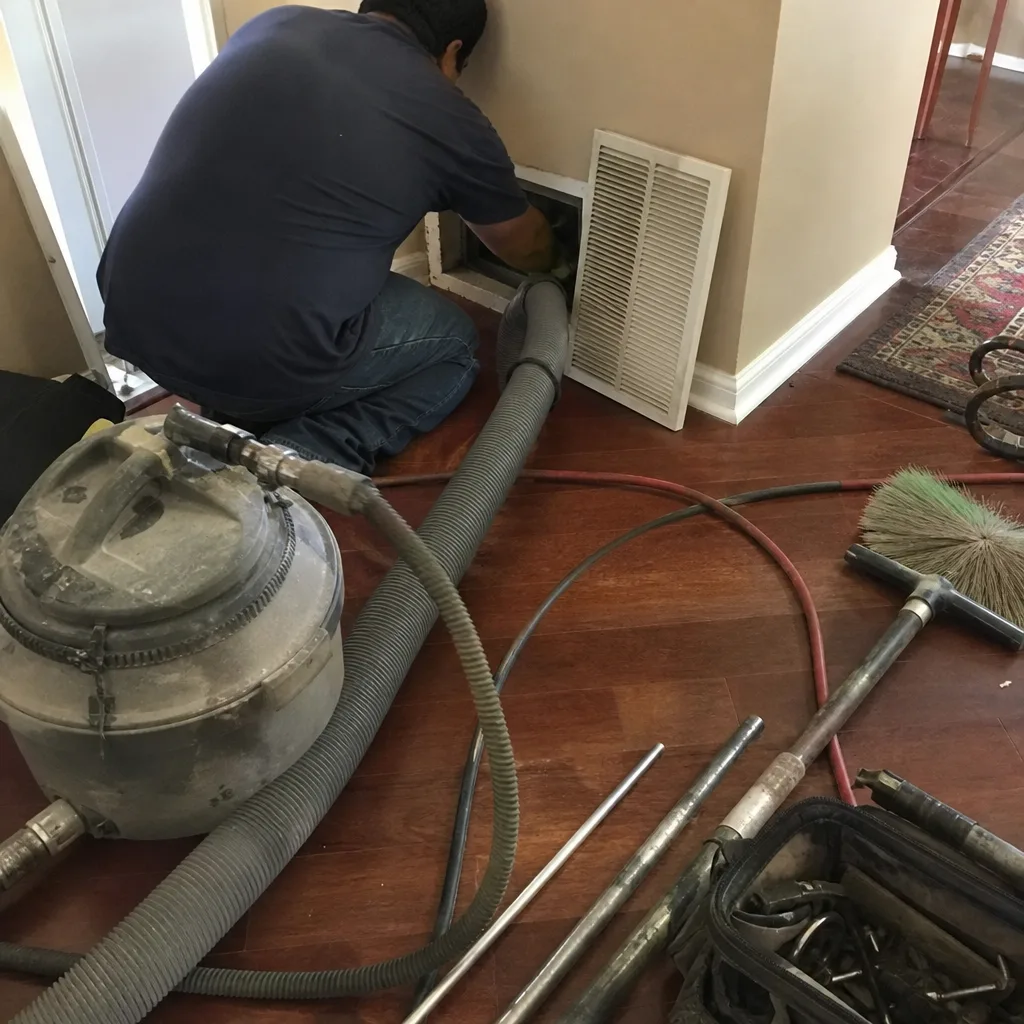 Before
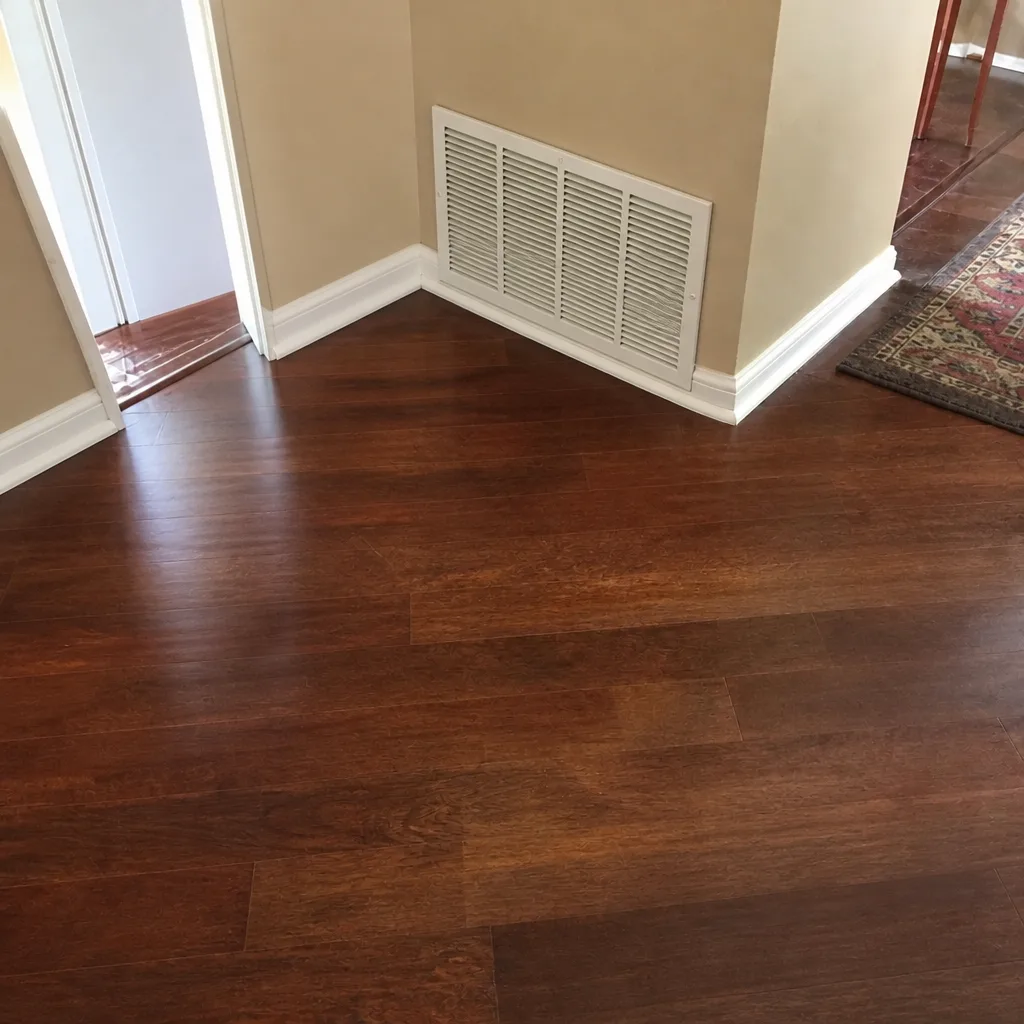 After
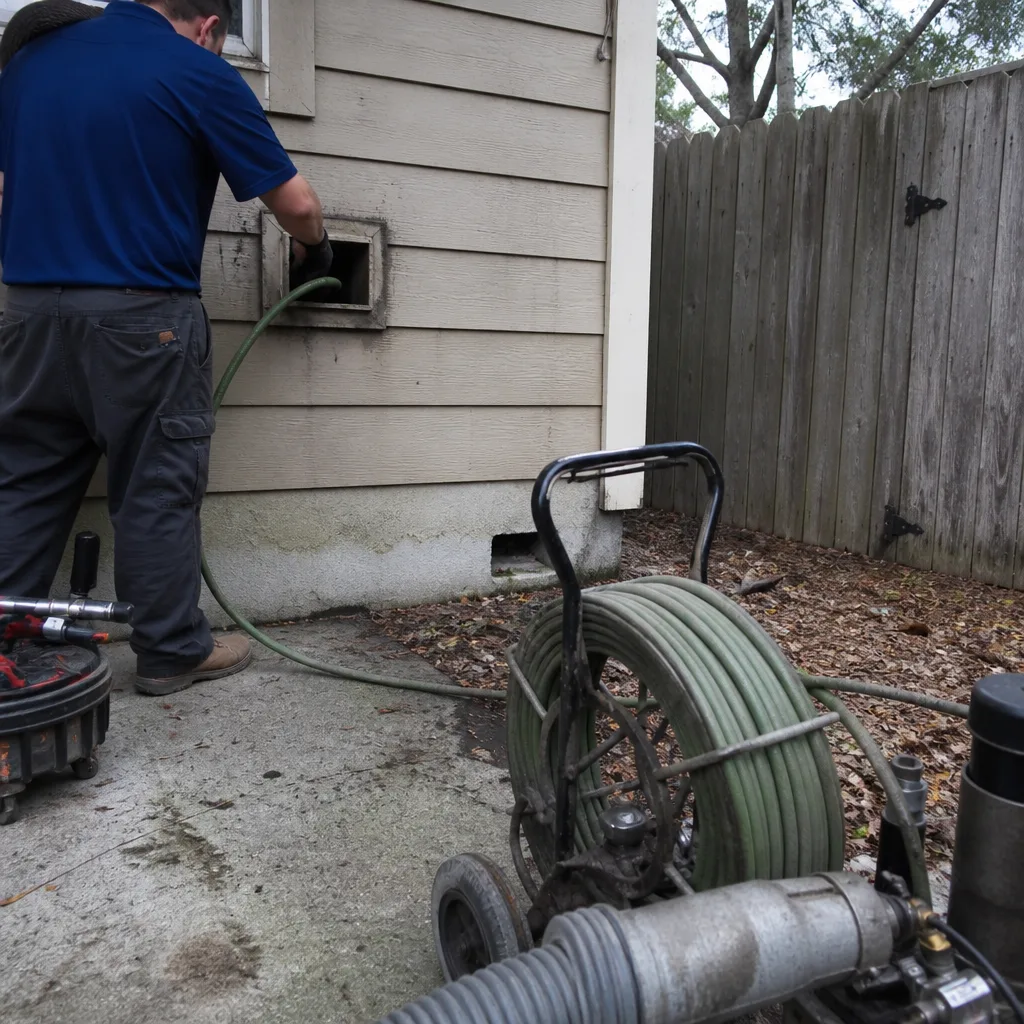 Before
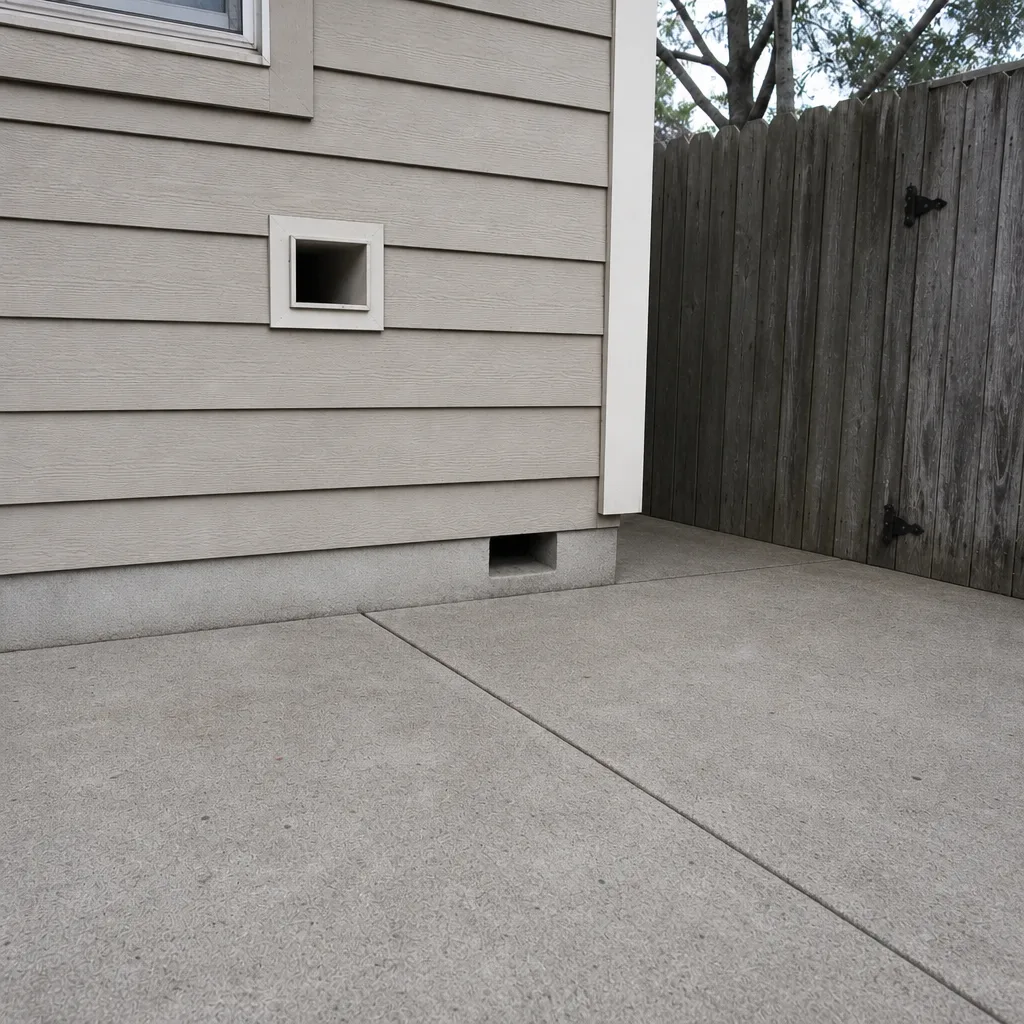 After
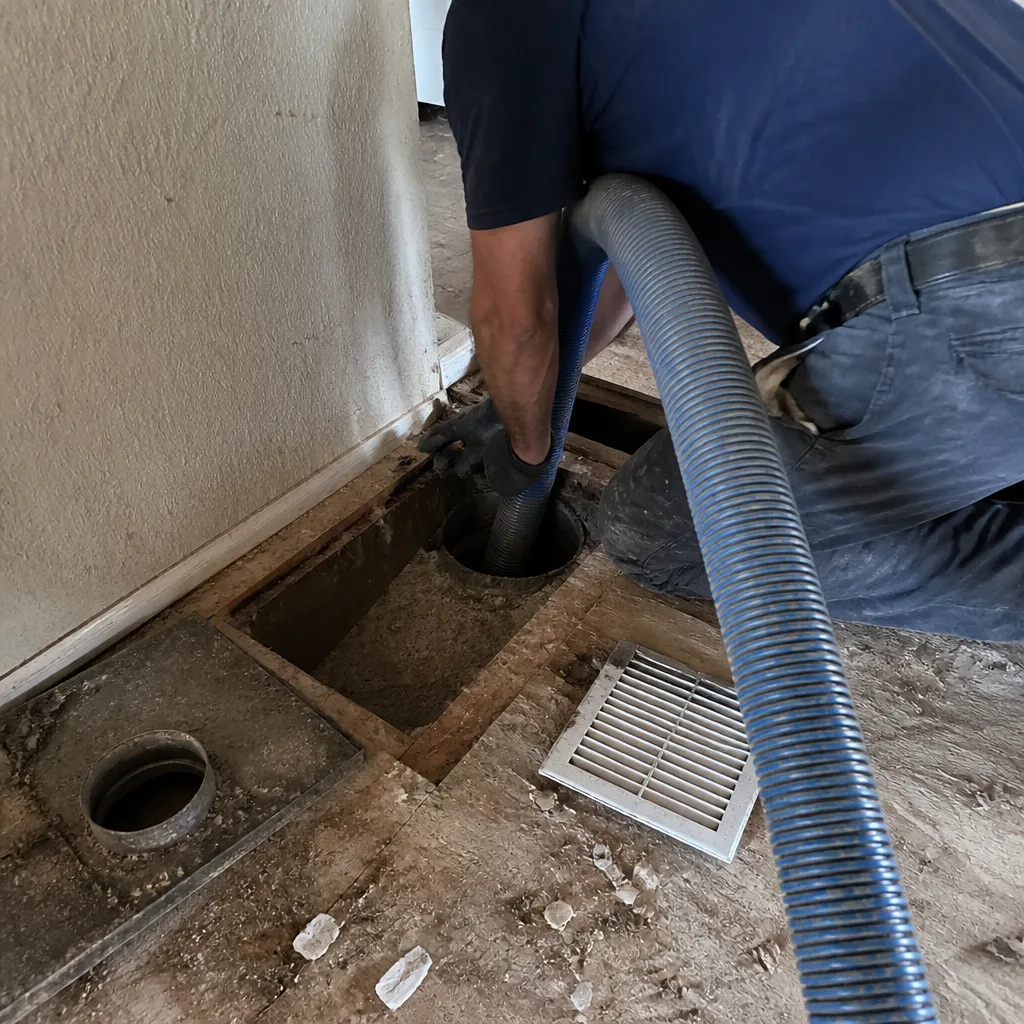 Before
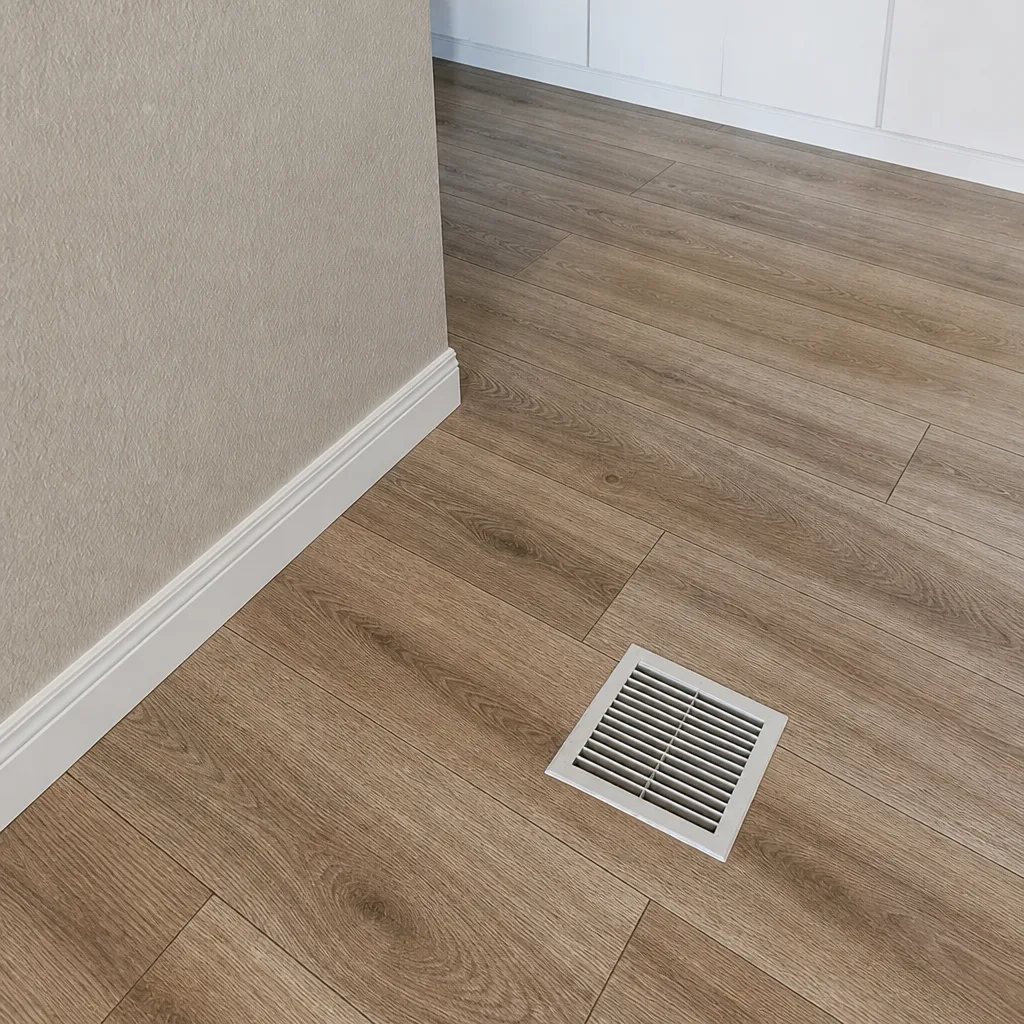 After
When to Call a Professional
You don’t need a technician for every observation. You do for these: a musty or smoke smell at every register, visible dust streaks around supply registers that persist after cleaning, uneven airflow between rooms that wasn’t there before, known water intrusion into the duct system or the attic, a recent renovation with the HVAC running, or a home you’ve just purchased where the prior owner’s duct history is unknown. If the home has had a flood or fire smoke event, get the system assessed regardless of the calendar. Duct Cleaning League City offers free estimates in League City. Call (866) 942-5170. We answer 24/7. Fast dispatch from 7am to 7pm, Sunday through Friday.
If you want to see what a proper cleaning looks like and what’s involved in a dryer vent cleaning, both pages go into detail. You can also visit our League City page for local coverage details.
Frequently Asked Questions
Every 2 to 4 years for most League City homes, with pets or allergy sufferers at the 2-to-3-year end and low-dust, no-pet households at the longest end. Any water intrusion, renovation, or smoke event resets the clock regardless of the calendar. Call (866) 942-5170 for an exact quote; estimates are free.
No, late spring usually beats it here. Cleaning in late April or early May means pollen has dropped and the long cooling season is just starting, so the ducts are as clean as they’ll be when the AC starts working hardest. Fall is a northern default that costs you a full summer of loading before you clean. Call (866) 942-5170 to book a spring window.
It depends on the system: the number of return and supply runs, how accessible they are, and whether any duct repair is needed. What shouldn’t happen is a low teaser price that becomes a much larger invoice on site. We give one flat price per system, agreed before work starts, with no per-vent pricing, and before-and-after photos of your own ducts. Call (866) 942-5170 for an exact quote; estimates are free.
Cheap quotes usually skip the equipment that actually lifts bonded debris. A shop vac and a hose can’t break a dust layer adhered to sheet metal in a humid climate, so the difference isn’t visible until you compare the after photos. We use Rotobrush mechanical brush-and-vacuum systems and Nikro HEPA-rated vacuums, the same class of hardware restoration contractors rely on. Call (866) 942-5170 for a quote and we’ll explain exactly what the price covers.
Ask for before-and-after photos of your own ductwork, and compare the same register or return in both. We provide them as standard. A written maintenance log with a dated photo of a dirty return before cleaning and the clean result after is your best side-by-side proof, and it doubles as insurance documentation. Call (866) 942-5170 to schedule and we’ll walk you through what you’ll receive.
Yes, dryer vents run on their own clock and are not on the same interval as your HVAC ducts. Clean at least annually, and more often in a busy household or when the dryer run is long or has several elbows. Treat it as a fire-safety service. Call (866) 942-5170 if your dryer takes longer than it should or feels hot at the vent.
The Bottom Line
A duct cleaning schedule is a decision, not a date. Base your interval on pets, renovation dust, allergies, and water events, and use late spring as your preferred service window in League City. Check returns and accessible flex runs twice a year, change the filter on a real schedule, and keep a written log with photos. When professional work is needed, use a company with the right equipment and a clear flat price per system. And keep your dryer vent cleaning on its own annual schedule. If you want help setting a schedule for your specific home, our Duct Cleaning League City team is glad to talk it through.
Want a maintenance schedule built for your home? Call (866) 942-5170 for a free estimate. We answer 24/7. Fast dispatch from 7am to 7pm, Sunday through Friday. We clean with Rotobrush and Nikro systems, work around Honeywell and Aprilaire filtration, repair damaged duct sections found during the visit, and treat dryer vent cleaning as the fire-safety service it is.
Written by the team at Duct Cleaning League City.