
Last updated November 15, 2026
 Whole-home duct cleaning
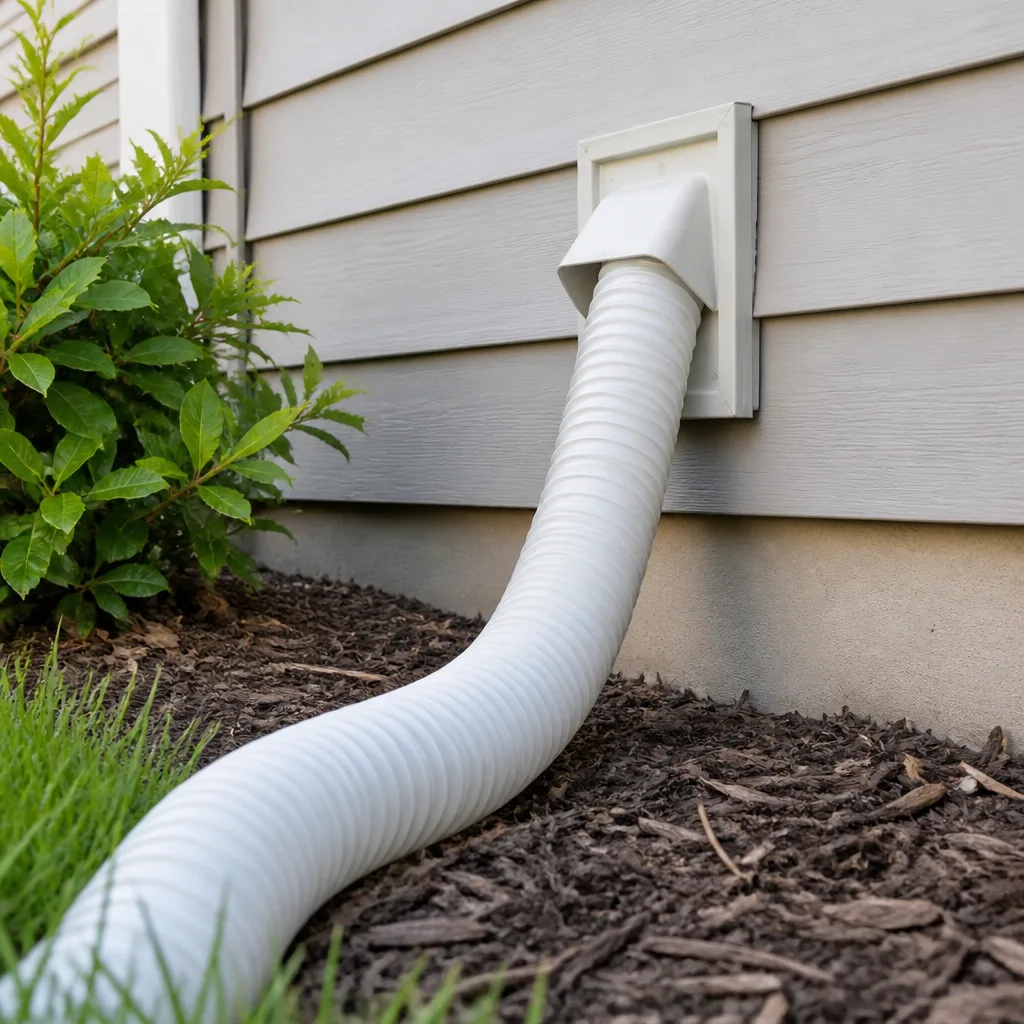 Dryer vent cleaning
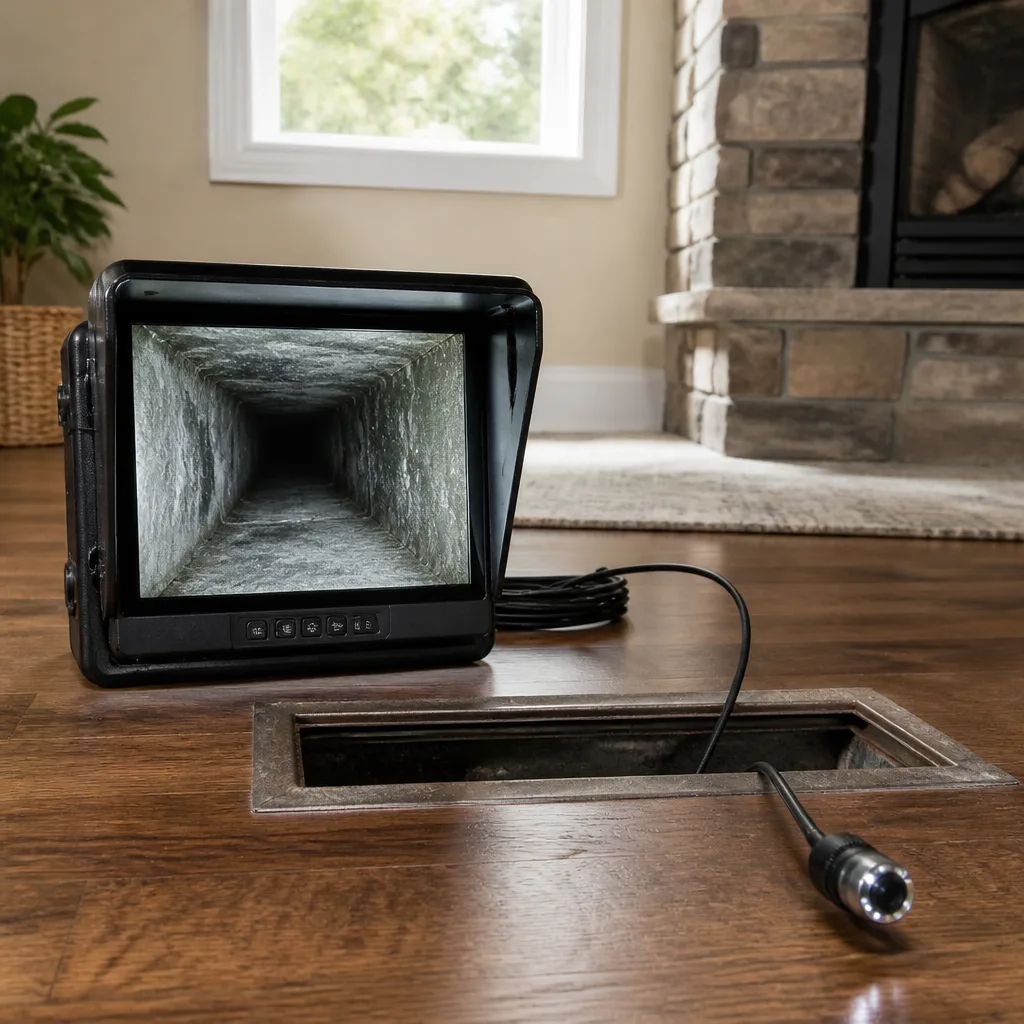 Camera inspection
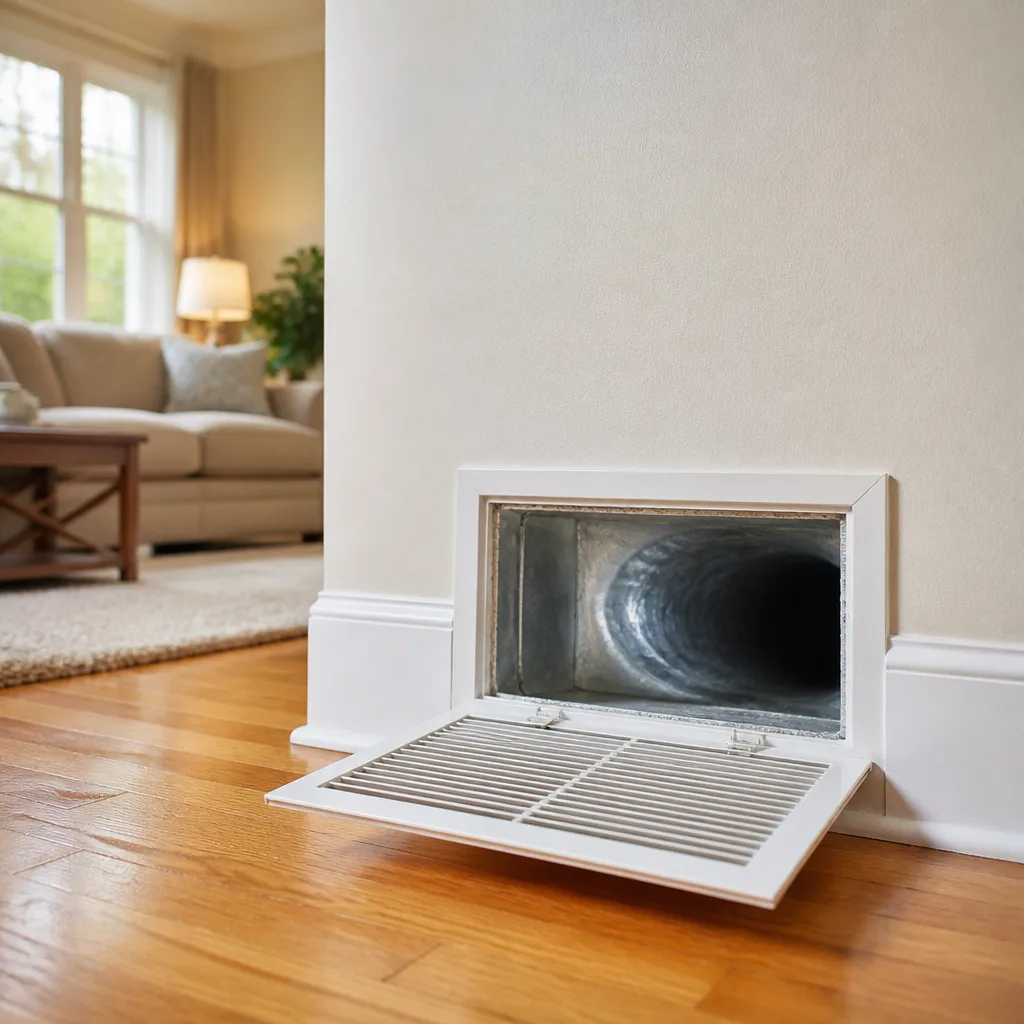 Sanitizing & deodorizing
Whole-system duct and dryer vent check with before-and-after photos - you see exactly what came out of your vents
That "$99 whole-house special" is a bait ad - the real number appears once they are in your hallway, or the "clean" is a shop-vac at the register. We photograph the inside of your ducts before and after instead.
Air Duct Cleaning Warning Signs: A League City Homeowner’s Reference Guide
A musty odor that fades ten minutes after the system kicks on isn’t a good sign. It means the blower is pushing the contamination source into your living space, not that the smell fixed itself. By the time most League City homeowners call us about visible mold or a burning smell, the problem has already crossed from “clean this” into “remediate this.” The useful warning signs show up much earlier. This guide catalogs what to actually watch for in a League City duct system: what each odor type signals, how to read register buildup, why uneven airflow usually isn’t an equipment problem, and the three home events that introduce sudden contamination. You’ll finish able to tell a dirty-duct problem from a dirty-coil problem before you spend a dollar.
Quick Answer
The core warning signs of contaminated ducts are persistent musty or sour odors that return after the blower runs, dark or sticky residue at the registers, visible debris or colored growth inside the supply boots, uneven airflow between rooms, and a spike in dust or allergy symptoms after renovation, flooding, or pest activity. Gray, dry, evenly distributed dust is normal. Dark, sticky, or odorous buildup is not. Any burning smell or mold visible inside the ductwork is a call-a-professional signal, not a wait-and-see one.
Styles & brands we work with
- Whole-home duct cleaning
- Dryer vent cleaning
- Camera inspection
- Sanitizing & deodorizing
Table of Contents
- What Do Different Duct Odors Signal?
- How to Read Visible Buildup at Your Registers
- Why Uneven Airflow Is Usually a Duct Problem
- A Basic Room-to-Room Airflow Test
- Three Events That Introduce Sudden Duct Contamination
- Dirty Ducts vs. a Dirty Coil: Telling Them Apart
- When to Call a Professional
- Common Mistakes to Avoid
What Do Different Duct Odors Signal?
Odor is the most reliable early warning sign a duct system gives, because the nose detects microbial growth and off-gassing long before anything becomes visible. The trick is that not all odors mean the same thing. If you can name the smell, you can point a technician straight at the likely cause.
Musty. This is the classic microbial signal, pointing to moisture-fed growth somewhere in the system: a damp section of flex duct, condensation at a poorly insulated run, or a return chase pulling humid air through a cool space. In League City’s humid summers, a return duct routed through an unconditioned garage attic is a frequent offender. If it smells like a damp basement when the fan first starts but fades once air moves, that fade is the problem, not the fix: the blower is dispersing spores and volatile compounds from a growth site into the living space.
Burning or hot-dust. A burning smell that appears when the heat first comes on often points to dust that has settled on the heat exchanger or the heat strips. It can also indicate a genuine mechanical issue. Treat a persistent burning smell as a safety call, not a duct-cleaning call, and get it checked before anything else.
Sour. A sour, slightly sewage-like smell usually traces to a backed-up condensate drain pan or a wet evaporator area. That’s an HVAC-drain problem that happens to vent through the ducts. Cleaning the ducts won’t fix it; the drain does.
Chemical or solvent. Off-gassing from new materials, adhesives, or contamination introduced during renovation is chemical rather than microbial. It tends to appear right after a project and can linger in the ductwork long after the rooms smell normal.
Naming the smell narrows the search. “Musty” sends a technician looking for a growth site; “sour” sends them to the drain pan. If you’re not sure which you’re dealing with, air duct cleaning with a real inspection always starts by identifying the source rather than blindly vacuuming.
How to Read Visible Buildup at Your Registers
Register buildup is the most misunderstood sign on this list, because some of it is completely normal and some of it is a red flag. The difference is texture and color, not volume. Every HVAC system in League City accumulates fine gray dust at the registers over months of use, and finding it doesn’t mean you need a cleaning.
What’s normal:
- Fine gray or light brown dust, dry to the touch
- Even distribution across the register face
- Buildup that wipes off easily with a cloth
- Return grilles that collect more than supply registers (expected, since returns pull air in)
What’s abnormal and worth investigating:
- Dark black, brown, or greenish staining, especially with a sticky or damp feel
- Patches of colored growth that resemble mold colonies around the register or inside the boot
- Debris that looks chunky or fibrous rather than powdery
- A visible ring of dark residue just at the edge where duct meets register, which suggests contamination inside the duct mouth
The reason texture matters: dry dust is airborne particulate that settled. Sticky, dark, or colored residue means something is growing or degrading in place, which points to moisture in the system. Pop off a register and look up into the boot with a flashlight. Clean, silver galvanized metal or clean flex liner is fine. A fuzzy or stained duct wall is not. If you see growth, don’t scrub it from the room side and call it done; the source is inside the run, and disturbing it without containment can spread it. That’s exactly the scenario where containment-grade equipment like Abatement Technologies systems earns its keep. Photograph what you find before you call anyone. It gives both you and the technician a baseline.
Why Uneven Airflow Is Usually a Duct Problem
When one room is always too warm and another always too cool, homeowners usually assume the system is too small or failing. Most of the time it’s the ducts: a disconnected joint, a crushed run, a hacked-together branch, or a poorly balanced damper. The equipment moves plenty of air; the distribution path just doesn’t deliver it evenly.
These are the duct-side causes of uneven airflow worth checking:
- A disconnected or badly taped duct joint leaking into an attic or crawl space. A surprising share of “weak room” complaints trace to a run that’s simply not connected anymore.
- A crushed or kinked flex duct, common where it bends sharply around a truss or gets stepped on during other work.
- A damper at the air handler or in a branch closed partly or fully from a previous adjustment.
- A single room with too few supply registers for its size, a design flaw rather than a failure.
- Leaky duct seams throughout, which bleed conditioned air before it ever reaches the far rooms.
Why this matters for cleaning decisions: if airflow is uneven because a section of duct is damaged or disconnected, cleaning alone won’t fix it. You need a technician who can spot and repair that section during the visit. Our capability to identify and fix damaged or disconnected duct sections in the same service is exactly why we don’t stop at cleaning. Ask any contractor you call whether they can repair what they find, not just vacuum it. Here in League City, a lot of homes have flex runs in the attic that shift, sag, or loosen over years of heat cycles, so damaged duct is a common discovery rather than a rare one. The airflow symptom is the tip of a problem that lives inside the walls and attic.
A Basic Room-to-Room Airflow Test
Before you call anyone, you can get a rough read on whether your distribution is balanced. This isn’t a substitute for a professional evaluation, but it tells you whether the imbalance is worth a service call and gives a technician useful information.
- Set the thermostat to fan-on so air moves continuously without heating or cooling cycling.
- Hold a sheet of tissue or a light piece of paper flat against each supply register. Note whether it flutters strongly, lazily, or not at all.
- Repeat at each return grille and note the pull.
- Make a simple room-by-room list marking strong, medium, and weak airflow at each register.
- Check whether every register has its disk or damper fully open.
- Look for the pattern. One consistently weak room suggests a single bad branch or damper. Several weak rooms clustered far from the air handler suggest a larger leak or undersized trunk.
Write down your results. If three rooms pull strong and one barely moves, that one is where a technician should start, and pointing them at it saves time. This test also separates a duct problem from an equipment problem. If the blower is fine and most registers are strong but one is dead, the air handler is doing its job and the duct is not. That distinction tells you to call a duct specialist rather than chasing equipment service. A quick pressure check costs you ten minutes and gives you a concrete description of the symptom instead of “some rooms are warm.”
Three Events That Introduce Sudden Duct Contamination
Duct contamination usually builds slowly, but three home events can dump it in overnight. If any of these happen to your League City home, treat the ductwork as suspect even if nothing smells off yet.
- Renovation and demolition work. Drywall dust, sawdust, insulation fibers, and construction debris get pulled into returns while the system runs. Fine drywall dust is especially good at coating duct walls and settling in the air handler. If a renovation happened and the system ran during it, the ducts likely pulled in more than they normally would. Look for white or grayish powder near returns and on the blower area.
- Flooding or water intrusion. Any event that puts water near a duct run, a return chase, or the air handler creates the exact conditions microbial growth needs. Even after visible areas dry, an insulated flex duct that got wet inside stays damp far longer than drywall or carpet, and that trapped moisture feeds growth out of sight. Gulf Coast humidity makes this worse because a wet duct has little chance to dry before the next humid week. If a run got soaked, the moisture and the growth are duct problems.
- Pest activity. Rodents, insects, and birds find their way into duct runs and returns, especially attic runs. Droppings, nesting material, and the associated contamination don’t just smell; they’re a reason for genuine containment-grade cleaning. If you find droppings near a register or hear scratching in the walls or attic, have the ducts inspected.
These three events share one property: contamination arrives fast and in volume, then sits. A post-renovation or post-flood duct load is different from everyday dust, and it calls for equipment built for contaminated environments, not a light pass. Our Abatement Technologies containment equipment exists for exactly this kind of work.
Dirty Ducts vs. a Dirty Coil: Telling Them Apart
Here’s where a lot of homeowners misdirect their money. They call for duct cleaning when the real problem is a dirty evaporator coil, or they replace equipment when the coil is fine but the ducts are full. The symptoms overlap, but the patterns differ enough to point yourself in the right direction.
Symptoms that point toward the ducts:
- Dust reappears on surfaces soon after you clean
- Odor that appears when the fan runs and fades afterward
- Uneven airflow between rooms
- Visible debris or growth at registers
- Contamination appearing after renovation, flooding, or pest activity
Symptoms that point toward the coil:
- The system cools poorly or the AC struggles, especially in League City’s long cooling season
- Weak airflow at every register rather than a few
- Water where it shouldn’t be near the air handler, or a drainage problem
- Ice on the refrigerant lines
- A musty smell coming from the air handler area specifically, not the rooms
The shortcut: if the whole house feels weak, suspect the equipment side. If some rooms are fine and others aren’t, or if dust and odor are the main complaints while cooling still works, suspect the ducts. Note that a clogged coil can also shed dirt back into the ductwork, so the two sometimes set each other off. If you’re dealing with a system equipped with a Duct Cleaning League City team has worked around, like Honeywell or Aprilaire filtration components, tell the technician, so the equipment isn’t mishandled while the ducts are serviced. And if a professional suspects a coil problem, that’s an HVAC technician’s scope, not a duct cleaner’s. Knowing which one to call first saves you paying twice.
Common Mistakes to Avoid
- Hiring on price alone. A rock-bottom quote often means a single pass with no containment and no mechanical agitation, which stirs up debris without removing it. The result is a system that feels no cleaner and may be dirtier in the air than before.
- Waiting for visible mold before acting. By the time growth is visible at a register, it’s been feeding for a while. The odor and dust clues show up long before mold does, and they’re the actionable ones.
- Cleaning the registers instead of the ducts. Wiping a grille does nothing for the duct run behind it. If the buildup is inside the boot, the grille is just the window.
- Ignoring airflow in favor of cleaning. If the real problem is a disconnected or crushed duct, cleaning it won’t restore that room’s airflow. Get the repair question answered, not just the cleaning quote. Ask the contractor whether they can repair duct sections they find.
- Assuming the air handler is always the fault. Chasing equipment replacement when the ducts are the issue is one of the most expensive mistakes. Do the room-by-room test before you spend on equipment.
- Restarting the system immediately after renovation. Running the fan during or right after dusty work pulls debris into the returns. If a project is coming up, minimize system runtime and check the ducts afterward.
- Trusting a “blowout special.” High-pressure air blasts debris loose but doesn’t capture it. Real cleaning agitates the duct wall with a brush-and-vacuum system and captures the loosened material in a HEPA-rated unit rather than scattering it into the house.
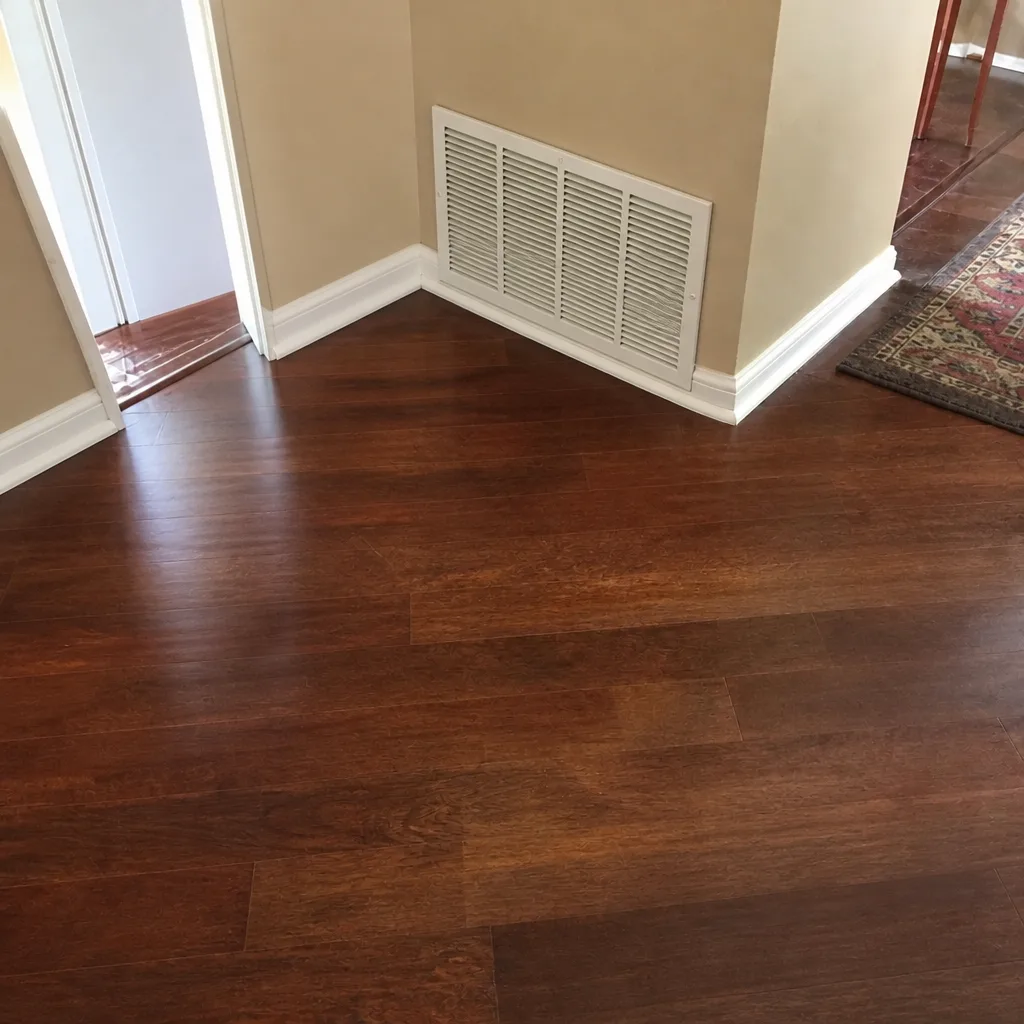
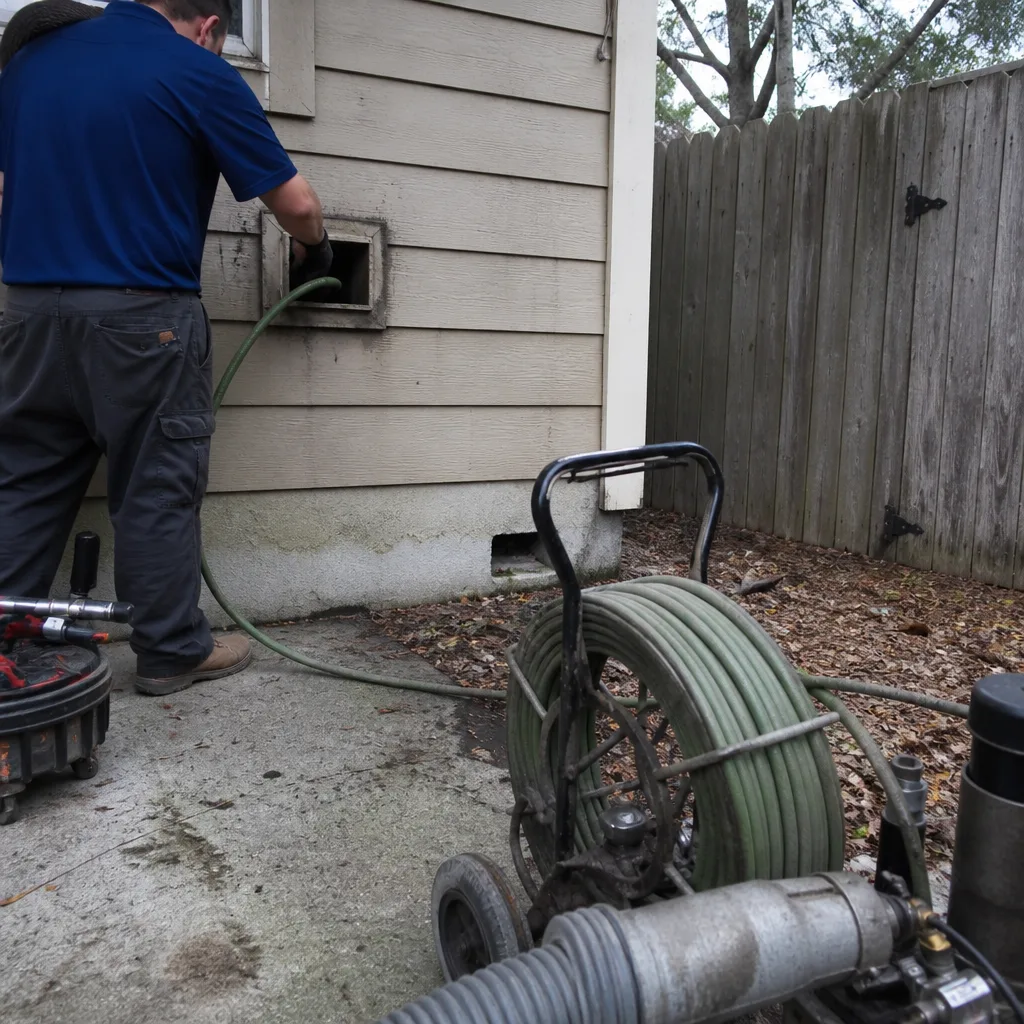
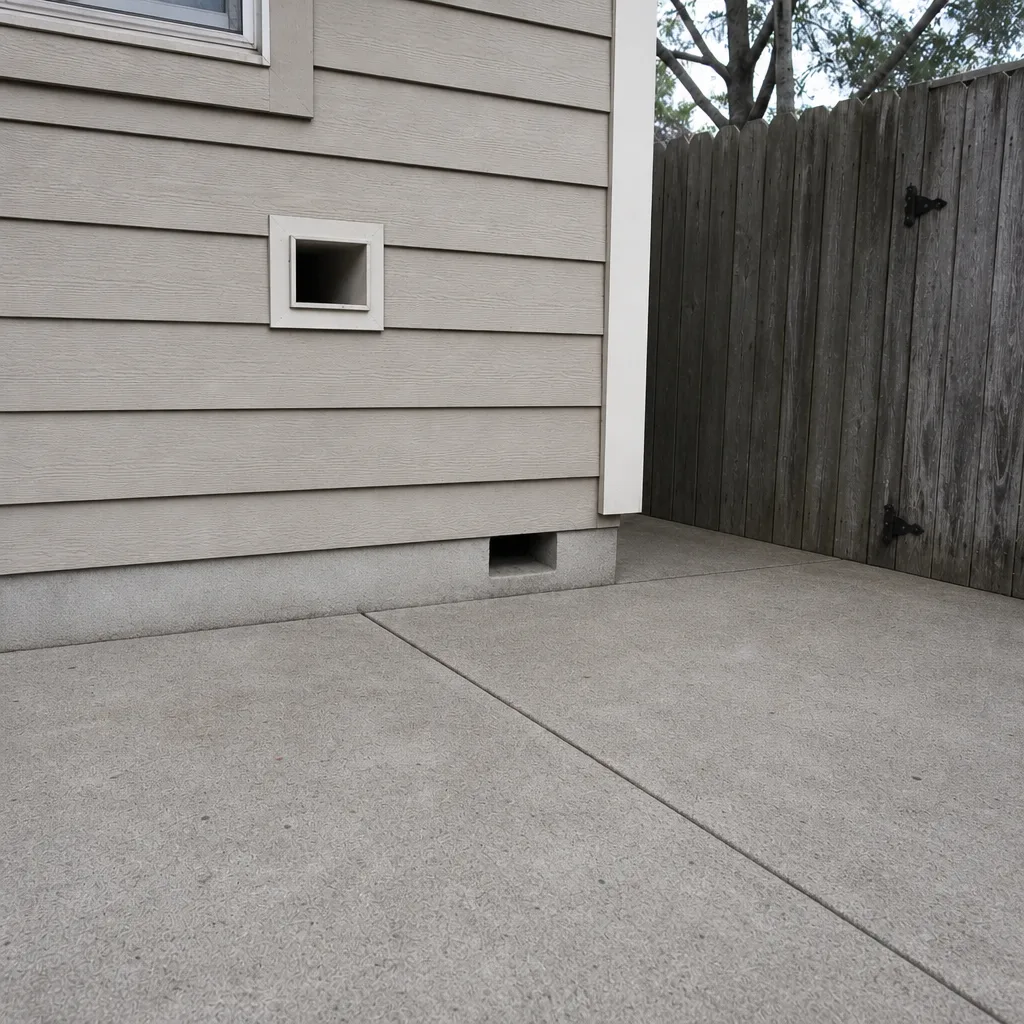
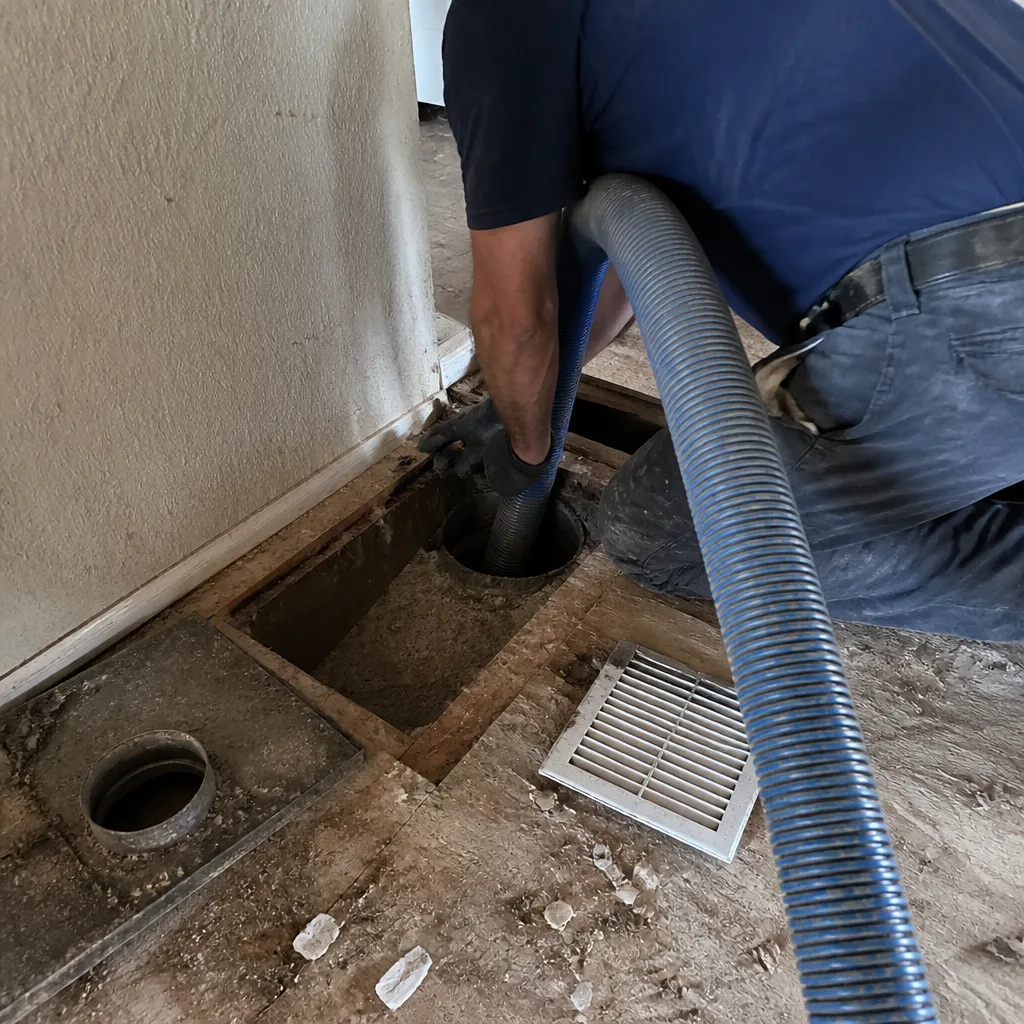
See the difference
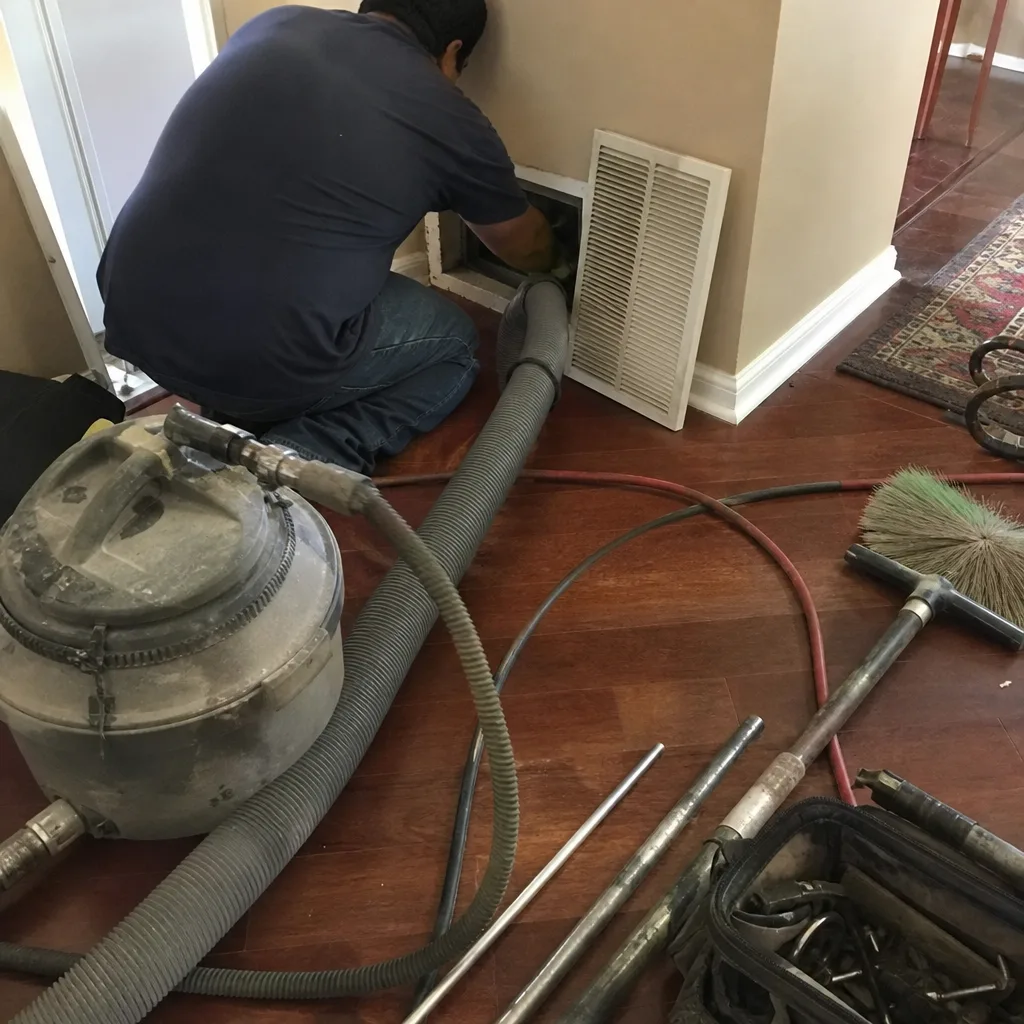 Before
 After
 Before
 After
 Before
 After
When to Call a Professional
Call a professional when you find any of these: an odor that returns every time the blower runs; dark, sticky, or colored residue inside a duct boot; mold growth visible in the system; a burning smell; contamination after renovation, flooding, or pest activity; or rooms that pull weak airflow while others are strong. These are the cases where do-it-yourself disturbance makes things worse and where the right equipment matters. Our technicians have up to experience and work with Rotobrush brush-and-vacuum and Nikro HEPA-rated equipment, the same tools restoration contractors use, and we clean ducts and fix them when damaged sections turn up. Duct Cleaning League City offers free estimates in League City. Call (866) 942-5170. We answer 24/7. Fast dispatch from 7am to 7pm, Sunday through Friday.
Frequently Asked Questions
If some rooms have strong airflow and others are weak, or if dust and odor are the main complaint while cooling still works, the ducts are the likely starting point. If every register feels weak and the system struggles to cool, or you see ice or water near the air handler, suspect the coil and call an HVAC technician first. The room-by-room tissue test above usually settles which side to start on.
No. It’s the opposite. If the smell appears when the fan starts and fades a few minutes later, the blower is dispersing contamination from a growth site into your living space; the odor fading doesn’t mean the source is gone. It means the source keeps doing its thing hidden from the room. That pattern points to a microbial growth site inside the system, and it’s worth a professional look.
Normal register dust is fine, dry, gray or light brown, and wipes off cleanly. Something to worry about is dark, sticky, colored, chunky, or damp buildup, especially with growth that looks like a mold colony. Dry powdery dust is airborne particulate that settled. Sticky or colored residue means moisture-fed growth inside the system, and that’s a containment-grade cleaning situation.
Yes. Renovation is one of the three events most likely to load a duct system with debris, especially drywall dust and insulation fibers pulled into the returns while work was going on. The contamination can be there without a strong smell, and checking early catches a white or grayish powder issue before it coats the air handler. A visual inspection near the returns and the air handler is a sensible first step.
Usually not. Uneven airflow is most often a duct problem: a disconnected joint, a crushed flex run, a closed damper, or a leaky trunk. If most registers feel strong and one or two are weak, the equipment is moving air and the distribution isn’t. Call a duct specialist to look for damaged or disconnected sections before spending anything on equipment.
Because what’s included differs enormously. A cheap quote often means a single fast pass with no mechanical agitation and no containment, which loosens debris without capturing it. Real cleaning uses a brush-and-vacuum system like Rotobrush to dislodge debris from the duct wall and a HEPA-rated unit like Nikro to capture it. Ask any contractor what equipment they use, whether they can repair damaged duct sections, and whether they inspect and photograph before and after. Call (866) 942-5170. We answer 24/7. Fast dispatch from 7am to 7pm, Sunday through Friday.
The Bottom Line
The early warning signs of a duct problem are subtle, and they show up long before visible mold or a burning smell. A musty odor that fades after the blower runs means the contamination source is still active, not resolved. Dark, sticky register buildup points to moisture-fed growth. Uneven airflow means damaged or disconnected duct, not failing equipment. Renovation, flooding, and pest activity can load a system in a single event. Reading these signs early lets you direct the right call and avoid paying for the wrong service. And remember the dryer vent side of the same discipline: lint accumulation in venting is the NFPA-documented leading cause of appliance fires, so treating dryer vent cleaning as a fire-safety service matters as much as duct care. Whether your ducts need cleaning, repair, or a vent safety check, the honest answer is to look first, then decide.
Here’s the practical summary:
- Odor type helps direct the search: musty = microbial, burning = heat exchanger or mechanical, sour = drain pan, chemical = new contamination.
- Dry gray dust at registers is normal; dark, sticky, or colored residue is not.
- Uneven airflow is usually a duct or duct-damage problem, not an equipment failure.
- Renovation, flooding, and pest activity are the events most likely to introduce sudden contamination.
- Distinguish dirty ducts from a dirty coil before you spend money.
- Real cleaning uses mechanical agitation and HEPA capture, not a blowout.
The next step is straightforward. If you’ve spotted any of these signs in your League City home and you’re not sure what you’re seeing, call (866) 942-5170 for a free estimate. We answer 24/7. Fast dispatch from 7am to 7pm, Sunday through Friday. We specialize in League City duct cleaning, dryer vent cleaning, and duct repair, and we’ll tell you honestly whether it’s a duct problem, a coil problem, or something to have your HVAC contractor look at first.
Written by the team at Duct Cleaning League City.