
Last updated November 15, 2026
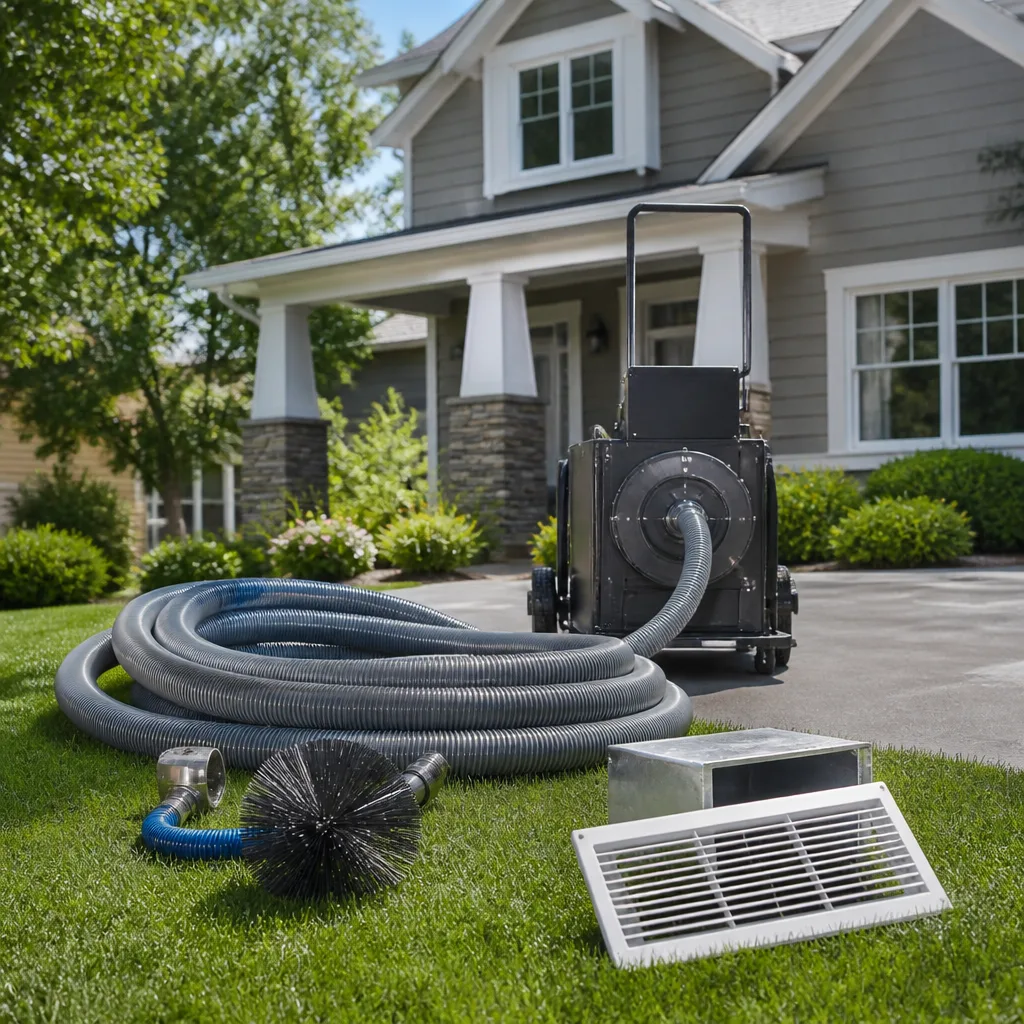 Whole-home duct cleaning
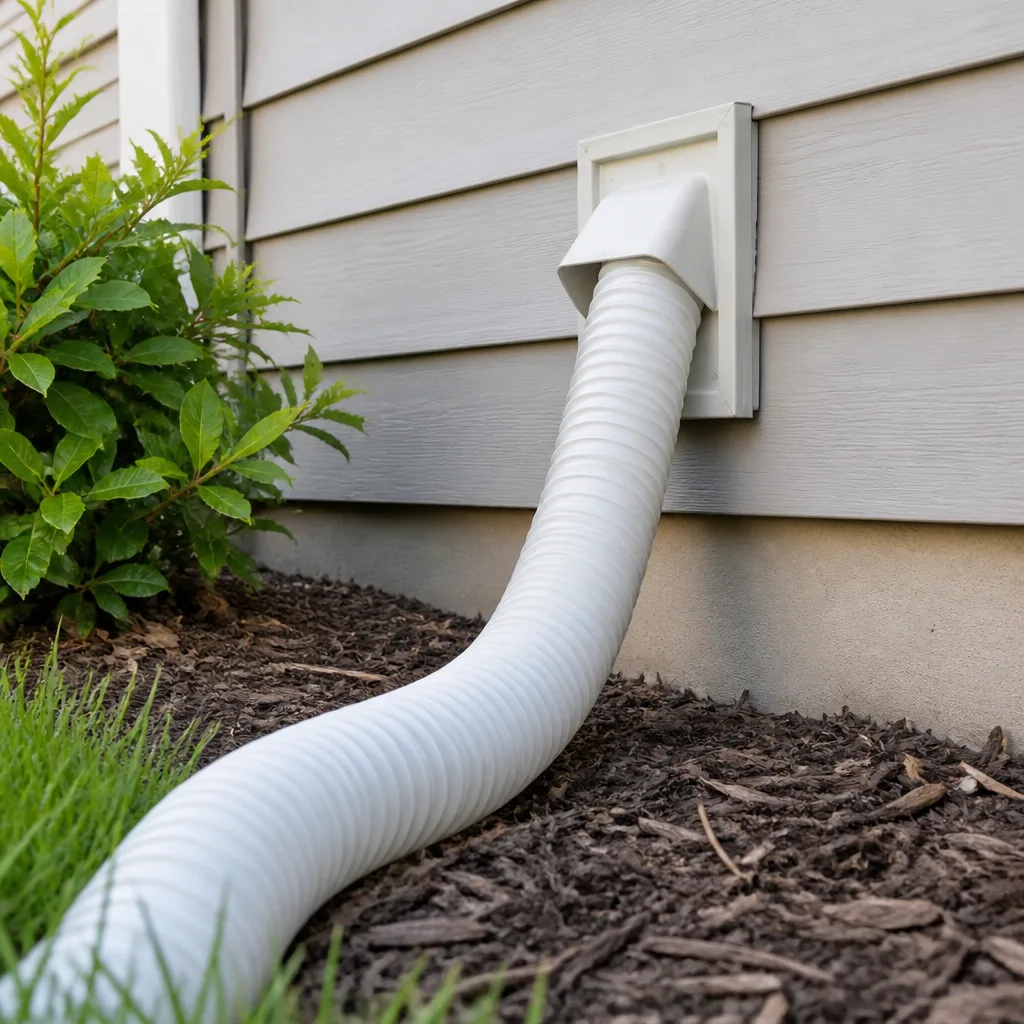 Dryer vent cleaning
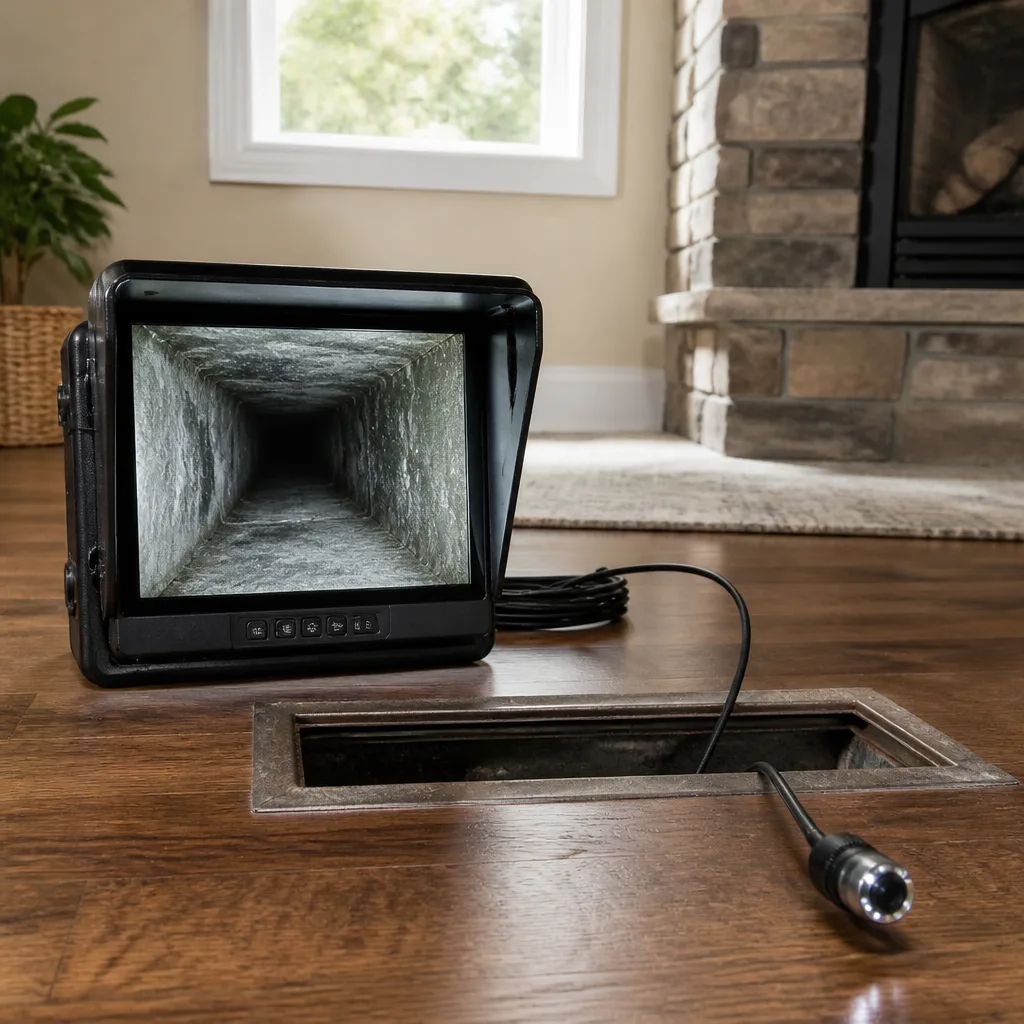 Camera inspection
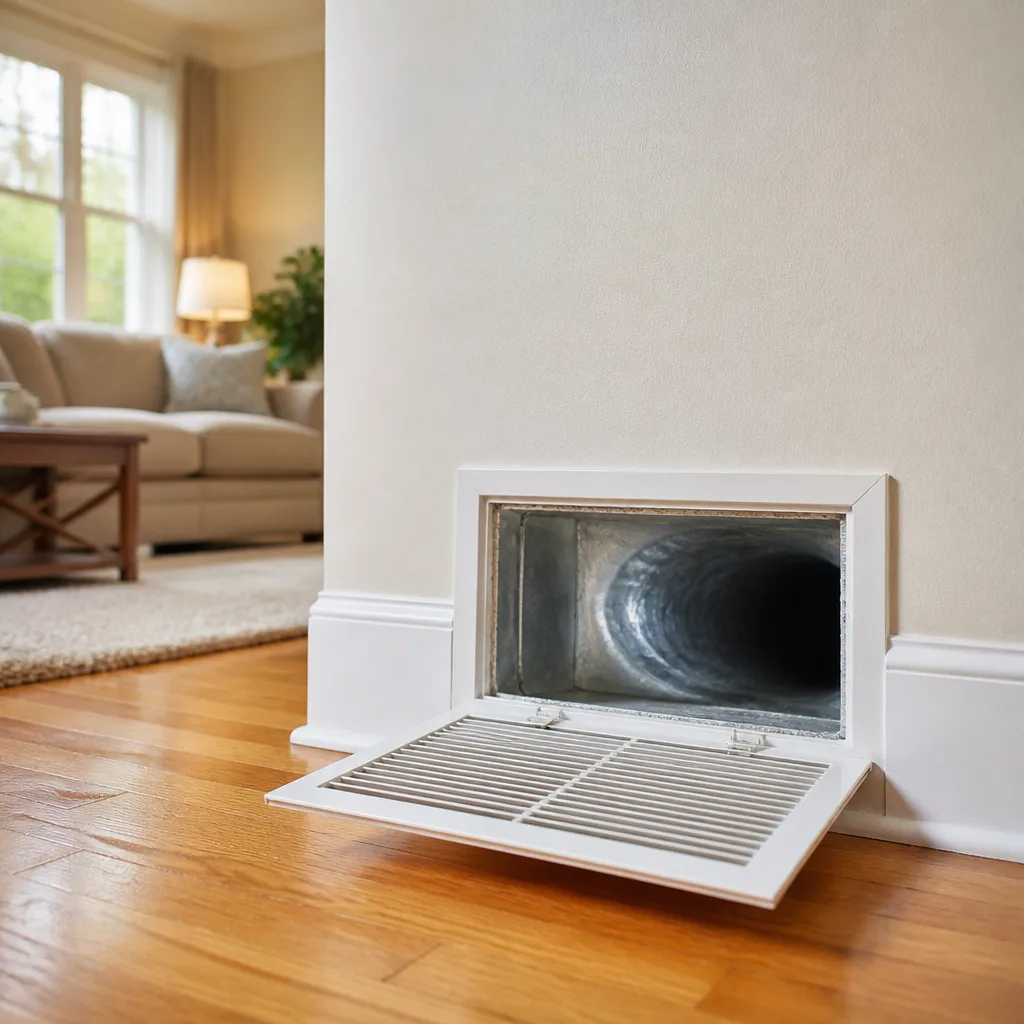 Sanitizing & deodorizing
Whole-system duct and dryer vent check with before-and-after photos - you see exactly what came out of your vents
That "$99 whole-house special" is a bait ad - the real number appears once they are in your hallway, or the "clean" is a shop-vac at the register. We photograph the inside of your ducts before and after instead.
Choosing the Right Air Duct Cleaning Brand: A Buyer’s Guide for League City
A recognizable national name on the side of a van tells you nothing about what’s attached to the hose inside. That’s the first thing most homeowners get wrong when shopping for duct cleaning in League City. They read a franchise logo as a quality standard, when a brand tag really only describes a marketing system – not the equipment sitting in the driveway or the training of the person running it. The same logo can sit above a truck-mount vacuum with real filtration, or above a portable shop vac with a brush taped to a pole. This guide is about reading past the brand and judging the work: the hardware, the method, the scope, and the paperwork. By the end you’ll know exactly which questions separate a genuine duct specialist from a surface-level blowout.
Quick Answer
To choose the right air duct cleaning brand in League City, ignore the logo and verify three things: the specific equipment the technician will use (professional-grade systems like Rotobrush or Nikro, not consumer vacuums), whether the company’s scope covers repair as well as cleaning, and whether they’ll show you before-and-after documentation of your own ducts. A brand that can answer all three with specifics is a specialist. One that can’t is selling a name.
Styles & brands we work with
- Whole-home duct cleaning
- Dryer vent cleaning
- Camera inspection
- Sanitizing & deodorizing
Table of Contents
- Why a Brand Name Isn’t an Equipment Standard
- The Questions That Reveal a Real Specialist
- What Rotobrush, Nikro, and Abatement Technologies Actually Do
- Why Specialization Matters More Than You Think
- Which Review Signals Actually Matter
- How to Verify Claims Independently
- What Makes Duct Work in League City Different
- What Honest Duct Cleaning Costs in League City
Why a Brand Name Isn’t an Equipment Standard
A franchise tag is a business arrangement, not a technical certification. When a national duct cleaning brand sells a territory to a local operator, that operator agrees to use the name, follow brand guidelines, and pay fees. What the agreement does not guarantee is that the operator owns professional-grade equipment, keeps it maintained, or trains technicians to use it correctly. In our experience in League City, the gap between two operators flying the same flag can be enormous.
Think about what “cleaning” actually requires. Dust and debris in a duct system don’t just sit loose on the bottom of the run. They cling to the walls, they compact at elbows and transitions, and they accumulate on the return side where airflow is strongest. Suction alone pulls at the surface. It doesn’t dislodge what’s bonded to the metal or the flex liner. Getting that material moving takes mechanical agitation – a rotating brush or air whip – paired with a vacuum strong enough to capture what the brush frees. If the company doesn’t own that combination, no brand name compensates for it.
So the first reframe is simple: judge the equipment, not the logo. The second is to judge the scope. A brand that only cleans is offering half a service. Ducts crack, separate at joints, and collapse at flex connections – problems a cleaning pass can reveal but not fix. A specialist who can also repair what they find closes that gap in the same visit. We clean ducts. We also fix them. That distinction is the difference between a company built around air quality and one built around airflow for an hour.
The Questions That Reveal a Real Specialist
The fastest way to tell a specialist from a generalist is to ask specific, technical questions and listen for specific, technical answers. Vague reassurance is the tell. Here are the questions worth asking before you book, in the order that saves you the most time:
- What equipment will the technician actually use in my home? A real answer names the system – Rotobrush mechanical brush-and-vacuum, Nikro HEPA-rated vacuum, Abatement Technologies containment gear if contamination is suspected. “Our powerful truck” or “industry-standard equipment” is not an answer.
- Does the price cover the whole system or each vent? Per-vent pricing rewards a company for counting rather than cleaning, and it usually hides add-ons. Ask for a flat price per system, agreed in writing before any work starts.
- Do you repair ducts, or only clean them? If they only clean, ask what happens when they find a disconnected run or a crushed flex section. If the answer is “we’ll note it,” you’ll be hiring someone else to fix it.
- Will I get before-and-after photos of my own ducts? Not stock images. Not a generic gallery. Photos of the runs in your house, taken during the job.
- How do you handle a system with Honeywell or Aprilaire filtration components? A technician familiar with premium air quality equipment works around it without bypassing or damaging it. Someone who doesn’t know the hardware may pull it apart and put it back wrong.
- Who actually does the work – your staff, or a subcontractor? The answer tells you whose training and equipment standards you’re really buying.
You don’t need all six answers to make a decision. Two or three specific, confident responses will tell you more than a stack of five-star reviews. If a company can name its equipment and explain its scope without hedging, you’re talking to a specialist. If it deflects, you’re talking to a sales operation.
What Rotobrush, Nikro, and Abatement Technologies Actually Do
This is where the guide earns its keep, because the equipment difference is the one most buyers can’t see until the work is done badly. Here’s what each system contributes, and why a repurposed shop vac can’t substitute.
Rotobrush is a mechanical brush-and-vacuum system. The rotating brush and whip dislodge debris that’s bonded to duct walls – the compacted dust at elbows, the film on return runs, the material suction alone slides past. The vacuum captures what the brush frees. The two halves work together; either one alone leaves the system half-cleaned. This is the same category of hardware restoration contractors rely on, not a consumer unit with a longer hose.
Nikro is a HEPA-rated vacuum system. Its job is to capture fine particulates at the source rather than redistribute them through the home. If you’ve had a cheap cleaning and noticed a fine dust film settling afterward, you’ve met the failure mode a HEPA-rated vacuum is built to prevent. Capturing particles where they’re dislodged is the whole point.
Abatement Technologies equipment is containment-grade. It signals readiness for contaminated duct environments – mold, heavy allergen loads, post-renovation debris – not just light household dust. When a system has been through a renovation or has visible growth, containment matters as much as the cleaning itself.
On the filtration side, familiarity with Honeywell and Aprilaire systems means the work happens without compromising equipment the homeowner already invested in. That’s not a marketing line; it’s a technician knowing which components to work around and how. Equipment is infrastructure, and infrastructure is what you’re actually paying for. The brand on the invoice is the least informative part of the whole transaction.
Why Specialization Matters More Than You Think
A company that only does duct and vent work builds its entire operation around that task. Technician training is calibrated to ducts, not split across a dozen service lines. Equipment maintenance follows the manufacturer’s schedule because the equipment is the business, not a side purchase that sits in the truck between calls. Job sequencing is designed around a cleaning plus any repair discovered on site, so the visit doesn’t end with a hole in your duct run and a promise to come back.
An HVAC generalist treats duct cleaning as a secondary revenue line. That shapes the work in predictable ways. The technician may be excellent at refrigeration and average at duct interiors. The equipment may be whatever was on sale when the company added the service. And the visit is optimized to get to the next appointment, which tends to mean a quick surface pass rather than dislodging what’s bonded to the walls. None of this is malice. It’s the natural result of duct cleaning being a footnote rather than the focus.
That’s why the brand question keeps circling back to specialization. You’re not buying a repertoire. You’re buying depth on one task. If you want a fuller picture of what that task involves at this address, the main Duct Cleaning League City page lays out the scope. If your dryer vent is the concern rather than the air ducts, that’s a separate job with its own safety stakes, and the dryer vent cleaning page covers it directly. Both are specialist work, and that’s the point.
Which Review Signals Actually Matter
Reviews are the most consulted and most misunderstood evidence in this category. A wall of five-star ratings tells you very little on its own, because the people who leave them are usually reviewing the scheduling, the price, and the technician’s manners. That’s fair, but it’s not the work. The signal you want lives in the negative reviews, where people describe what actually went wrong.
Read the one- and two-star reviews looking for these patterns:
- Scope disputes. “They said the price covered everything, then charged extra for each vent” or “they wouldn’t clean the returns without another fee.” This tells you the company sells a teaser price and expands it on site.
- Upsell pressure. A review describing a hard pitch for services that weren’t the reason for the visit is a sign the technician is paid on volume, not on work done right.
- No before-and-after documentation. Either the company doesn’t take photos or won’t share them. Both mean you have no way to verify the cleaning happened.
- “No visible difference.” Dust returns quickly after a surface-level pass. A review saying nothing changed usually describes a cleaning that never reached the duct walls.
What five-star reviews often omit is equally telling. A happy review might mention a friendly technician and a fair price, but say nothing about the equipment used, the scope of the clean, or photos of the work. That’s not a knock on the reviewer – they’re reporting what they saw. It just means a five-star average can describe a pleasant transaction with a mediocre clean. The reviews that name equipment or show before-and-after images are the ones to weight heavily.
How to Verify Claims Independently
Any company can claim professional equipment and trained technicians. Verification is what separates the claim from the fact, and it isn’t hard. Here’s an order of operations you can run in an afternoon:
- Check the equipment claim at the source. Ask for the brand names, then ask which system they’ll use in your home. Rotobrush and Nikro aren’t mystery brands, and a technician who uses them can describe them without looking it up. Vague answers are a red flag; specifics are a green one.
- Verify licensing through the state. Texas requires HVAC-related contractors to hold a license, and the licensing database is searchable. Look the company up directly rather than trusting a number printed on a flyer.
- Look up trade association membership. NADCA, the National Air Duct Cleaners Association, maintains a member directory. Membership isn’t a guarantee of perfect work, but it’s an independent data point you can check without taking anyone’s word for it.
- Request before-and-after photos as a booking condition. Not samples – photos of your own ducts taken during the job. A specialist expects this request and plans for it. A company that pushes back is telling you something.
- Read the estimate for scope. The written estimate should name what’s included and what the final price is per system. If the estimate is one number with no scope detail, ask for the detail in writing before you commit.
This verification is as much about the local operator as the national brand. A franchisee can be excellent or mediocre depending on exactly these factors, and a local independent can be either too. The equipment, the license, the membership, and the documentation are what tell you which one you’re dealing with. If you want to skip ahead and ask us directly, the air duct cleaning service page has the details, and our technicians have up to experience with these systems.
What Makes Duct Work in League City Different
League City runs its HVAC system for most of the year, and that continuous runtime shapes what accumulates in the ducts. When the air handler runs nearly nonstop through a long cooling season, more air passes through the ducts, more dust and debris get carried into the system, and more of it settles on the duct walls. That’s the opposite of a climate where the system sits idle for half the year. The accumulated load is higher, and so is the value of a cleaning that actually reaches the walls rather than skimming the surface.
Humidity plays a part too. Long cooling seasons mean indoor air stays damp enough that return ducts and coil-adjacent runs can hold conditions where dust and debris clump rather than stay loose. That’s precisely the material a brush-and-vacuum system is built for. A suction-only pass slides over it. Mechanical agitation frees it. This is why a blowout special in League City often produces no visible change: the debris wasn’t loose to begin with.
Then there’s the housing stock. League City has grown quickly, and the housing reflects it – a mix of newer construction with flex-duct runs and older homes with rigid metal systems. Flex duct has more flex and more surface area per run, and its corrugated interior catches debris at every rib. Rigid metal develops pinhole leaks and joint separations that a technician should identify during the clean. Either way, the same conclusion: the system in League City is worked hard, and it benefits from equipment that can handle the load. If your home is in League City, that’s the context the cleaning happens in. For more on the local picture, the city page covers what’s specific to this area.
What Honest Duct Cleaning Costs in League City
There’s no single price for a whole-system clean, because the variables differ from home to home: number of runs, accessibility, condition, and whether repairs turn up mid-job. But there is a way to tell an honest quote from a teaser. An honest estimate is a flat price per system, agreed in writing before work starts, with the scope spelled out. A teaser is a low number that expands once the technician is on site. That’s the industry’s bait-and-switch reputation in one sentence, and the way to beat it is to ask for the flat price up front.
As you compare quotes, keep this structure in mind:
- Whole-system clean: one flat price per system, not per vent. The estimate should state what the clean covers – supply and return runs, registers, the air handler area – and what the final price is.
- Repairs discovered during cleaning: priced separately, based on what’s found and confirmed with you before any repair work begins.
- Dryer vent cleaning: a separate service with its own price, because it’s a different job entirely. It shouldn’t be bundled into the duct quote as an item you feel obliged to accept.
The right question isn’t “what’s the cheapest quote?” It’s “what will this company do, with what equipment, and what will I actually pay when the work is done?” A company that answers those three plainly is giving you something a low teaser price can’t: a number you can trust. Call (866) 942-5170 for an exact quote – estimates are free.
Common Mistakes to Avoid
- Choosing by logo instead of equipment. A national brand tag doesn’t guarantee Rotobrush-based mechanical cleaning or a HEPA-rated vacuum. Ask what hardware goes in your home, then verify it.
- Accepting per-vent pricing. It rewards counting rather than cleaning, and it almost always expands on site. Ask for a flat price per system in writing.
- Skipping the repair question. If your company only cleans, a disconnected flex run found mid-job stays disconnected. Confirm repair capability before booking.
- Trusting five stars alone. Look for reviews that describe the equipment and the documentation. A friendly visit with a surface pass still gets five stars sometimes.
- Not asking for before-and-after photos. Without photos of your own ducts, you have no way to verify the work happened. Make it a booking condition.
- Cleaning ducts but ignoring the dryer vent. Dryer vent lint is the leading cause of dryer fires. Treat vent cleaning as fire safety, not an upsell.
- Assuming an HVAC generalist does duct work well. For many generalists, duct cleaning is a footnote. A specialist whose whole operation is ducts and vents is calibrated for it in ways a generalist isn’t.
See the difference
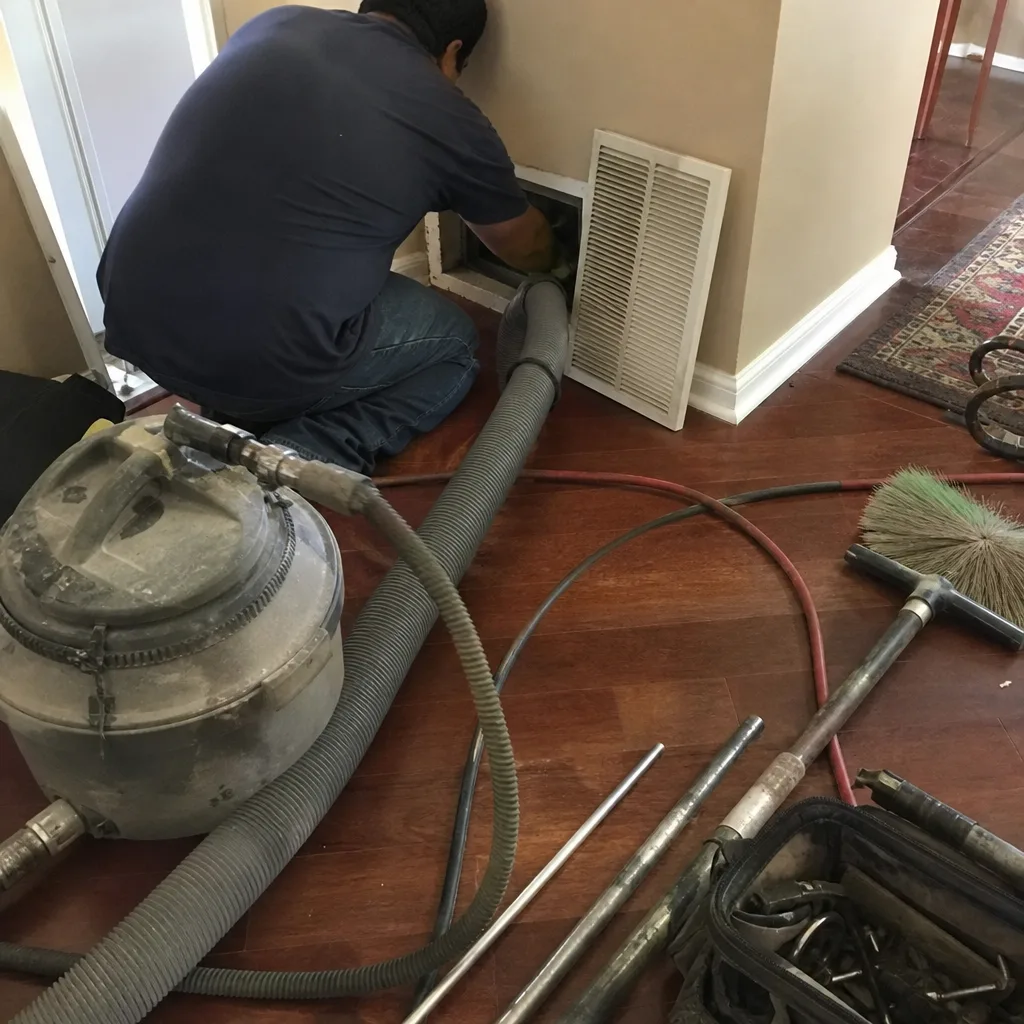 Before
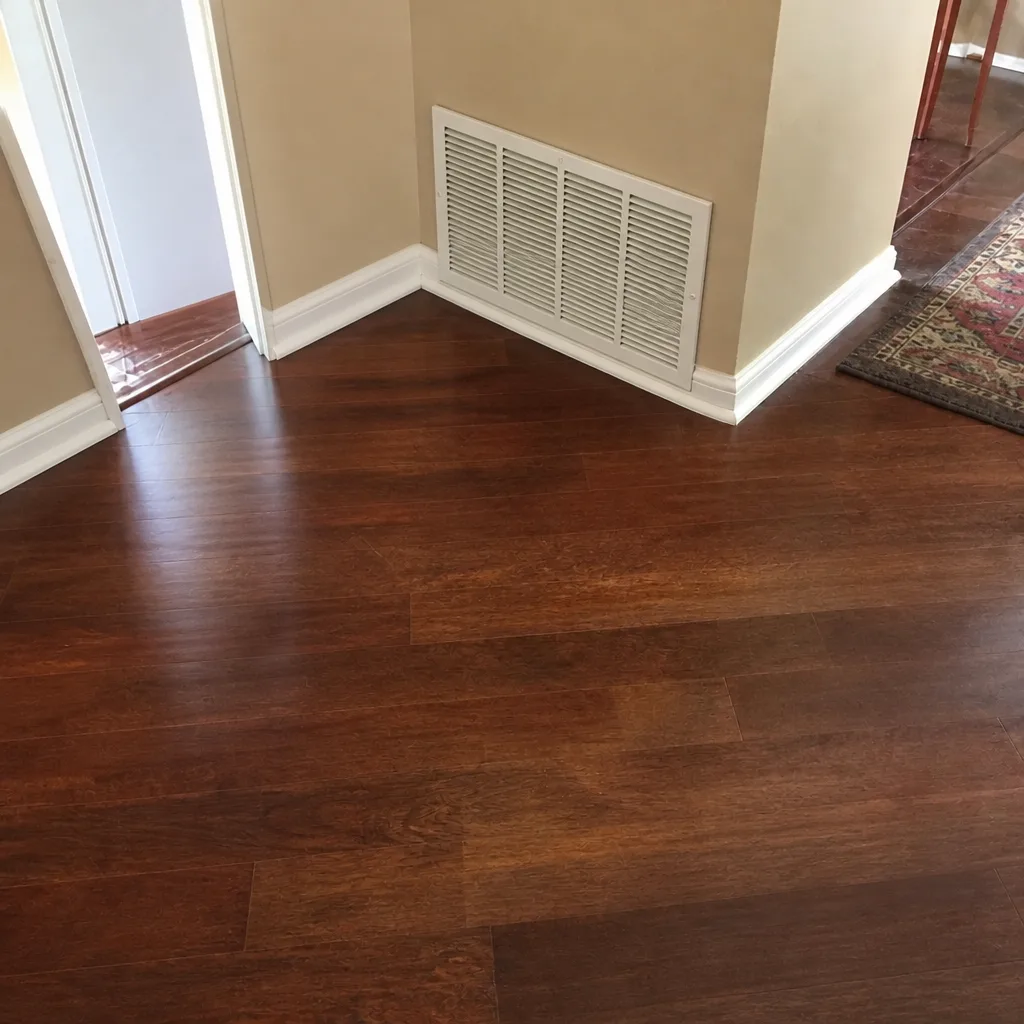 After
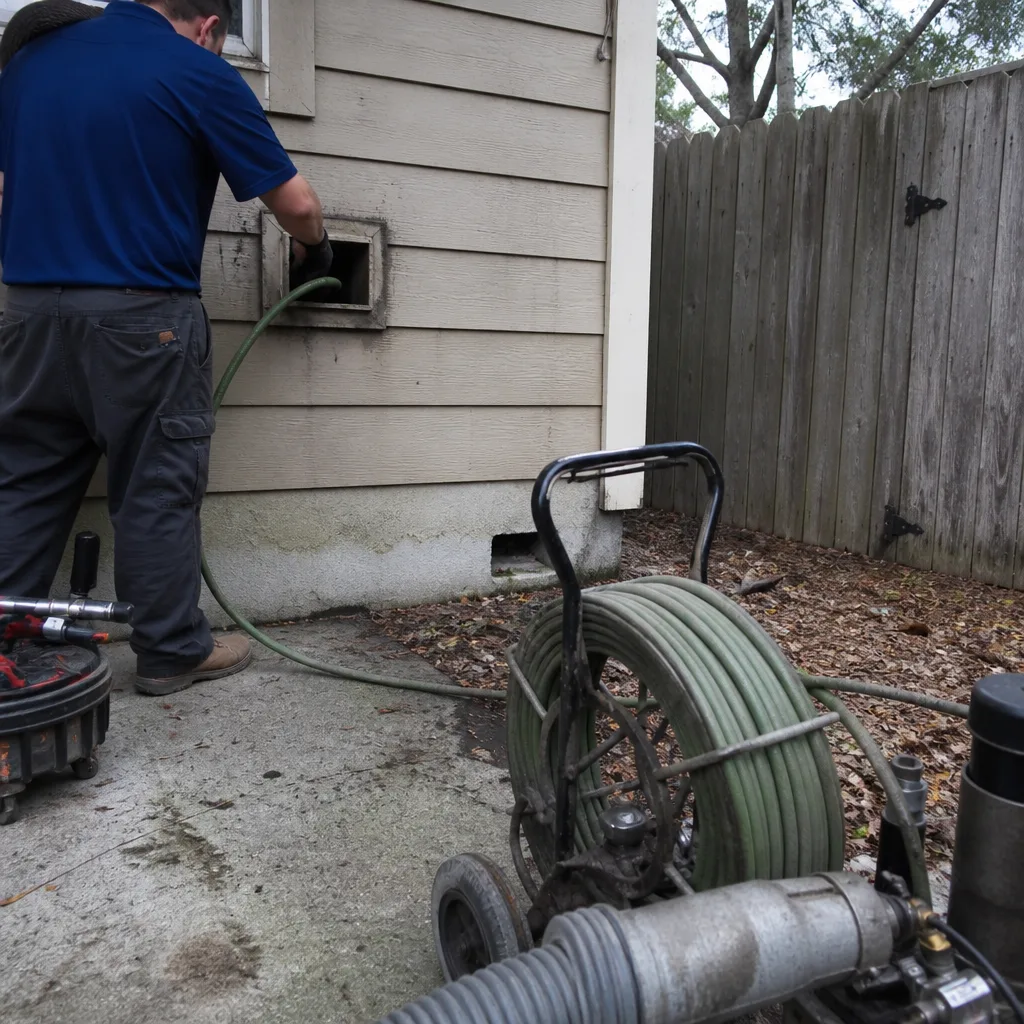 Before
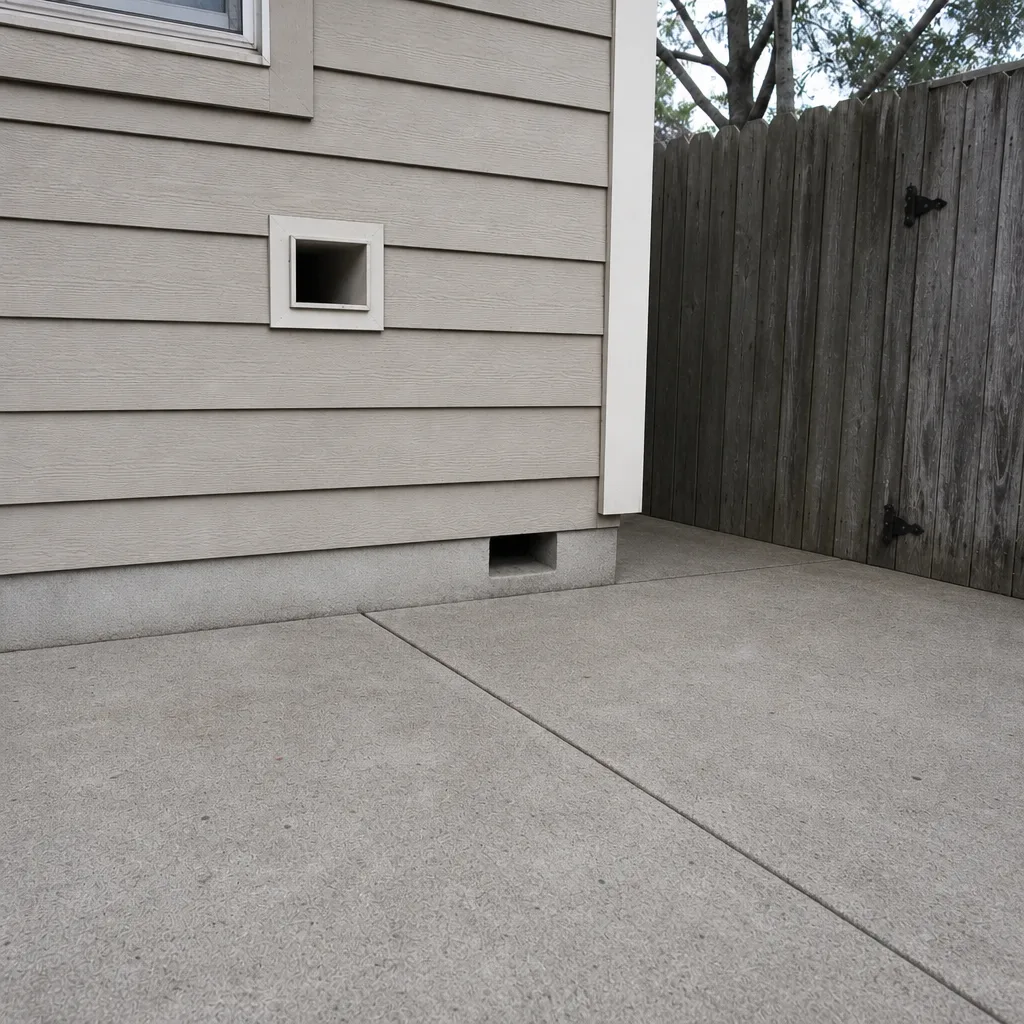 After
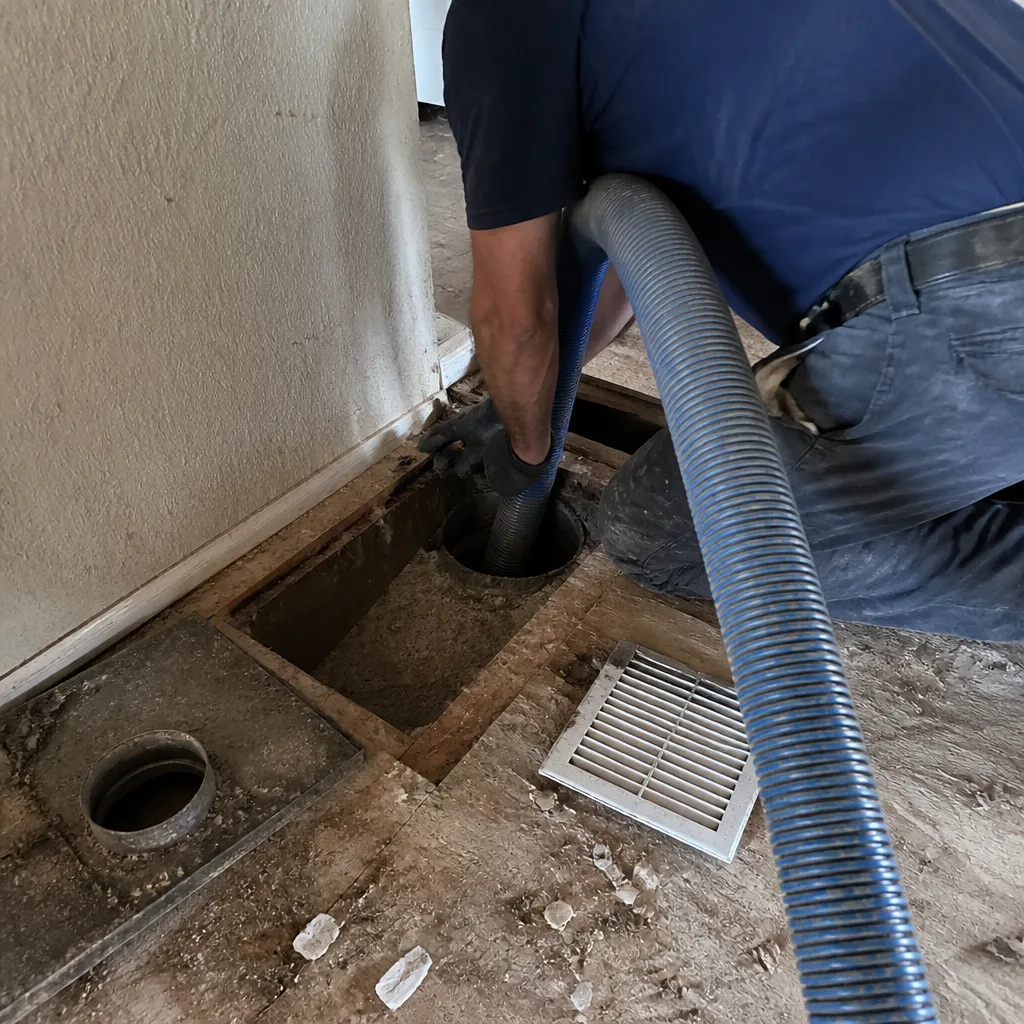 Before
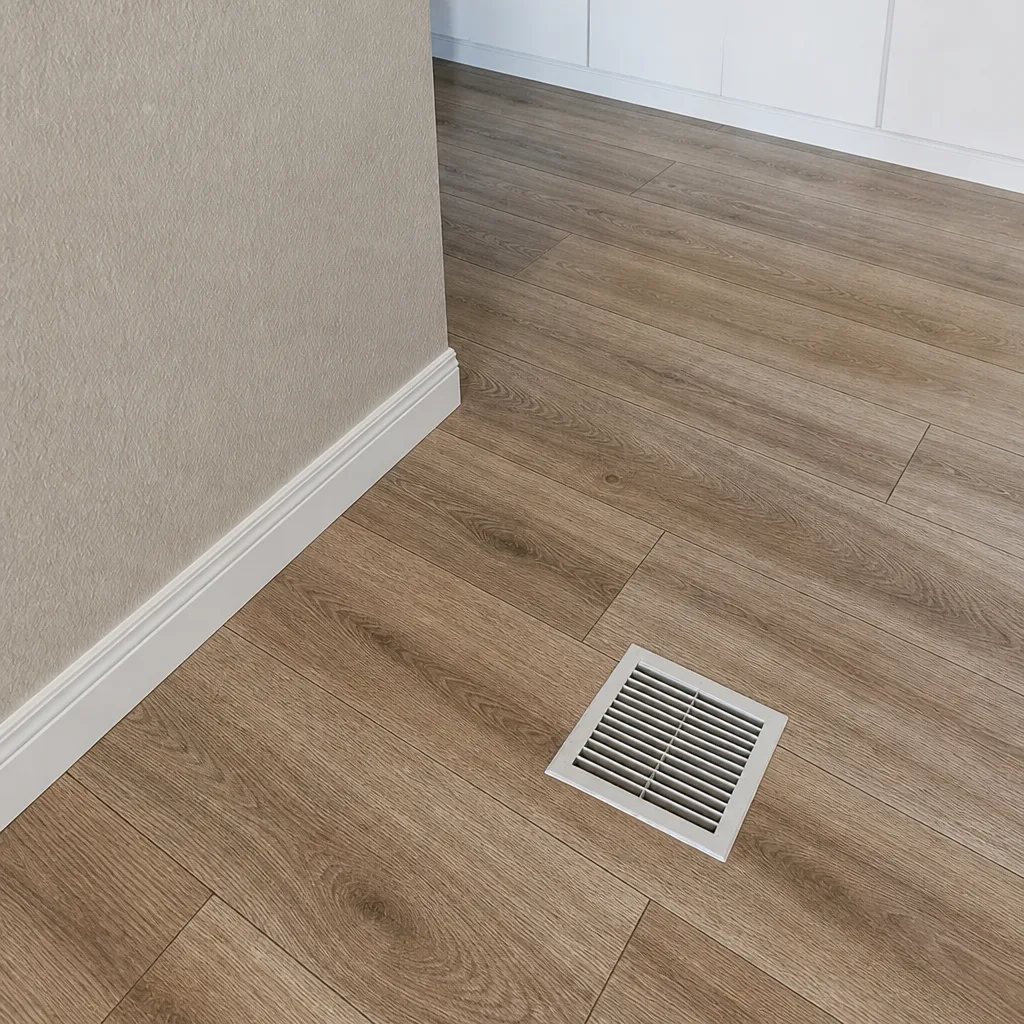 After
When to Call a Professional
Some things are obvious: visible dust blowing from a register when the system starts, a musty smell that returns after a filter change, or a dryer that takes two cycles to dry a load. Others are quieter. A home that’s been through a renovation has construction dust in the ducts whether or not you can see it. A return that feels weak in one room can mean a disconnected flex run. And a duct clean you paid for that left no visible difference is a reason to call someone who’ll do it properly, not a reason to give up on duct work. If any of these sound familiar, Duct Cleaning League City offers free estimates in League City – call (866) 942-5170. We answer 24/7. Fast dispatch from 7am to 7pm, Sunday through Friday.
Frequently Asked Questions
It depends on the system: the number of runs, accessibility, and condition all affect the price, so no honest company quotes a single number for every home. What you should demand is a flat price per system, agreed in writing before work starts, with the scope spelled out. That structure is what protects you from bait-and-switch pricing. Call (866) 942-5170 for an exact quote – estimates are free.
Cheap quotes usually describe a different kind of service: a surface suction pass with consumer-grade equipment, no mechanical agitation, no documentation, and a low teaser price that expands on site. Real cleaning with a Rotobrush brush-and-vacuum system and a Nikro HEPA-rated vacuum costs more to run, and the work takes longer, because it actually reaches the duct walls. Compare scope and equipment, not headline price. Call (866) 942-5170 for an exact quote – estimates are free.
Ask for before-and-after photos of your own ducts, taken during the job. That’s the standard we hold to, and it’s the documentation a specialist expects to provide. If a company can’t or won’t document the work, you have no way to verify it. Call (866) 942-5170 to book a clean that comes with photos – estimates are free.
There’s no fixed interval that fits every home. In League City, where the HVAC system runs most of the year, debris accumulates faster than in a climate where the system sits idle for months. Visible dust at the registers, a returning musty smell, a recent renovation, or a new-to-you home are better triggers than a calendar. Call (866) 942-5170 for an exact quote – estimates are free.
It can reduce the dust and debris circulating through the system, which is the starting point. Cleaning with containment-grade equipment matters when allergen loads are heavy, because a low-powered vacuum can redistribute fine particles rather than capture them. If your system includes Honeywell or Aprilaire filtration, the clean should be done without bypassing or damaging that equipment. Call (866) 942-5170 to talk through your situation – estimates are free.
Only if it offers repair as part of its scope, which many don’t. A separated flex run or a crushed section found during cleaning can be fixed in the same visit by a company that’s equipped for it. If the company only cleans, you’ll be hiring a second contractor for the repair. Call (866) 942-5170 to ask about repair – estimates are free.
The Bottom Line
The right air duct cleaning brand in League City isn’t the one with the most recognizable logo. It’s the one whose equipment and scope you can verify: Rotobrush mechanical brush-and-vacuum, Nikro HEPA-rated capture, Abatement Technologies containment when needed, and repair capability so nothing gets left half-fixed. Ask the six questions, check the license and the trade directory, read the negative reviews for scope disputes and upsells, and make before-and-after photos a condition of the booking. A specialist answers all of it plainly. A brand wrapper doesn’t. Our technicians have up to experience with these systems, and a flat price per system comes in writing before any work starts.
Call (866) 942-5170 for a free estimate. We answer 24/7. Fast dispatch from 7am to 7pm, Sunday through Friday.
Written by the team at Duct Cleaning League City.